Guy Fawkes
Table of Contents:
-
Development, Releases, and Technology
-
General News
-
Events and Meetings
-
Exchanges and Merchants
-
Community Crowdfunding
-
Trading and Speculation
-
Network Metrics
-
Entertainment
Development, Releases, and Technology
The CARROT addressing upgrade for Monero has successfully passed an audit by security firm Cypher Stack. The audit found that the carrot_core implementation closely follows the protocol specification and that the expected security properties are present, with only minor differences noted that were considered mathematically redundant. CARROT is a proposed upgrade to Monero’s addressing system designed to improve privacy, security, and usability while remaining fully compatible with existing Monero addresses.
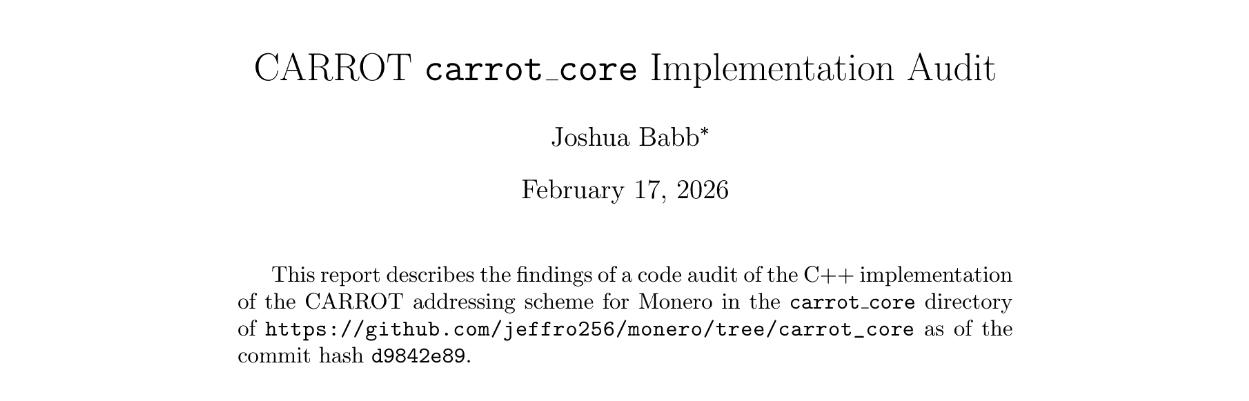
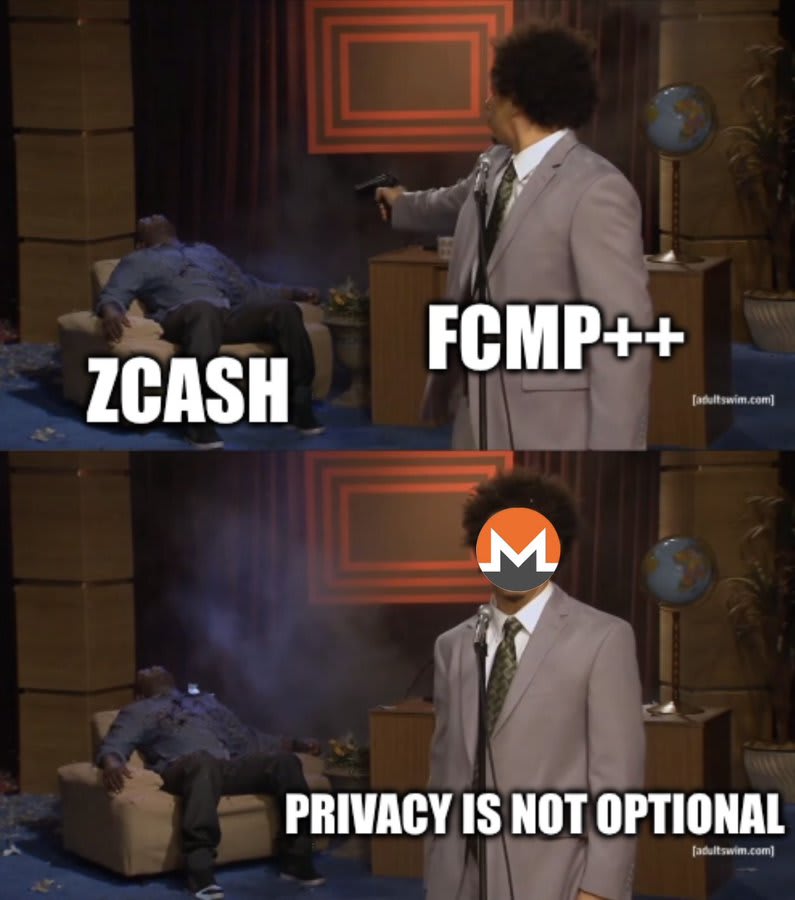
The Monero Research Lab (MRL) has been progressing work toward the upcoming FCMP++ upgrade. Developers reported that all major pull requests for FCMP++ integration are now open, with plans to contact audit firms for quotes before launching a Community Crowdfunding System proposal to fund a multi stage audit of the code. The FCMP++ alpha stressnet also continues running smoothly with no major new issues reported, while a separate audit of the carrot core library found only minor differences from the specification that were considered safe within Monero’s implementation. You can follow the Monero Research Lab (Unofficial) X page for regular updates.
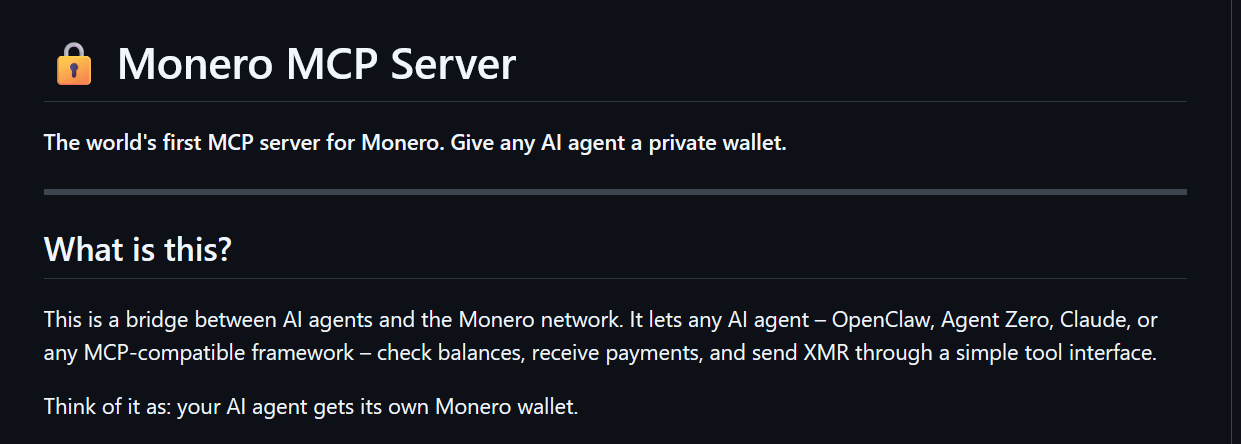
Baltsar has released monero-mcp, an early open source bridge that lets AI agents interact with the Monero network and manage their own wallet through the Model Context Protocol (MCP). The tool allows compatible agents to check balances, generate addresses, and optionally send XMR while emphasizing security through features like read only defaults, address allowlists, two step transfer confirmations, rate limits, and audit logging designed to mitigate prompt injection attacks. The project is MIT licensed and self hosted, and developers are inviting feedback and security review as the early alpha evolves.
Haveno v1.2.3 has been released, bringing several improvements to the decentralized peer to peer exchange software used for trading Monero without centralized exchanges. The update focuses on improving reliability when taking trades, better wallet syncing, and general user experience updates such as clearer trade timers and improved offer management. Haveno continues to develop as a decentralized marketplace where users can buy and sell XMR privately using fiat or other cryptocurrencies.

Cake Wallet and Monero.com Wallet v6.0.1 have been released, bringing a complete redesign of the wallet along with new features. The update introduces a refreshed interface aimed at making the app cleaner and easier to use, while also adding support for fast Bitcoin payments through the Spark Lightning protocol. Despite the visual overhaul, the release also focuses on improving performance under the hood to keep Monero syncing and transactions running smoothly.
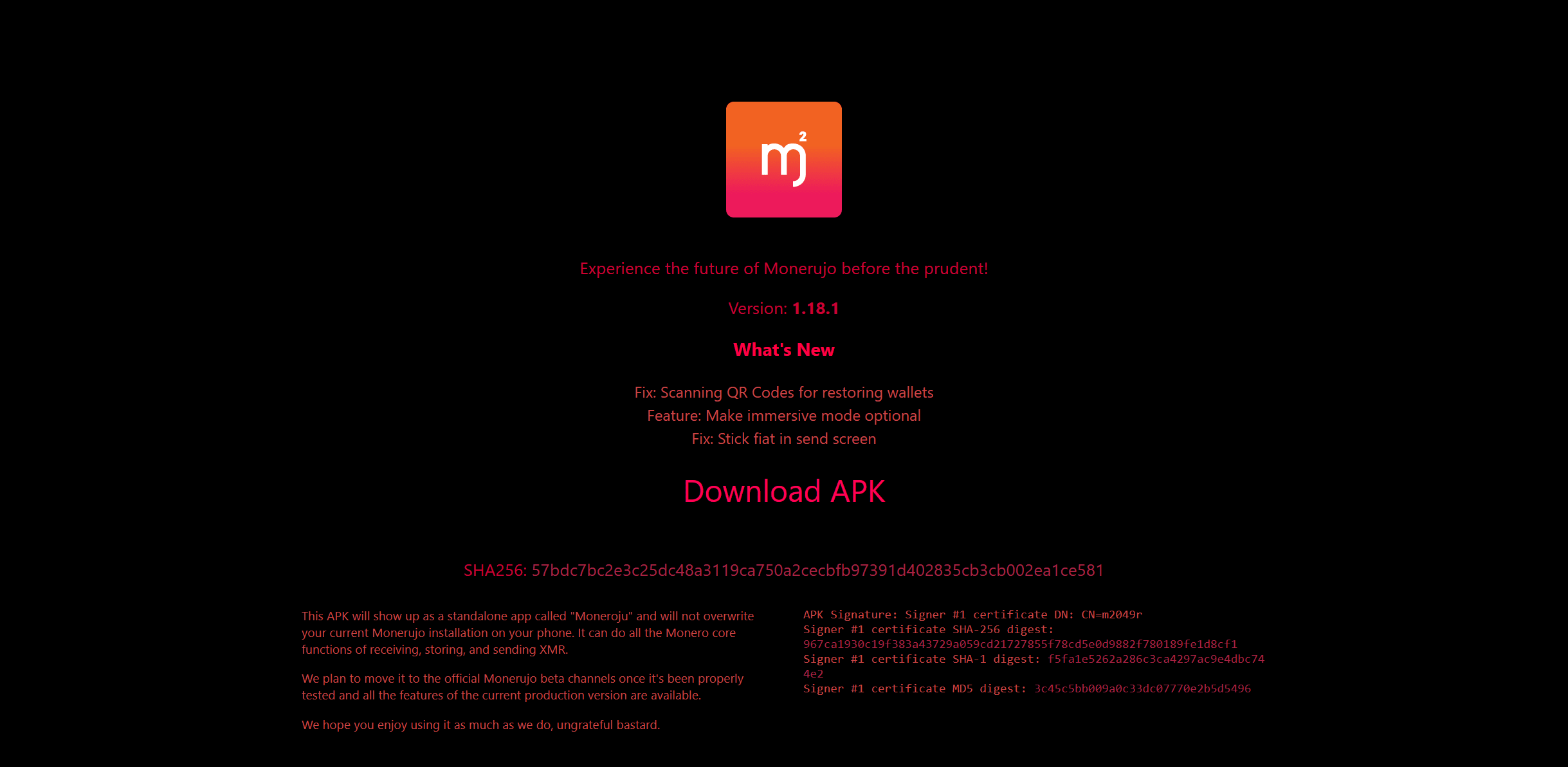
The Monerujo team has released an experimental preview build of Monerujo M2, giving users an early look at the next generation of the popular mobile wallet. The standalone test APK includes fixes for QR based wallet restoration, optional immersive mode, and improvements to the send screen, while allowing users to test the redesigned new version without overwriting their existing installation. Developers are encouraging the community to experiment with the preview build and provide feedback before the update moves into official beta channels.
Skylight Wallet, a lightweight Monero wallet focused on simplicity and accessibility, is now available on the Apple iOS App Store. The release expands access to Monero mobile wallets on iOS, allowing users to send, receive, and manage XMR from their phones using a light wallet setup. More details and the download are available here.
telliandev has created a prototype Monero hardware wallet that runs on the Critical Decentralisation Cluster badge, a small device with an e paper screen and keypad. The gadget can generate and store your Monero keys locally, show your wallet address as a QR code for receiving payments, and export a standard 25 word seed phrase so the wallet can be restored in apps like Cake Wallet. The project is open source and still experimental, but it shows another simple hardware option for people who want to hold their own XMR keys offline.
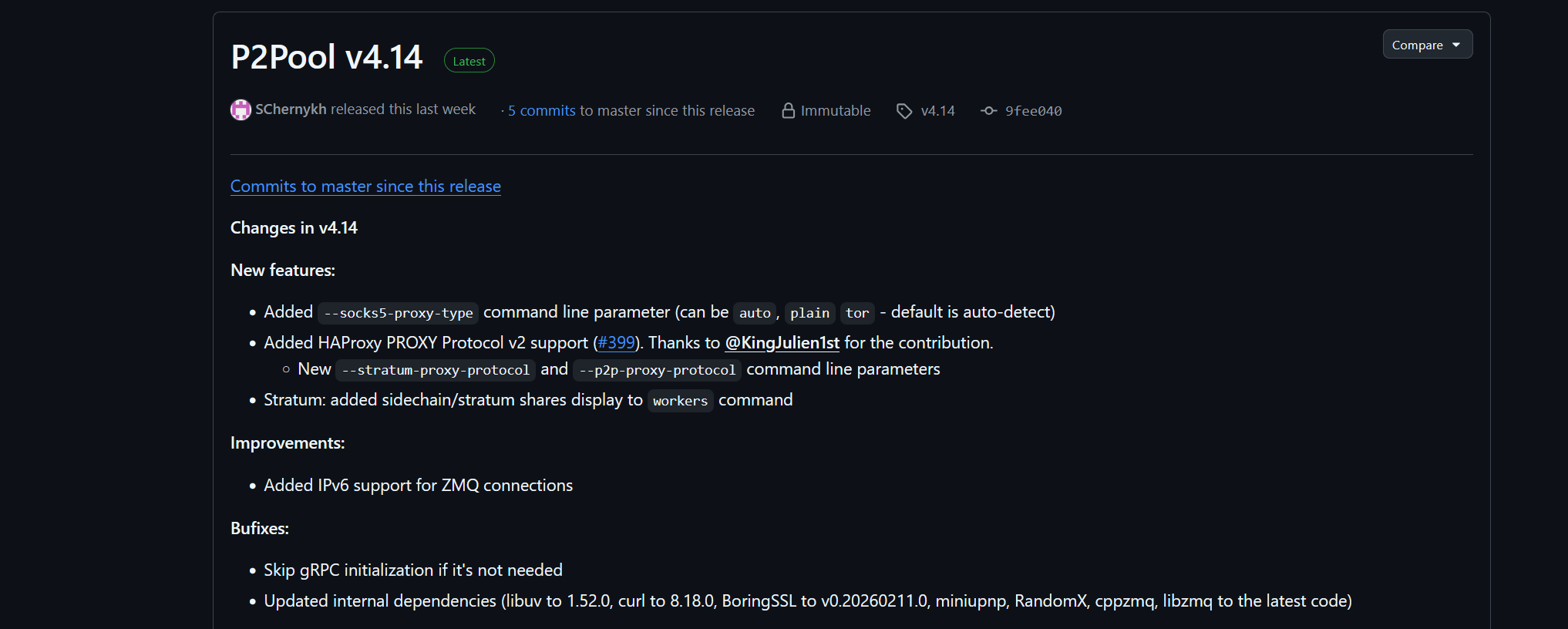
P2Pool v4.14 has been released, bringing several updates to the decentralized Monero mining pool software. The release adds support for configurable SOCKS5 proxy types, HAProxy PROXY Protocol v2 for improved networking setups, and new worker stats showing sidechain and stratum shares. Additional improvements include IPv6 support for ZMQ connections, dependency updates, and various bug fixes, continuing development on one of the most popular ways for miners to mine Monero in a decentralized way without relying on centralized pools.
Gupax v2.0.0 has been released, bringing a major update to the popular graphical interface used for running Monero nodes, P2Pool, and XMRig mining software. The release integrates features from the former Gupaxx fork, adds a new update manager, renderer selection with fallback support, and various usability improvements while simplifying the default interface to focus on P2Pool and XMRig. The update also includes numerous bug fixes and internal improvements, with users currently required to manually download the release due to a known updater issue. More details and downloads are available here.

P2Pool Starter Stack v0.2 has been released for Monero miners who want an easier self hosted setup for running a Monero node. The update adds a smart routing system that can automatically switch hashrate between P2Pool and XMRvsBeast to chase better rewards, along with a rebuilt dashboard that shows real time stats, worker activity, and historical hashrate charts. It also includes new command line tools and worker setup scripts to make managing and expanding a mining setup much simpler. Check it out here.
![r/MoneroMining - [RELEASE] P2Pool Starter Stack v0.2: Algorithmic Yield Optimization & Dashboard 2.0 🚀](https://substackcdn.com/image/fetch/%24s_!G-Gt!,f_auto,q_auto:good,fl_progressive:steep/https%3A%2F%2Fsubstack-post-media.s3.amazonaws.com%2Fpublic%2Fimages%2Fac4b6e4f-d70d-4e8d-a543-95f1b79afd2d_2084x1424.png "r/MoneroMining - [RELEASE] P2Pool Starter Stack v0.2: Algorithmic Yield Optimization & Dashboard 2.0 🚀")
A developer in the Monero subreddit has shared Onyx Escrow, an experimental browser native non custodial 2 of 3 Monero escrow system that uses FROST threshold signatures and client side WebAssembly signing so users do not need to install software or run a wallet locally. The server acts only as a relay coordinating signing rounds and monitoring transactions with a view key, while spending funds mathematically requires two of the three parties buyer, seller, or arbiter. The project is early and community members urged caution while testing it out, with the developer publishing the code and protocol specification here.
A new decentralized trading network called Haveno Nova has launched, built on the Haveno protocol. The network operates as a Tor native, non custodial peer to peer exchange similar to other Haveno based networks like Retoswap, allowing users to trade Monero without accounts or KYC while experimenting with different network parameters such as lower trading fees. Developers say the goal is to increase decentralized exchange infrastructure and competition within the ecosystem, though community members noted the project is still very new and advised users to proceed cautiously while liquidity and trust develop. More information here.
ProbeLab has published a new analysis of the Monero network using its Nebula crawler to map the P2P layer and provide a snapshot of the network’s structure and health. The report highlights a large and globally distributed node network, while also showing that nearly half of legitimate nodes appear to enforce the community ban list designed to isolate suspected surveillance infrastructure. The research offers a detailed look at Monero’s network topology and the ongoing efforts by the community to strengthen privacy and resilience at the P2P layer. Check it out here.

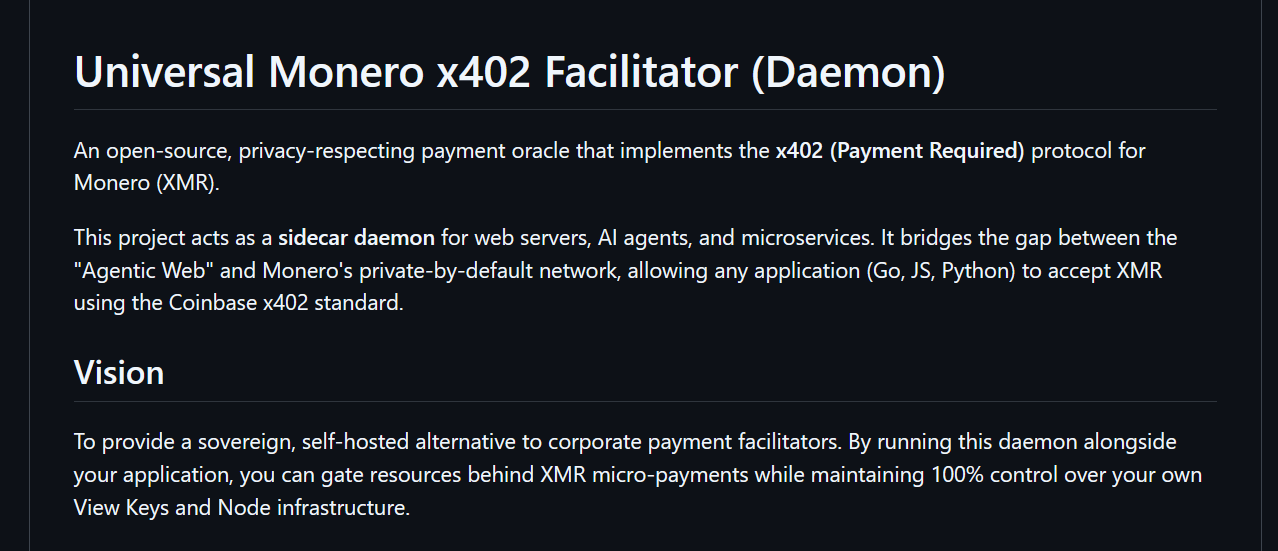
A developer has released a proof of concept Monero facilitator for the x402 payment protocol, designed to let websites, apps, or AI services accept XMR micro payments using the standard HTTP 402 “Payment Required” flow. The Rust based daemon runs alongside your own monero-wallet-rpc, generates unique subaddresses for each invoice, verifies payments using the transaction secret key (tx_key), and can even unlock resources instantly by detecting transactions in the mempool. The project aims to provide a self hosted, privacy preserving alternative to corporate payment facilitators, allowing developers to accept Monero while keeping full control over their own node, wallet, and view keys.
It is highly recommended you run a node to help secure the Monero network. You can also solo mine via the official Monero GUI wallet which can be found here or partake in the decentralized and permissionless P2Pool. The official Monero website GetMonero.org or SethForPrivacy.com are fantastic places to find help to get started running a node or mining. You can also check out the YouTube video below.
General News
A new explainer video titled “What is Monero and how does it work?” has been published by the YouTube channel Breakdownvideos. The video gives a simple overview of Monero’s core privacy features, explaining how ring signatures, stealth addresses, and hidden amounts work together to keep the sender, receiver, and transaction value private by default. It also contrasts Monero with most cryptocurrencies where transactions remain permanently public and traceable. Watch the video here.
The Monero Talk podcast released Monerotopia episode 253, featuring the weekly Monero price report, news discussion, and community conversation. The livestream includes a market update from bawdyanarchist, commentary on recent crypto and economic news, and a viewers on stage segment where community members join the discussion. The full episode is available on YouTube for those wanting a deeper look at the week’s Monero related developments and broader crypto news.
Monero Talk also released a MoneroTopia 2026 conference debrief, discussing highlights from the recent conference. Check it out here.
Xenu presented a talk titled “The Aura of Darknet Adoption” at Monerotopia 2026, arguing that darknet markets act as a real world stress test for cryptocurrencies functioning as peer to peer cash. In the presentation, Xenu explains that Monero’s built in privacy, open source culture, and resistance to censorship have made it the dominant currency across many darknet markets. He also discusses the concept of “aura” in crypto, suggesting that real world usage in adversarial environments strengthens the credibility of a digital currency beyond speculation alone. Watch the talk here.
There are also many other videos from the Monerotopia 2026 conference circulating on X that are well worth checking out. One standout is a talk from Monero Core Team member ArticMine discussing the challenges of scaling blockchain surveillance, which you can watch below on X.
You can find the entire Monerotopia 2026 conference to stream on the Monero Talk YouTube channel here.
CypherGoat published a new issue of This Week in Monero, covering the latest news across the Monero ecosystem. You can check out the latest issue here.
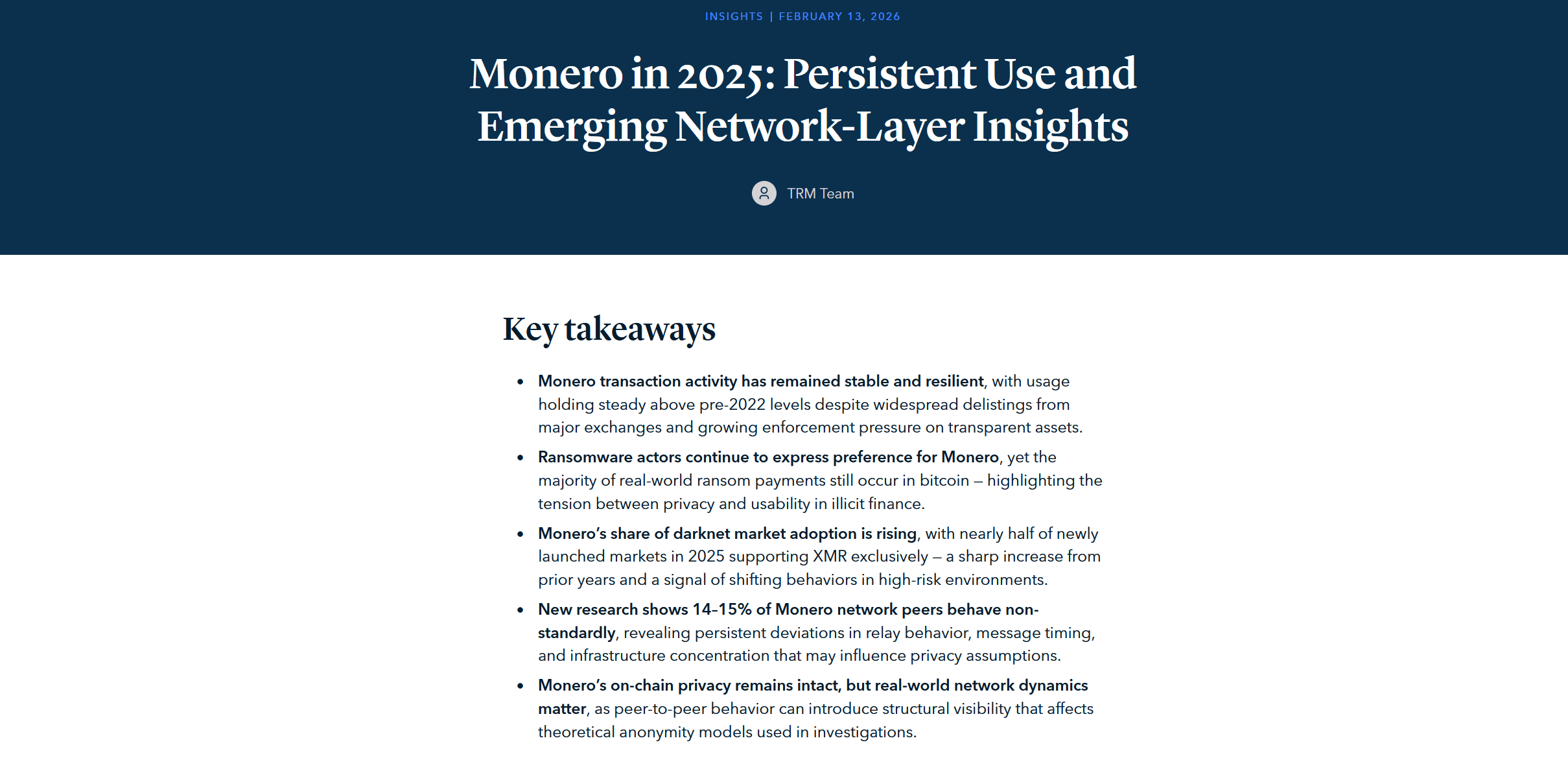
Blockchain analytics firm TRM Labs has published a new report looking at Monero’s activity and network behavior in 2025. The report claims Monero usage has remained steady despite widespread exchange delistings, with transaction levels staying above pre 2022 levels and nearly half of newly launched darknet markets in 2025 supporting XMR only. It also discusses research suggesting around 14 to 15 percent of nodes on the Monero peer to peer network behave in non standard ways, which researchers say could influence how transactions propagate across the network, though the report notes Monero’s on chain cryptography itself remains intact.
Events and Meetings
An upcoming Monero meetup will take place in Prague on March 27. The two hour event will introduce attendees to how Monero works in practice for private payments and cross border transfers, while discussing its role in preserving financial privacy in an increasingly monitored financial system. Tickets and event details are available here.

Monerun aka MoneroRun 2026 is set to take place on April 18, as the community once again organizes its annual grassroots proof of reserves event. Participants are encouraged to withdraw their XMR from centralized exchanges and hold it in their own wallets for the day, both as a reminder of the “not your keys, not your coins” principle and as an informal audit of exchange solvency. The yearly tradition also doubles as a celebration of Monero’s birthday and a show of support for self custody across the ecosystem. More information can be found here.

MoneroKon 2026 is officially on, with OrangeFren stepping in to organize this year’s event after earlier plans fell through. MoneroKon is the annual meeting of privacy advocates, cypherpunks, researchers, and developers focused on sharing scientific and technical work on Monero, privacy enhancing technologies, and distributed systems. MoneroKon will run June 5 to 7 in Warsaw, alongside the Bitcoin Film Fest next door. The call for presentations, panels, workshops, and artworks is now open, with submissions due by April 24, 2026. Tickets and more information can be found on the MoneroKon website.

Exchanges and Merchants
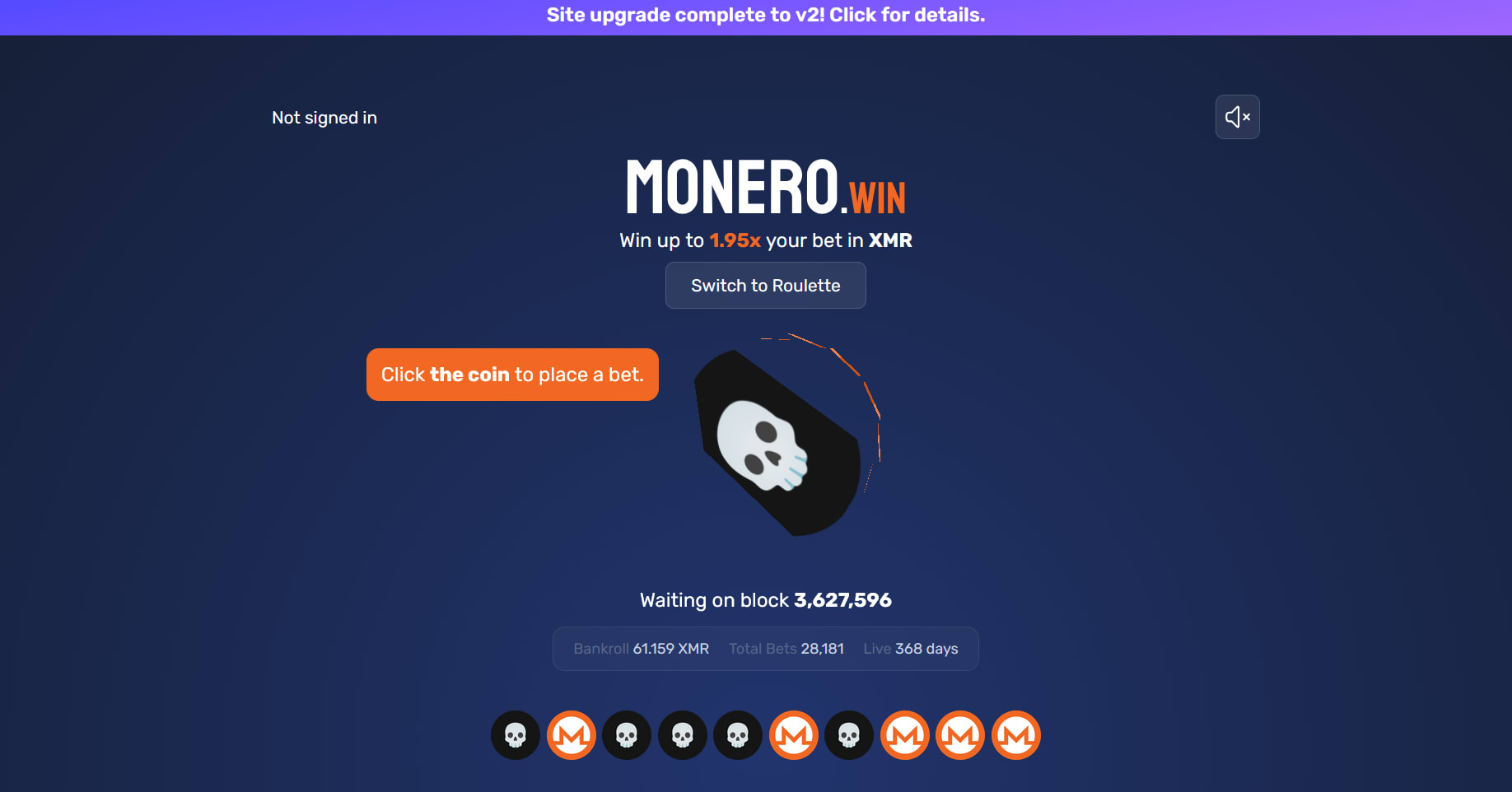
The privacy focused casino monero.win has launched version 2 of its platform, adding faster same block betting along with a new dice game. The site requires no accounts, KYC, or tracking, letting users place bets simply by sending XMR from a wallet address, while games such as coinflip, roulette, and dice use provably fair verification. The update also lowers roulette’s house edge to around 3.23 percent and introduces a public bet mempool showing live totals for each round, while the platform reports processing over 6,000 XMR across more than 27,000 bets during its first version.
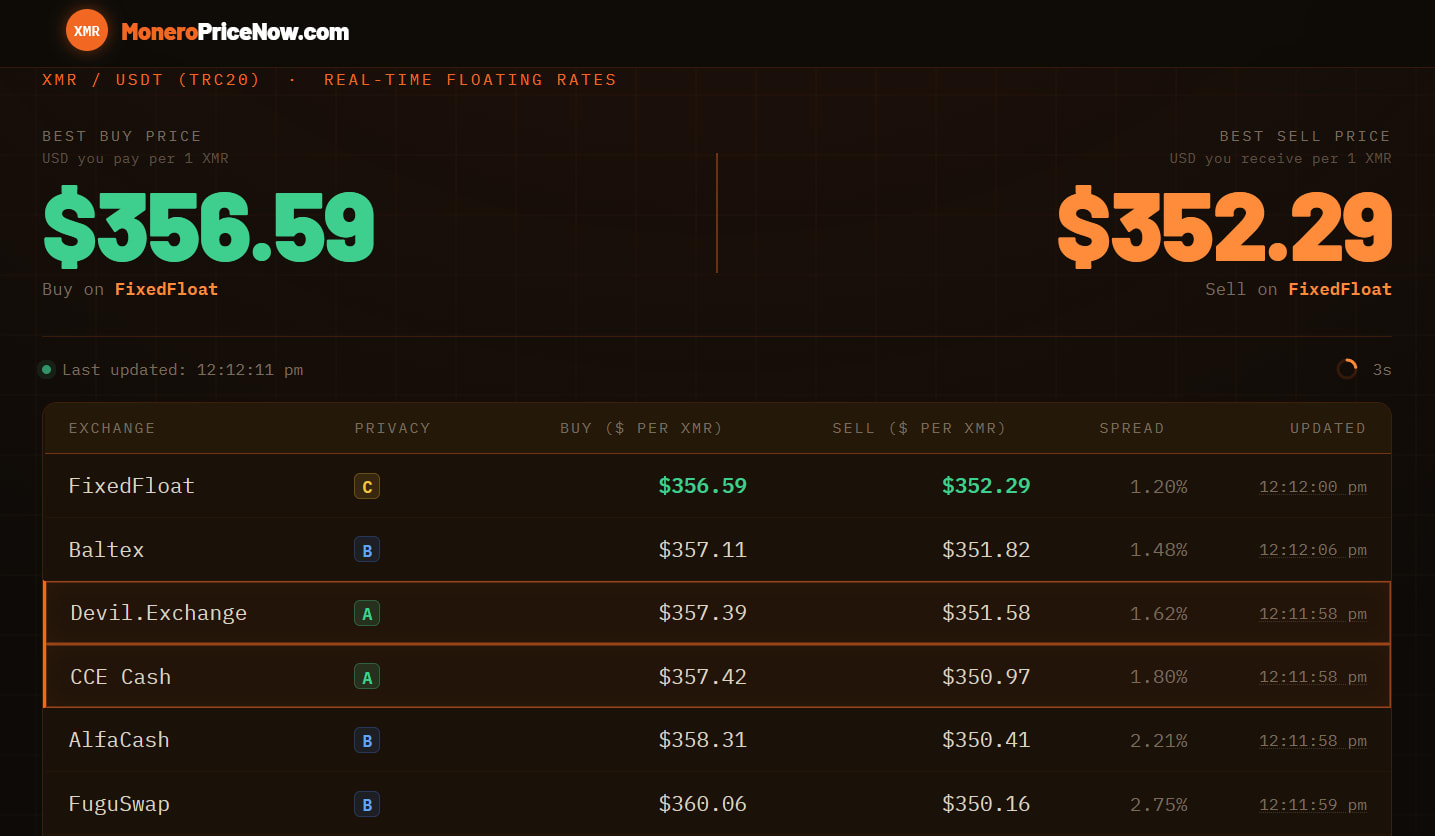
MoneroPriceNow.com is a new tool that shows the real time price of Monero across multiple instant swap services in one place. The site pulls live API data from several swap platforms and displays the current buy and sell rates, allowing users to quickly compare where they can get the best deal when swapping into or out of XMR. Instead of manually checking different swap sites, users can simply leave the page open and watch the live prices update as markets move.
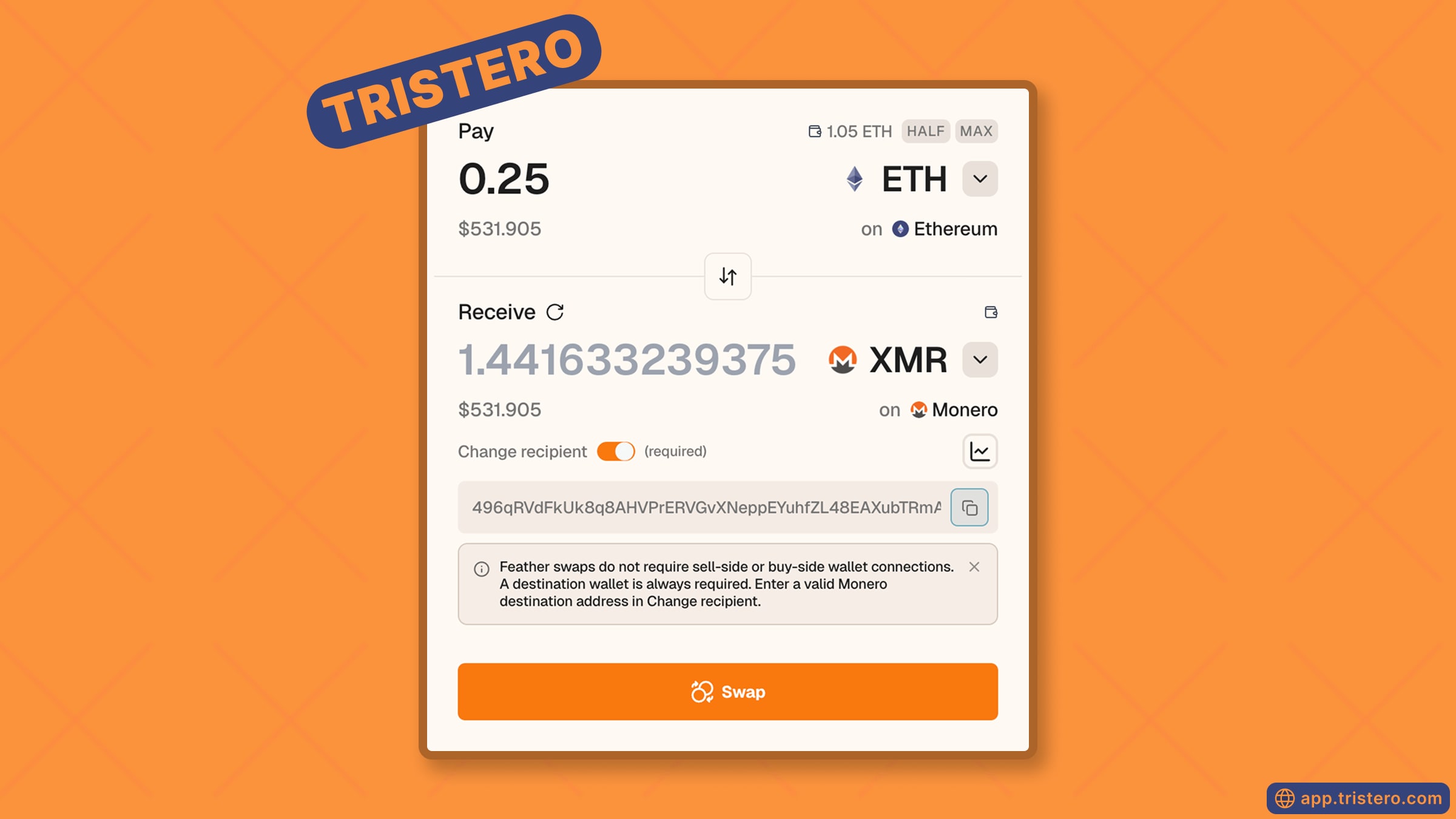
The crypto swap service Tristero has added support for buying Monero using other cryptocurrencies such as BTC, ETH, and SOL. Users can select a quote, send the source asset to a deposit address, and receive XMR directly to their Monero wallet, with the team claiming competitive exchange rates compared to similar services. As with any new platform, community members advised caution and encouraged users to test the service carefully before using it with larger amounts.
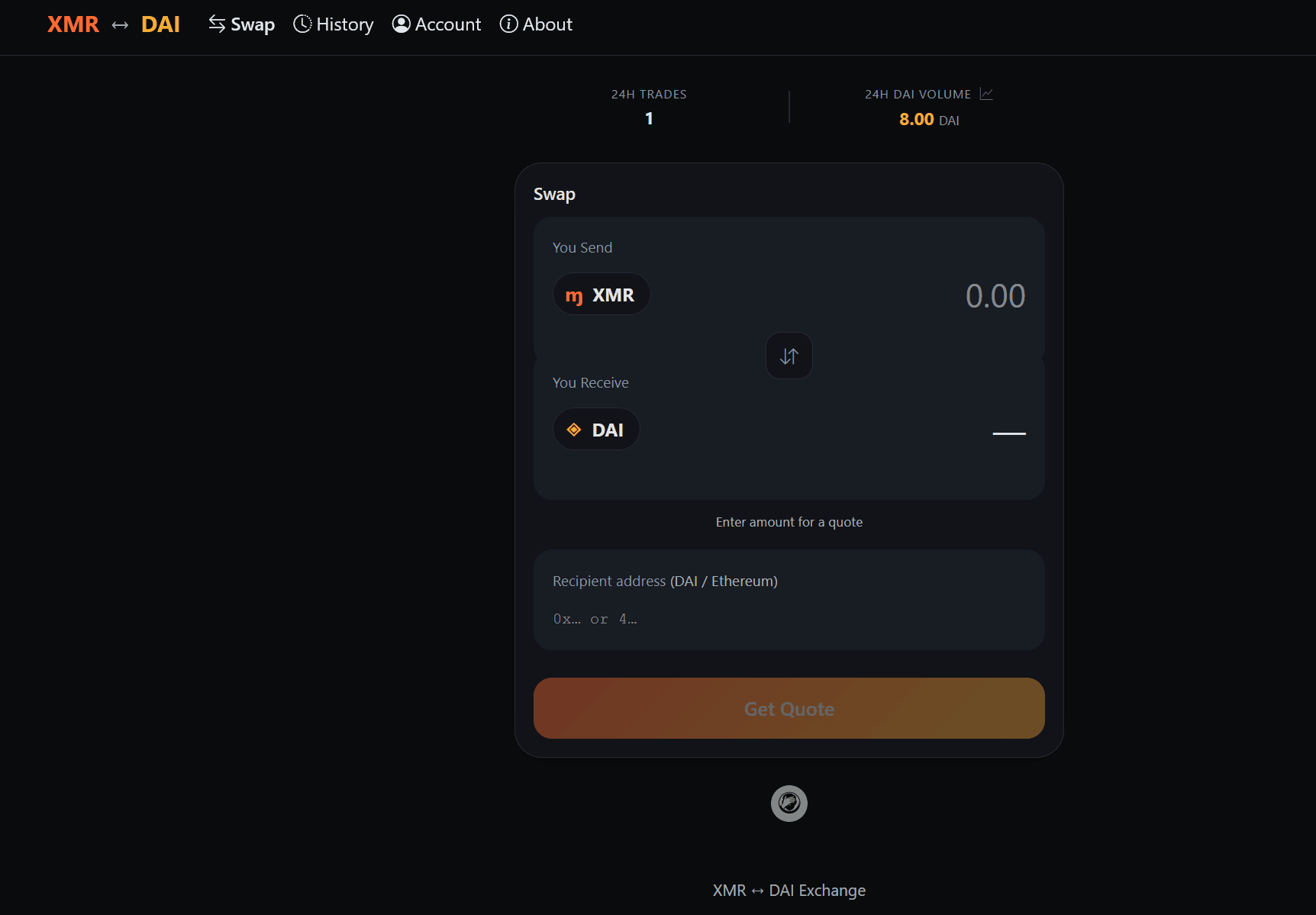
A developer on the Monero subreddit has launched VeiledSwap, a new XMR to DAI swap service currently in a two week public testing phase. The project aims to offer fast conversions between Monero and the stablecoin DAI, with swaps reportedly completing in minutes and requiring only a simple username and password without email or KYC. The creator notes the service is centralized and still experimental, and community members have encouraged users to proceed cautiously while testing the platform.
ShopinBit has shared new payment statistics showing Monero accounting for 73% of all transaction volume on the platform. The result marks one of Monero’s strongest months on the site, approaching the platform’s previous record of 74.54 percent reached in June 2024.
Advertising network MellowAds has added support for Monero as a payment option. MellowAds is a long running crypto advertising platform used by websites to buy and sell banner ad traffic, commonly in crypto and privacy focused niches.
Community Crowdfunding
Several crowdfunding proposals are awaiting community feedback before they can start accepting funds through the Community Crowdfunding System (CCS). For now, they are just proposals, but if they receive some positive feedback from the community they will be moved to a “Funding Required” stage so that they can accept Monero donations through the CCS.
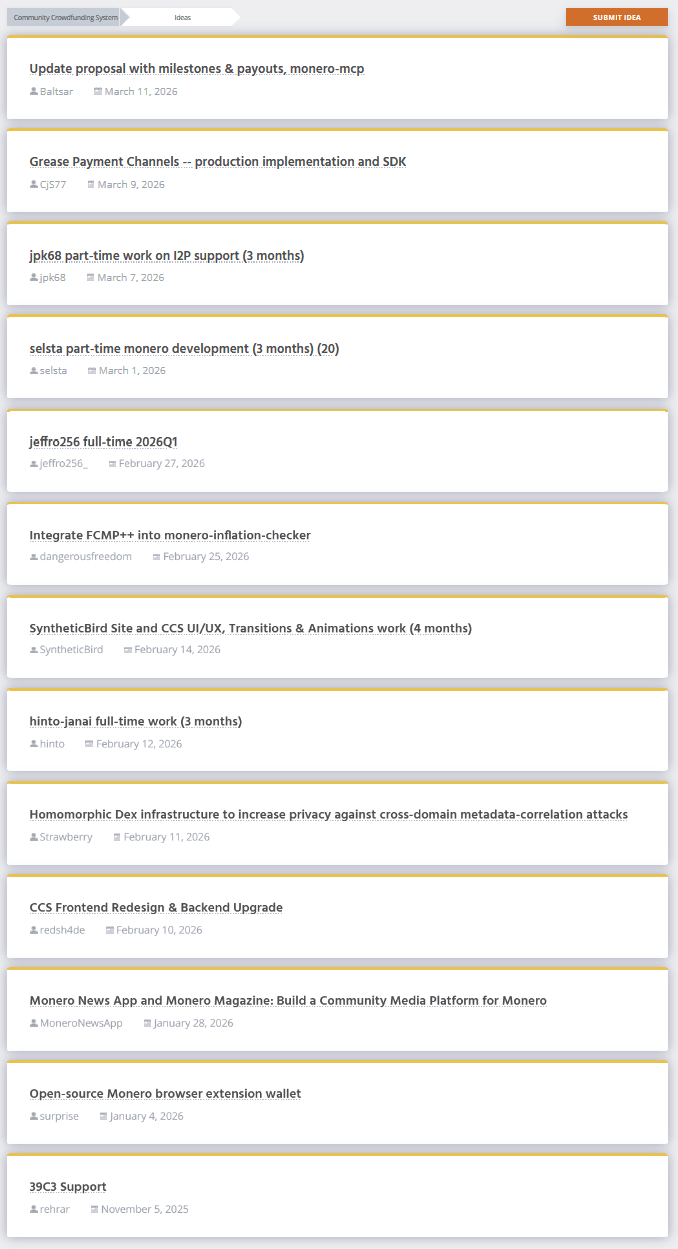
All approved proposals have been fully funded.
Trading and Speculation
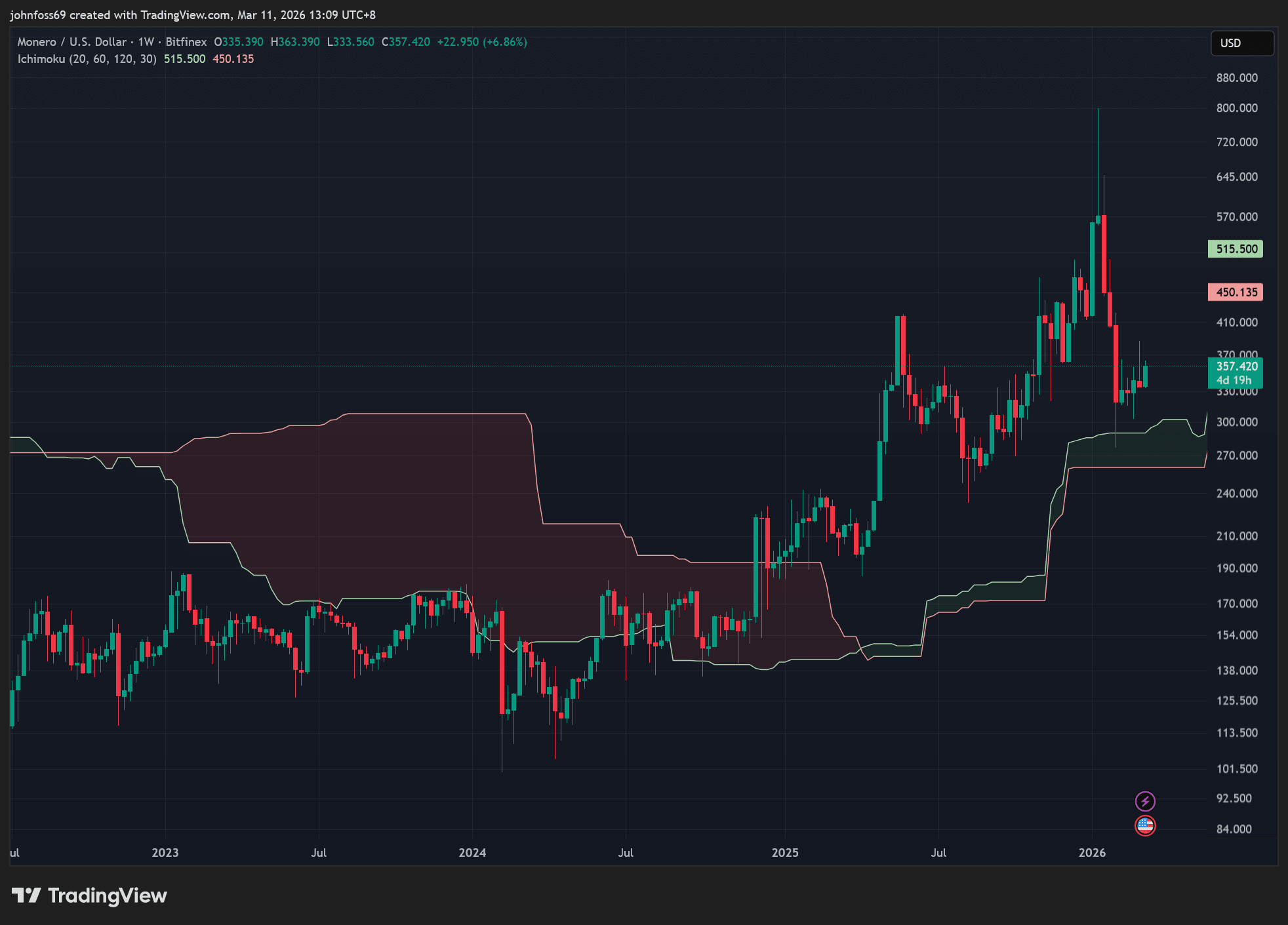
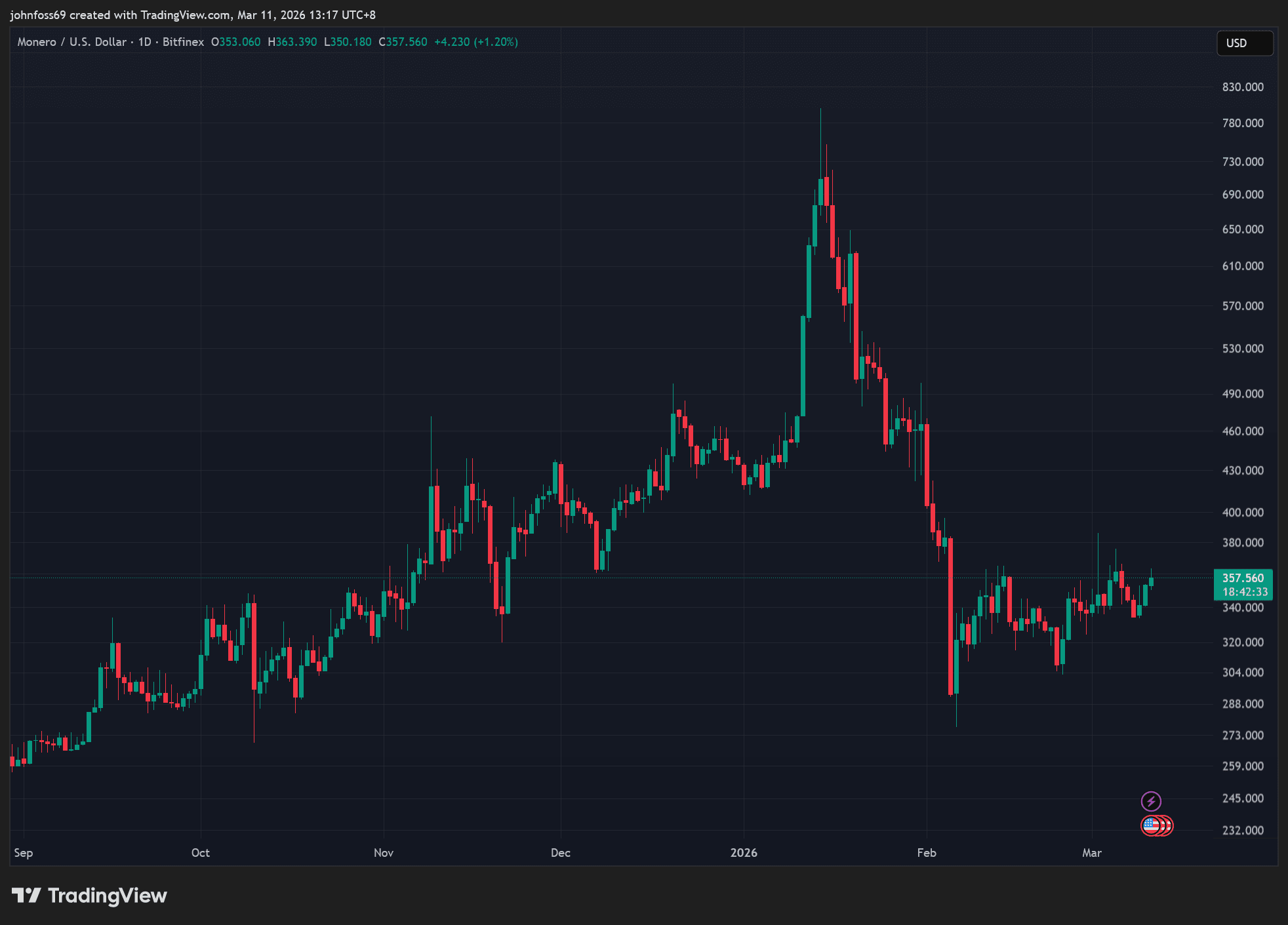
After Monero’s strong run at the end of last year, the initial sell off has been followed by several weeks of sideways price action while still holding above the weekly cloud. This type of consolidation above support is generally constructive, allowing the market to cool off and build a base before potentially making the next move higher.
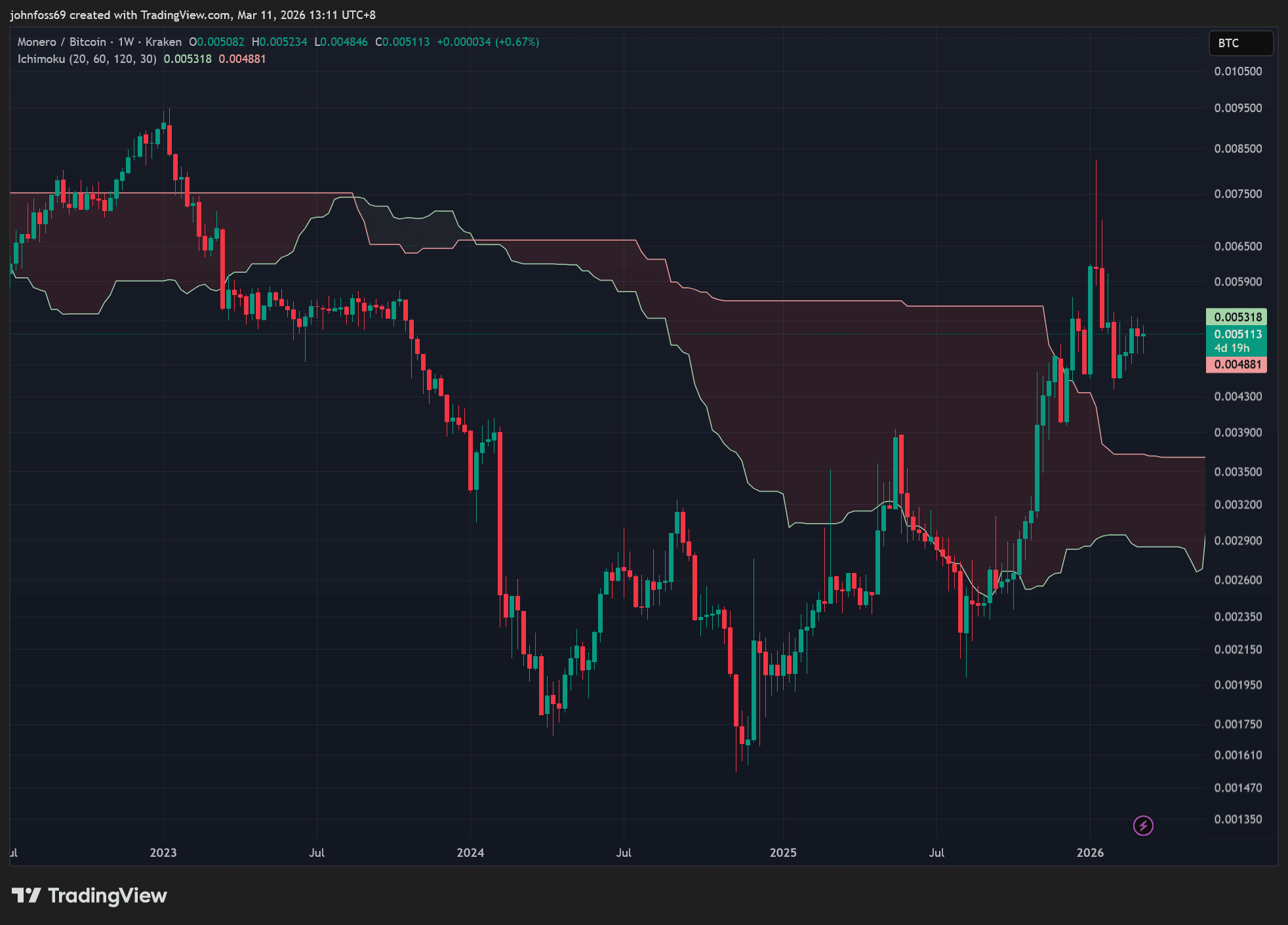
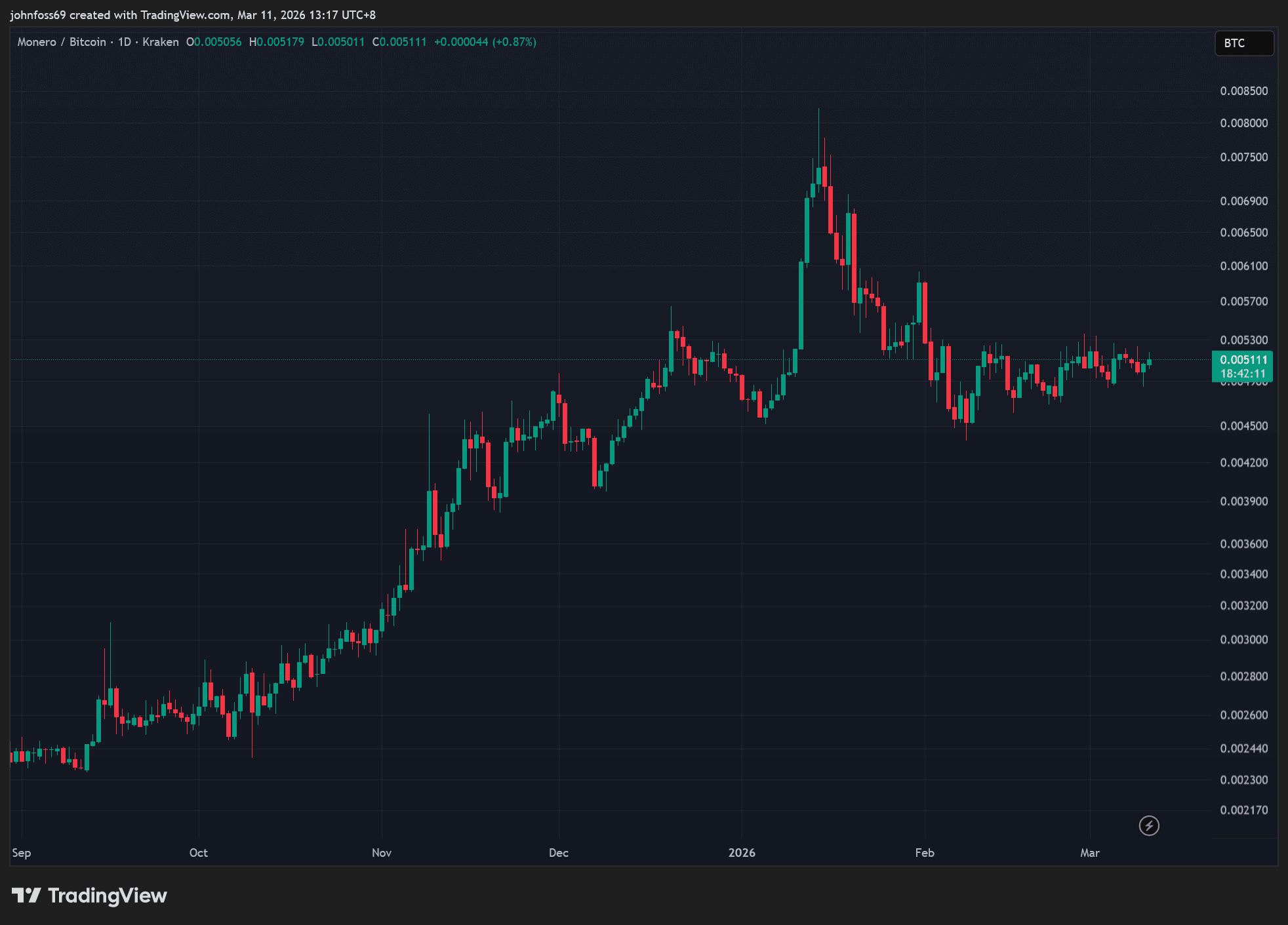
On the weekly XMR/BTC chart, Monero is still above the Ichimoku cloud after a long downtrend and is now consolidating just above it, suggesting a potential trend shift with the cloud acting as support if the sideways structure holds.
Network Metrics
Total Monero in Circulation : 18,723,738 XMR
Monero Total Marketcap: $6,674,123,770
Coinmarketcap Ranking: #14
XMR ‘street price’ from RetoSwap: $333 (-6%)
XMR/USD Price: $357
XMR/BTC Price: 0.005111 BTC
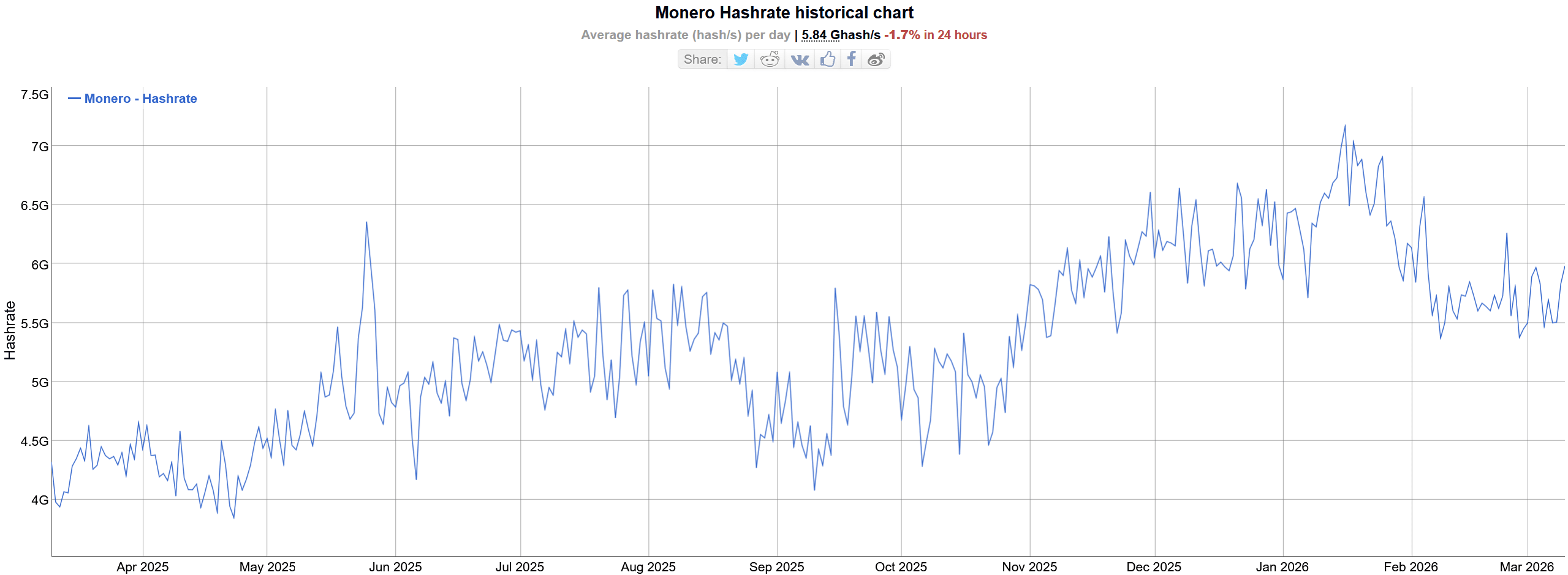
Monero Network Hashrate: 5.84 Ghash/s
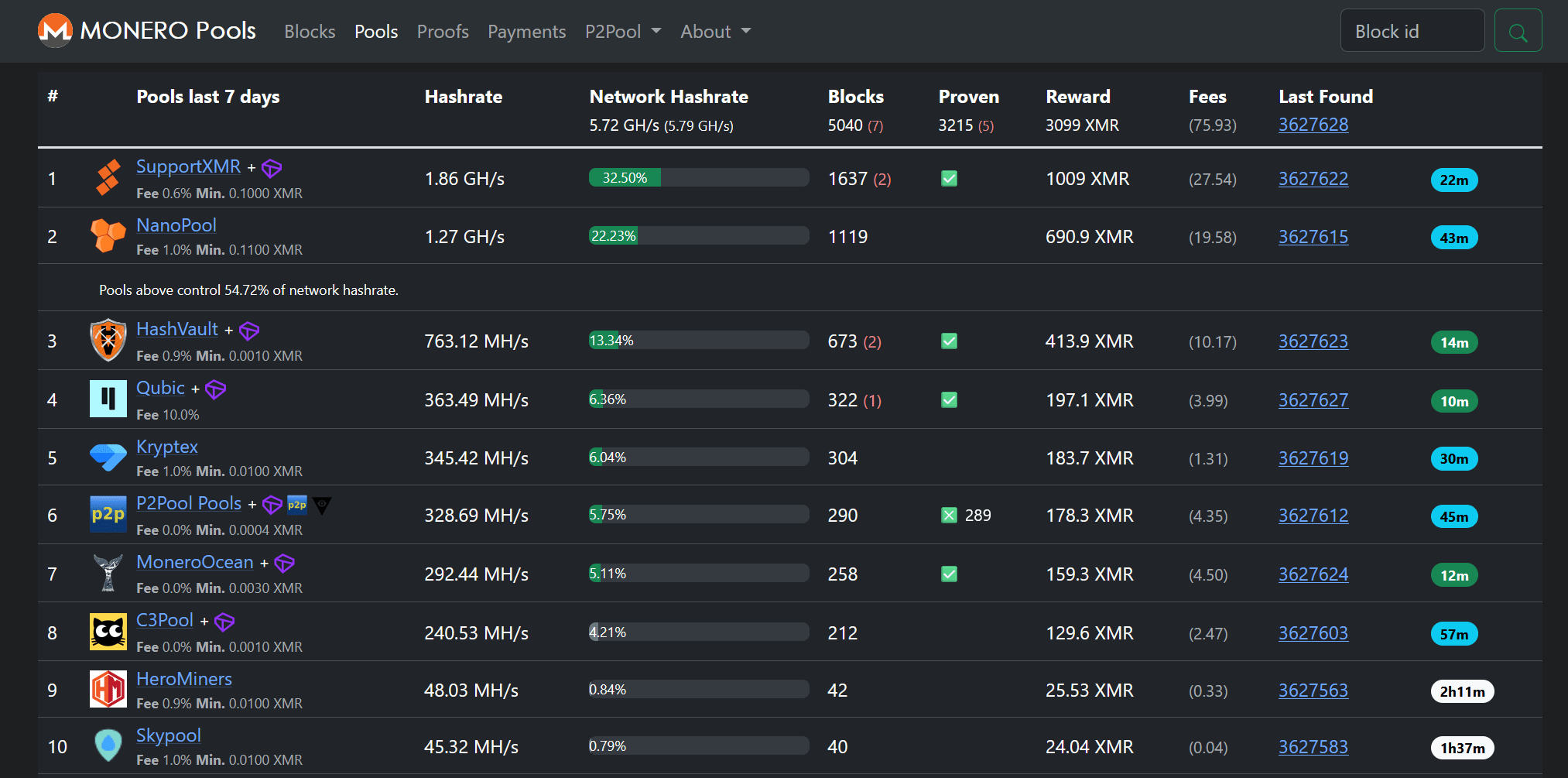
Monero Mining Pools Hashrate Distribution:
Entertainment


If you enjoy the newsletter and want more of this content, shout me a beer by donating some spare Monero you didn’t lose during your boating accident. I’m completely independent and rely solely on donations, with no sponsorship. A massive thank you to everyone who supports my work!
8C2xtdsCmJGhUgvMWYLayRR1wFgrjtQ2wNvzgFfrAfbjW7gatQDiNjUfFX7K5cm9UVefrVPFmxiM4jhhybsLQGpG1aeRzfD

Have we missed something?
If we’ve missed something important, let us know! As this is our first issue after a few months, we might have overlooked some news. Feel free to DM if there’s anything you’d like included in a future issue.
Support Monero
Want to contribute to the Monero Project? Developers, marketers, event coordinators, translators, Instagram personalities, meme creators, and public speakers — whatever your skills may be, it is extremely likely there is something you can do to assist. Reach out to the Monero community on Reddit, IRC/Matrix, GitHub, Twitter, or Telegram. The official Monero website is GetMonero.org.
Past Issues
Issue 88 / Issue 87 / Issue 86 / Issue 85 / Issue 84 / Issue 83 / Issue 82 / Issue 81 / Issue 80 / Issue 79 / Issue 78 / Issue 77 / Issue 76 / Issue 75 / Issue 74 / Issue 73 / Issue 72 / Issue 71 / Issue 70 / Issue 69 / Issue 68 Issue 67 Issue 66 / Issue 65 / Issue 64 / Issue 63 / Issue 62 / Issue 61 / Issue 60 / Issue 59 / Issue 58 / Issue 57 / Issue 56 / Issue 55 / Issue 54 / Issue 53 / Issue 52 / Issue 51 / Issue 50 / Issue 49 / Issue 48 / Issue 47 / Issue 46 / Issue 45 / Issue 44 / Issue 43 / Issue 42 / Issue 41 / Issue 40 / Issue 39 / Issue 38 / Issue 37 / Issue 36 / Issue 35 / Issue 34 / Issue 33 / Issue 32 / Issue 31 / Issue 30 / Issue 29 / Issue 28 / Issue 27 / Issue 26 / Issue 25 / Issue 24 / Issue 23 / Issue 22 / Issue 21 / Issue 20 / Issue 19 / Issue 18 / Issue 17 / Issue 16 / Issue 15 / Issue 14 / Issue 13 / Issue 12 / Issue 11 / Issue 10 / Issue 9 / Issue 8 / Issue 7 / Issue 6 / Issue 5 / Issue 4 / Issue 3 / Issue 2 / Issue 1
Socials
If you have suggestions, corrections, or feedback, please contact me on X @johnfoss69 or Reddit u/johnfoss68.
DISCLAIMER: This publication contains opinions for informational and entertainment purposes only and does not constitute investment advice. Information may contain errors and omissions; use it solely at your own risk. The author of this publication and/or the authors of articles linked to or from this site may have financial investments that could bias their opinions, including ownership of Monero currency. No website, service, or product mentioned in the newsletter constitutes an endorsement; use them at your own risk. Always do your own research, form your own opinions, and never take risks with money or trust third parties without verifying their credibility.


The Monero Moon
[crypto-donation-box type=”tabular” show-coin=”all”]