 Tyler Durden
Gamma Squeeze The World
Submitted by QTR’s Fringe Finance
A little over a week ago, I wrote about Leopold Aschenbrenner returning to markets, and the ensuing nausea the entire spectacle caused me.
For those who missed it, Aschenbrenner’s Situational Awareness fund had grown to roughly $45 billion before getting absolutely smoked in July, falling toward $10 billion and forcing the liquidation of most of its public equity portfolio to Darth Griffin over at Citadel. Then, barely six weeks later, CNBC reported that Situational Awareness was back, this time buying options tied to AMD, Bloom Energy, CoreWeave, SK Hynix, SanDisk and the Roundhill Memory ETF.
The media slobbered over these options buys like it wasn’t the exact same thing a million 19 year olds do on their Robinhood app and post to r/WallStreetBets every day.
In my piece, I noted that maybe Aschenbrenner really is brilliant about AI, but understanding scaling laws and compute doesn’t automatically make somebody a great portfolio manager. His previous strategy looked to me like nothing more than an enormously concentrated, leveraged bet on the hottest momentum trade on Earth, one that generated spectacular returns right up until it imploded into itself like a dying star.
Today let’s add another piece to the puzzle. For years I’ve argued that the modern stock market increasingly resembles a gigantic mechanical contraption driven primarily by passive flows, options positioning, dealer hedging and gamma. The marginal price of a stock isn’t necessarily being set by some guy with a green visor carefully discounting the next 20 years of cash flows.
Increasingly, instead, it can be set by flows interacting with flows interacting with algorithms, while CNBC brings on an analyst afterward to explain why it was actually because Jensen Huang signed some nubile Taiwanese woman’s tit at a tech conference in Asia that week.

And ever since GameStop, I’ve wondered, and I want to emphasize that this is my speculation, not something I can prove, how often enormous options purchases are being used to manufacture or accelerate momentum underneath the surface of the market. I’ve asked this question specifically related to the NASDAQ and Tesla multiple times, dating back to the early 2020s.
Archegos’ Bill Hwang, for example, used highly leveraged derivatives to create massive synthetic exposure, whose buying pressure pushed stocks higher, increased his collateral and borrowing capacity, and funded even more derivative exposure, creating a self-reinforcing feedback loop. Until it all went to shit.
Buy enough calls and somebody has to sell them to you. Depending on how dealers are positioned, those dealers may hedge by buying the underlying stock. If the stock rises, the delta of the calls can rise with it, requiring additional hedging. Momentum strategies notice the move. Humans see a chart going vertical and pile in. Suddenly you have a feedback loop.
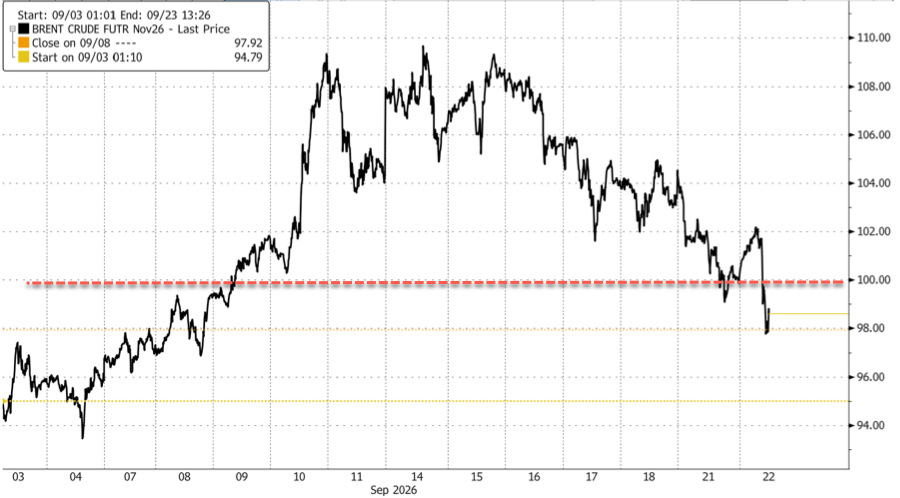
Which brings us to yesterday. Literally hours after the Federal Reserve raised rates 25 basis points to 3.75% to 4.00% on the largest debt bubble in history, its first hike in three years, the Nasdaq Composite exploded almost 3% higher.
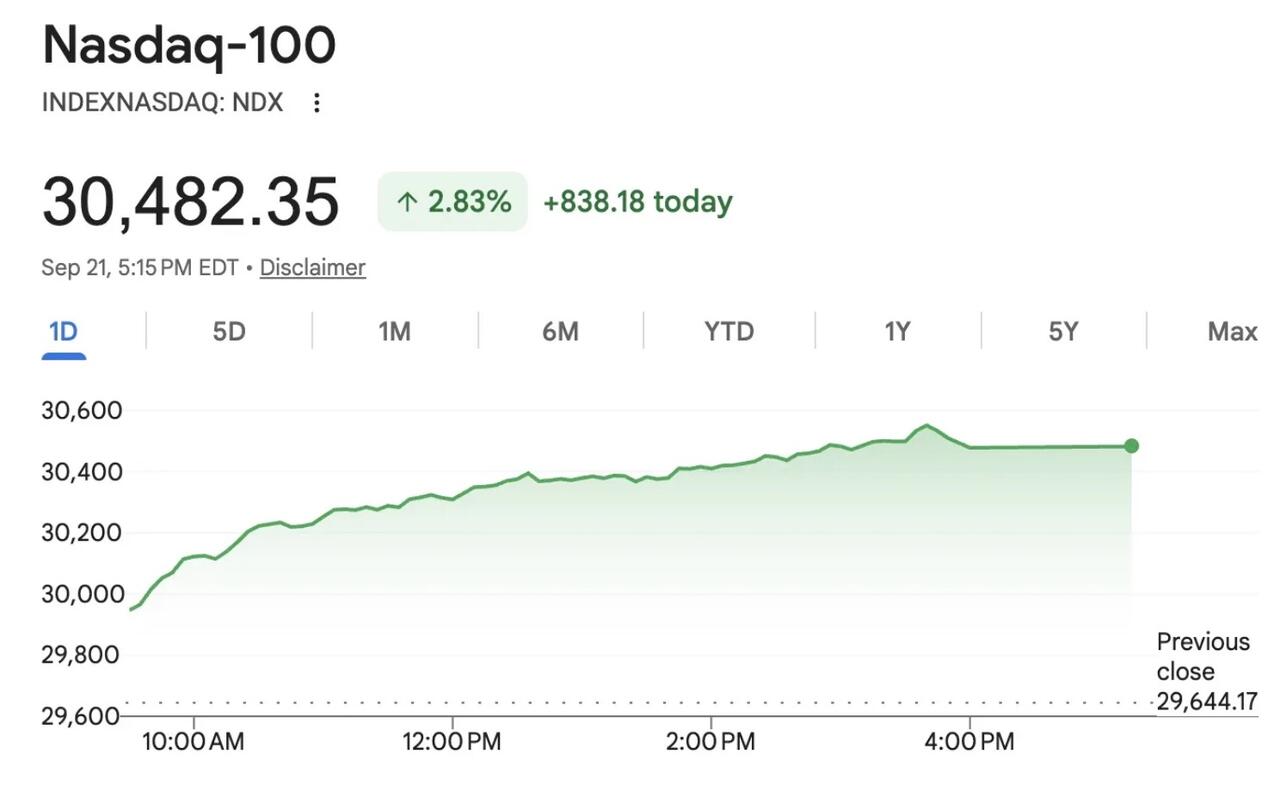
Sure. Why not? There were legitimate explanations offered for the rally. Treasury yields declined, oil fell and enthusiasm around AI came roaring back. Fine.
But the timing caught my attention because shortly before this move, Situational Awareness had reportedly returned to the options market buying exposure to precisely the kind of AI, semiconductor and memory names capable of lighting up the Nasdaq.
So it was easy to ask: is Leopold responsible for Monday’s rally? Was it nothing more than a gamma squeeze? I have absolutely no idea. And neither does anybody else without seeing the complete positioning and dealer books. But facts have started to leak out. For example, Zero Hedge noted it was META’s highest call volume on record yesterday:
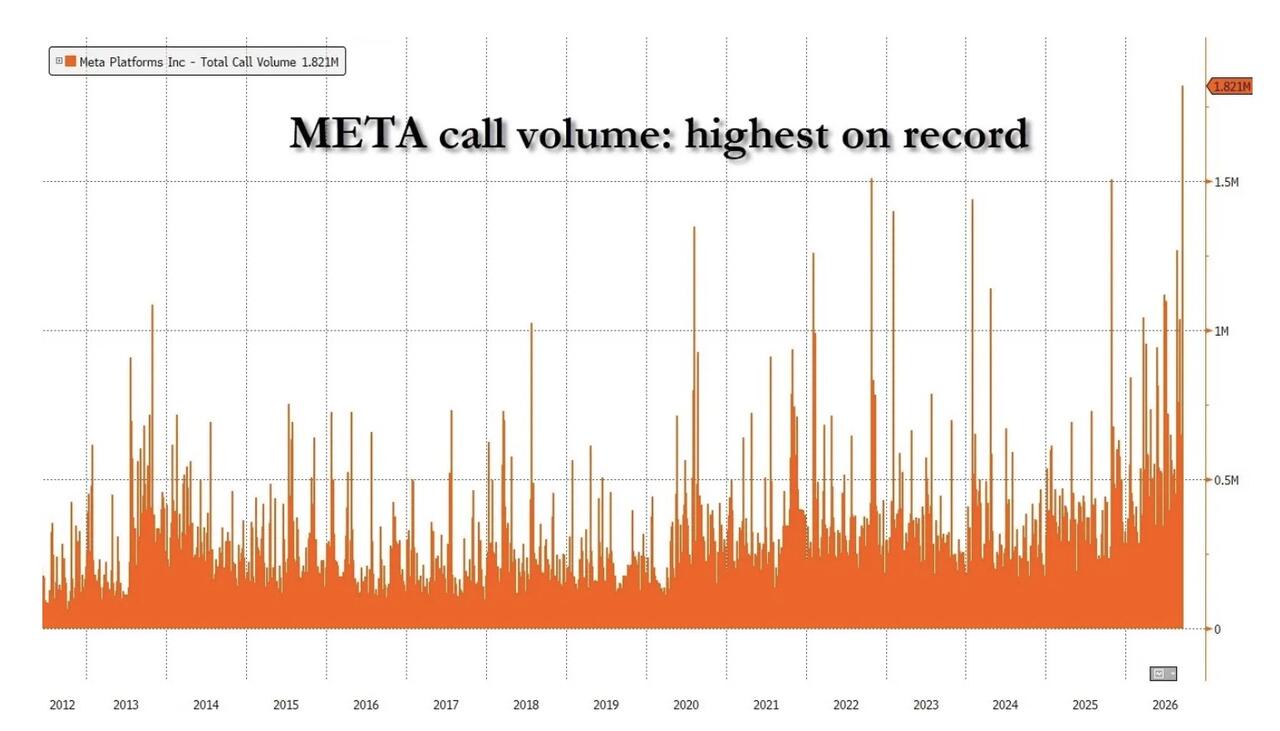
But the circumstantial setup is interesting enough that I’m paying attention. It also fits the same suspicion I’ve had about this market for years: what looks like fundamental price discovery may sometimes be something considerably more mechanical.
And one of the stranger things about Monday was volatility. Normally a violent equity rally is associated with falling implied volatility. When stocks and implied volatility rise together, however, it can indicate unusually strong demand for optionality, including upside calls, rather than the familiar slow risk on grind.
That doesn’t prove a gamma squeeze and it doesn’t prove manipulation. But it makes me less inclined to look at a giant green Nasdaq candle and conclude that millions of investors independently woke up Monday morning, opened their discounted cash flow models and simultaneously discovered that stocks were worth 2.3% more.
I’ve said for years that I think the market is, in a colloquial sense, rigged. I don’t mean somebody is sitting in a smoke filled room deciding where the Nasdaq closes. I mean the structure of modern markets can create enormous self reinforcing moves that have very little to do with the fundamental value of the underlying businesses. (Read: What If The Automatic Stock Buying Stops?)
And reflexivity works both ways. The same machinery capable of turning call buying, dealer hedging and momentum into a face ripping rally can amplify the move when everybody heads for the other side of the boat.
🔥 85% OFF FOREVER IF YOU SUBSCRIBE TODAY: I am again offering an 85% discount to anyone that wants to become a Fringe Finance annual subscriber today. It’s a discount you can keep and stays applied for as long as you wish to remain a subscriber: Get 85% off forever
None of this changes my broader thesis. I still think the AI bubble is likely to crack within the next six to ten months. Monday doesn’t change that view one bit.
You can gamma squeeze stocks. You can buy calls. You can trigger systematic flows. You can squeeze shorts and chase indexes higher. What you cannot do indefinitely is repeal mathematics.
The risk free rate is around 4%. The Fed just raised rates. Capital has a real cost again. Inflation remains elevated. Those realities eventually matter to companies whose valuations depend on enormous amounts of capital spending and profits stretching years into the future.
I continue to think we’re eventually headed toward a powerful deflationary impulse as this cycle breaks. If I’m right, all of this options driven gamesmanship will eventually look like a sideshow.
Oh and one last thing. Watching Aschenbrenner’s enormous concentrated bets, spectacular rise, violent drawdown and rapid return to leveraged instruments gives me Bill Hwang vibes. To be crystal clear, I am not accusing Aschenbrenner of fraud, illegal manipulation or any of the conduct associated with Hwang. I’m talking strictly about the market dynamic: enormous concentration, leverage, extraordinary mark to market gains, sudden losses and the possibility that positioning itself becomes meaningful to the prices of the securities involved.
The analogy ends there.
My warning to subscribers remains the same: do not confuse the price blinking on your screen with some immutable statement about economic reality.
This isn’t the stock market of the 1980s or 1990s. We now have zero day options, enormous passive vehicles, algorithmic strategies, volatility products, dealer gamma hedging and trillions of dollars responding mechanically to price.
After more than a decade of zero rates, QE and monetary intervention, I increasingly think we’re staring at a financial mirage, a fiat driven, QE induced hallucination where price temporarily becomes its own justification.
Nothing feels particularly real anymore.
But that’s the funny thing about a mirage, it all looks perfectly real right up until you try to drink the water.
—
QTR’s Disclaimer: Please read my full legal disclaimer on my About page here.
Tyler Durden
Tue, 09/22/2026 – 11:40
ZeroHedge News
[crypto-donation-box type=”tabular” show-coin=”all”]