Tyler Durden
Trump Hails Mecca Defense Pact As ‘Big, Bold, Important First Step’
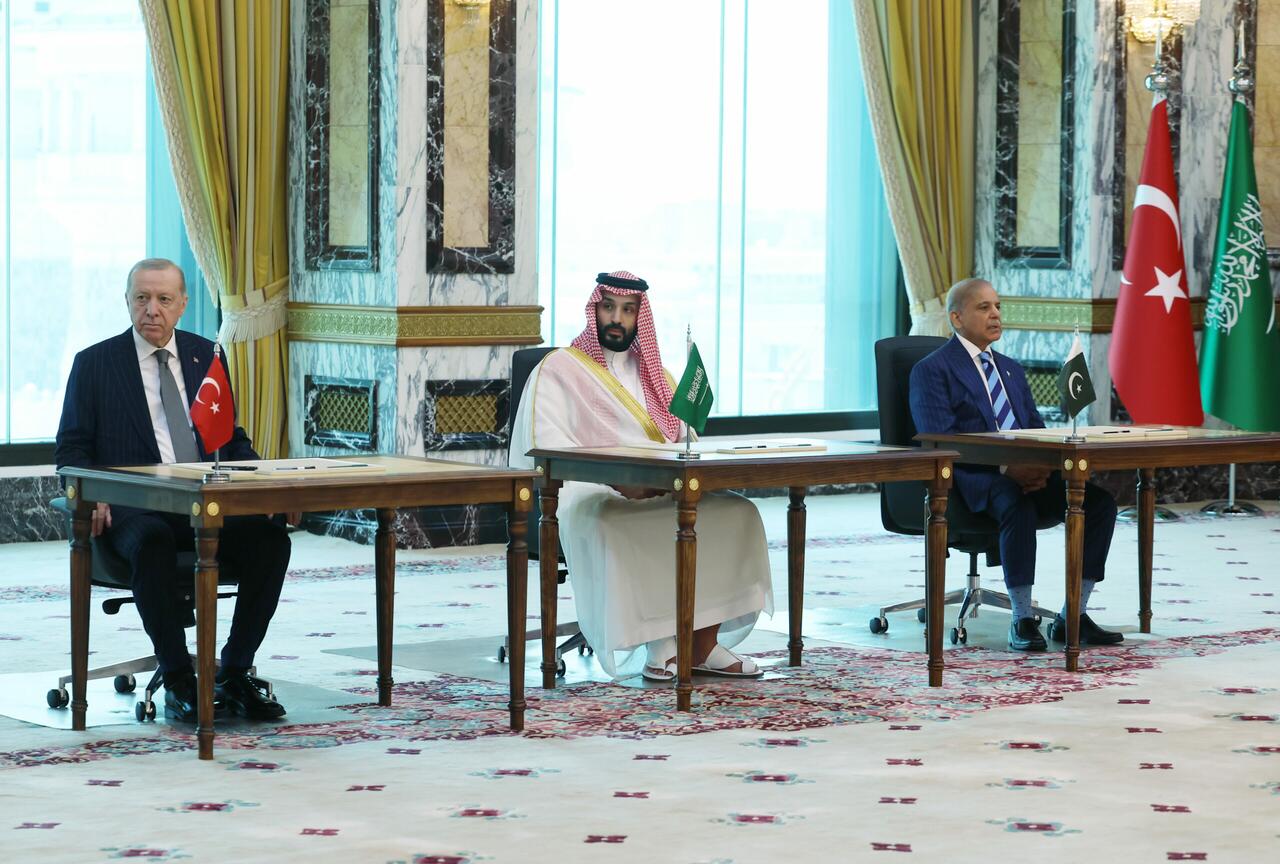
Since the signing of a defense pact earlier this month by Saudi Arabia, Turkey, and Pakistan – which is being touted as having NATO level protections akin to an Article 5 style ‘attack on one is an attack on all’ – there’s been much speculation on whether Washington would embrace or reject it.
After all, it seems to put greater distance between Saudi Arabia and Israel, and thus lessens the potential for Riyadh ever agreeing to join the US-backed Abraham accords, especially given that Turkey is an avowed enemy and regional rival of Israel. But the United States broke its silence on the pact this weekend, as President Trump on Sunday hailed it as a good and promising development.
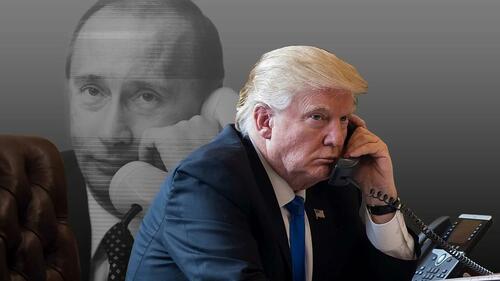
“Very happy to see that Saudi Arabia, Turkey, and Pakistan have recently, and finally, signed the Mecca Joint Defense Agreement,“ Trump wrote on Truth Social.
“It shows how the Middle East is coming together and how countries will finally be able to defend themselves in a more meaningful way,“ he added, further hailing the agreement a “BIG, BOLD, IMPORTANT FIRST STEP.”
Israeli media has meanwhile been pointing out that the pact is widely seen as a sign of waning US influence in the region, and that its members states see it fundamentally as a rejection of Israeli regional hegemony.
Pakistan’s foreign ministry has it was “intended to strengthen collective deterrence” – and affirmed that an attack one one member country would be seen as an attack on all, after Turkey already stated the same.
As for Trump’s backing, he has of course long lambasted allies for not spending enough on their own defense while over-relying on American military resources, so his messaging in support of the Mecca pact seems to spring from this theme.
One Saudi-based analyst has said that this does not necessarily signal a Washington retreat from the Mideast region, in the context of the ongoing Iran conflict and Hormuz crisis.
“I don’t think the US is stepping back as such, but perhaps the limits of its military presence and its impact, as well as the associated liabilities, have been exposed quite significantly, compelling all regional actors to speed up their attempts to diversify their security linkages,” said Umer Karim, an associate fellow at the Riyadh-based King Faisal Center for Islamic Research and Studies.
“The US will remain in the region, but perhaps in a manner where local partners increase their own contribution and align more closely to fill the gaps left by their near-total dependence on the US,” Karim added.
Another key aspect to the new pact is that it further formalizes Pakistan’s nuclear umbrella for Saudi Arabia, which lacks atomic weapons. Turkey does not have its own nukes either, but plays host to US nuclear weapons as part of NATO. Turkey maintains the second-largest military within the NATO alliance, behind the United States.
TRUMP: VERY HAPPY to see that Saudi Arabia, Turkey, and Pakistan have recently, and finally, signed the Mecca Joint Defence Agreement… Middle East coming together
‘WOW!’ pic.twitter.com/WJiTM6ZHKF
— RT (@RT_com) August 16, 2026
Pakistan and Saudi Arabia already have a bilateral defense pact, somewhat recently inked, which has lately seen Islamabad deploy 8,000 troops, a squadron of fighter jets, and an air defense system to Saudi Arabia.
The Saudi kingdom has lately been subject of sporadic ‘retaliatory’ attacks from Iran in the context of the war, and has earlier even responded by launching numerous unpublicized strikes on Iran.
Tyler Durden
Mon, 08/17/2026 – 11:40
ZeroHedge News
[crypto-donation-box type=”tabular” show-coin=”all”]