
The Pentagon’s watchdog has identified serious concerns over corrosion, mold, and the structural decline of “critical infrastructure” at Air Force bases and other military installations in the Pacific, according to a recent report.
The Department of Defense Inspector General was working on a project evaluating bases under U.S. Pacific Command for how shielding against electromagnetic pulses when it came across deeper infrastructure concerns, according to the Aug. 6 report.
Inspectors said the issues affected both “mission‑critical systems” and “other critical infrastructure … and housing infrastructure” that support troops to complete their missions. They were looking at 11 bases across the region, but most of the report focused on installations in Japan—for the Air Force, that included Kadena Air Base and Yokota Air Base.
So far, the IG is characterizing the issues as “unresolved” until it receives documentation from the Pentagon, U.S. Pacific Command, and U.S. Forces Japan that they identified the “root causes” for the deficiencies and identified the funding to correct the problems, the report states.
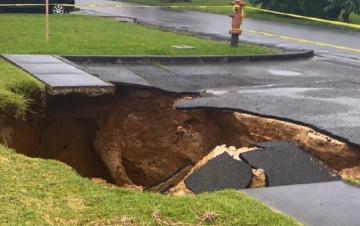
Some of the issues identified in the report are redacted, as are many responses from the various military services, commands, and organizations that run these installations. But the public report does detail signs of decay and poor maintenance such as “visible corrosion, visible mold, … visible cracks on the building exterior and interior, visible concrete spalling, and exposed rebar,” lead‑based paint, and asbestos in infrastructure used for operational and communications as well as maintenance and storage.
There were also problems with the water infrastructure at both air bases, including “reduced water capacity, increased waterline breaks and water disruption and pipeline infrastructure beyond service life,” the report states
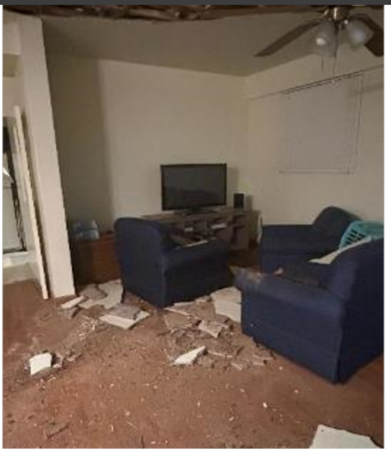
Military housing is also in ill-repair at Kadena. A ceiling collapse affected 139 homes in one development, and hundreds of homes showed signs of mold growth and concrete spalling, the report states, adding that maintenance issues have forced dozens of residents to relocate.
In 2024, Dr. Ravi Chaudhary, the assistant secretary of the Air Force for energy, installations, and environment at the time, launched an Installation Infrastructure Action Plan aimed at reversing years of disrepair across Air Force and Space Force bases.
At the time, the action plan stated that “70 percent of utility systems at Pacific Air Forces locations are severely degraded due to the highly corrosive environment.”
Defense Department officials stationed at the 1970s-era bases the IG visited in Japan reiterated that point, saying their locations are “subject to recurring environmental conditions such as typhoons, earthquakes, and tsunamis that further degrade the infrastructure,” according to the report. DOD officials added that “in some cases, falling debris—ranging from small fragments to large slabs—poses an ongoing risk to personnel safety.”
Personnel shortages and the cost of repairs and upkeep are also issues, the officials said.
The IG recommended that the responsible commanders submit a “prioritized list of infrastructure repair or replacement projects based on risk to critical missions.”
Lt. Gen. Laura Lenderman, deputy commander of Pacific Air Forces, submitted a response, but it was redacted in the public version of the report. A PACAF spokesperson could not provide a comment by press time.
The IG’s response to Lenderman’s comments does say that she “provided examples of prioritized projects related to infrastructure,” but the watchdog says its recommendation will remain open until “we receive documentation verifying Pacific Air Forces’ internal prioritization of ongoing efforts” list of the installations in the region.
According to Master Sgt. Kristopher Dunn, superintendent for wing plans at the 374th Civil Engineering Squadron at Yokota Air Base, “with more money and people we could get after the issues,” according to the report.
A second recommendation in the report called on the Air Force and other services to work with the Pentagon, PACOM, and U.S Forces Japan to “conduct a root cause analysis including identifying funding sources and correct infrastructure deficiencies identified” in the report.
In response, Mark Sinder, deputy assistant secretary for the Defense Department’s office of infrastructure, modernization and resilience, said the Air Force and other services will “take the lead” to address all infrastructure deficiencies and “develop and execute a comprehensive plan to program, budget for, and execute the necessary repairs and replacements” and establish a detailed timeline for correcting all deficiencies listed in the report.
Pacific Command also agreed with the IG’s recommendation, stating it will “support U.S. military services in correcting the issues identified in this report, to include the service’s efforts to develop and implement a corrective action plan based on the provided recommendations,” according to the report.
But Sinder’s and PACOM’s responses did not satisfy the IG. After discussions with the Pentagon’s office of energy, installations, and environment, “we redirected the recommendation to the military services” to work in coordination with Pacific Command and U.S. Forces Japan, the report states.
“Therefore, we consider Recommendation 2 unresolved,” the IG states in the report. “We request that within 30 days the appropriate office provide official management comments on the final report.”
The post Watchdog Presses DOD to Fix Decaying Infrastructure at Pacific Air Bases appeared first on Air & Space Forces Magazine.
Personnel, Air Base resiliency, Defense Department Inspector General, infrastructure, Inspector General, Kadena Air Base, Yokota Air Base
Air & Space Forces Magazine
[crypto-donation-box type=”tabular” show-coin=”all”]