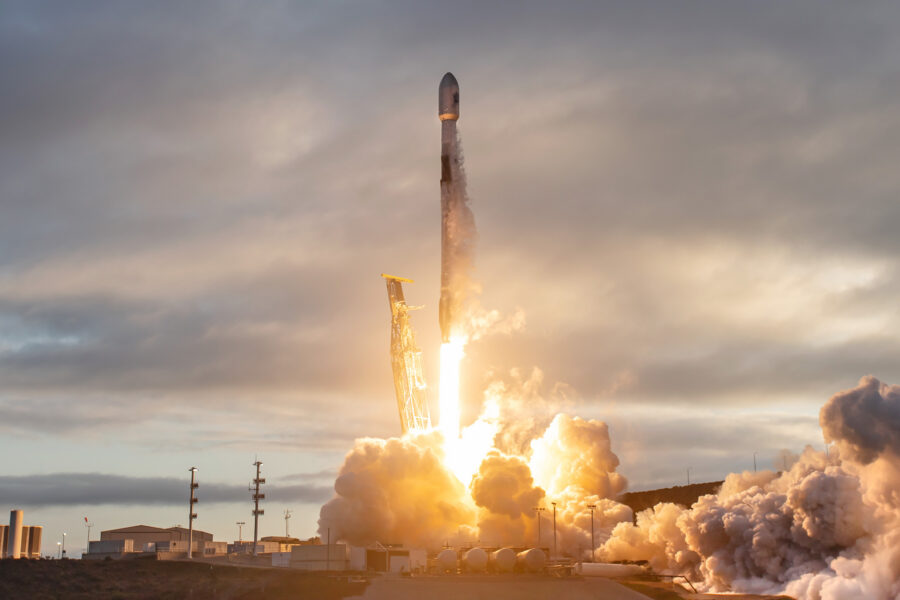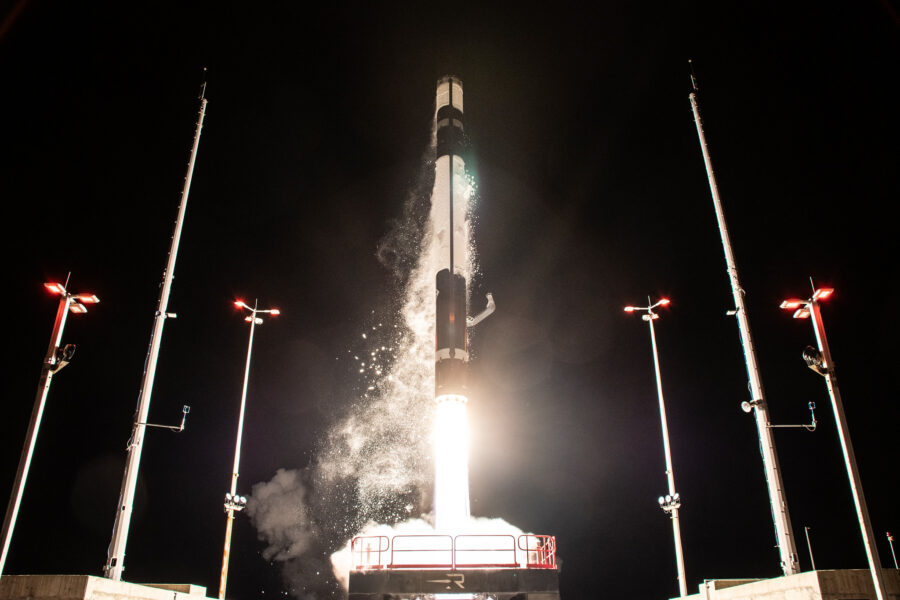
The Space Force awarded Rocket Lab a $266 million contract to launch 12 suborbital missions over the next three years—most of them from a new launch pad in Alaska.
The contract, which runs through 2028, is the space company’s largest ever launch deal and includes options for six more missions.
“The size and scale of this contract reflects the Space Force’s confidence in our ability to meet their urgent national security demands with speed, responsiveness, and scale, and we’re proud to provide the high-frequency launch capacity required to keep the U.S. ahead of global threats,” Rocket Lab CEO Peter Beck said in a July 27 statement.
The company currently launches many of its rockets from the Mid-Atlantic Regional Spaceport in Virginia as well as its own private complex in Mahia, New Zealand, but most of these 12 missions will lift off from a new Rocket Lab site at Kodiak, Alaska’s Pacific Spaceport Complex. The company confirmed it is establishing a presence at the spaceport but did not provide further detail on when that facility will be ready to support launch missions. Launching from Alaska gives Rocket Lab and its customer base access to unique high-inclination, polar and sun synchronous orbits.
“Adding Alaska to our global network of launch locations gives us a critical vantage point for tests across the Atlantic and Pacific and it opens up more trajectories under operational conditions that can’t be replicated anywhere else,” a Rocket Lab spokesperson told Air & Space Forces Magazine. “Establishing our fourth location in Alaska is about expanding to a new location where we can keep serving key missions.”
As Rocket Lab ramps up its Alaska operations, its infrastructure and systems will be modeled off of its other launch locations, the spokesperson noted.
“They’re based off an operational framework that we’ve proven across our other locations so we can take that and establish it in other places, including allied nations looking for sovereign launch capability,” they said.
The announcement comes as the Space Force is exploring options to ease strain on its busiest launch ranges at Cape Canaveral Space Force Station, Fla., and Vandenberg Space Force Base, Calif. Service officials have said commercial spaceports in Alaska, Virginia, and Texas provide an opportunity to offload smaller satellite launches while prioritizing medium- and heavy-lift missions at its military-run ranges.
The Rocket Lab spokesperson declined to discuss the missions in detail, but said they will support missile defense. That means they’ll likely be launched by the company’s HASTE platform, a variant of its workhorse Electron rocket that can support hypersonic testing. In the last few years, HASTE has emerged as a key high-speed testing platform for Defense Department and Missile Defense Agency systems.
The new launch contract is the latest in a string of awards this year. In March, the company received a $190 million order for 20 HASTE launches in support of the Pentagon Test Resource Management Center’s Multi-Service Advanced Capability Hypersonic Testbed 2.0 program. Then in May, defense firm Anduril Industries had selected HASTE for several test flights to validate hypersonic technologies.
The July 21 contract was awarded under the Space Force’s Rocket System Launch Program, which provides launch vehicle support to a range of DOD customers, including the military services, the Missile Defense Agency, the Defense Advanced Research Projects Agency, and the National Reconnaissance Office.
Along with its Electron and HASTE launchers, Rocket Lab is also developing a larger rocket, Neutron, which it plans to fly for the first time this year. While Electron is suited for launching smaller payloads and suborbital missions, Neutron is designed to compete in the medium- and heavy-class market, including the Space Force’s National Security Space Launch program.
The post Space Force Picks Rocket Lab for Suborbital Launches from Alaska appeared first on Air & Space Forces Magazine.
Space, Alaska, hypersonic testing, launch ranges, Pacific Spaceport Complex, Rocket Lab, Rocket Systems Launch Program, Space Force launch
Air & Space Forces Magazine
[crypto-donation-box type=”tabular” show-coin=”all”]