Tyler Durden
BMW Targets 8,000 Job Cuts With New Voluntary Severance Package
BMW shares in Germany are down 36% so far this year, as the automaker’s latest forecast downgrade was described by JPMorgan analyst Jose Asumendi as a “wake-up call for the auto industry.”
The outlook for BMW continues to deteriorate, with Bloomberg reporting that the automaker will begin a sweeping workforce restructuring in Germany this fall.
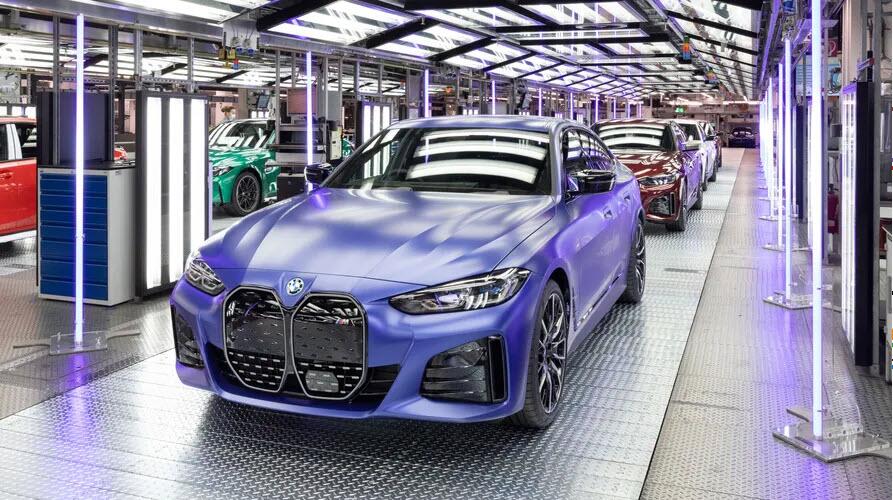
Voluntary departures in Germany are expected to account for most of the roughly 8,000 positions BMW plans to eliminate globally, equivalent to about 5% of its workforce. The restructuring is aimed at reducing costs and strengthening the automaker’s ability to compete with fast-growing Chinese rivals.
The report continued:
The offer will go out to staff in research, development, planning and other corporate functions, with factory floor workers not eligible, said the people, who asked not to be identified as the plans aren’t public. BMW also is looking to streamline its management ranks in the coming months as part of the broader cuts, they said.
The job reduction program will begin in October and run through 2027, with BMW anticipating a boost in profitability in 2028.
Shares in Frankfurt are marginally higher on the news after tumbling 36% so far this year, but they have stabilized over the last month around 60 euros per share.
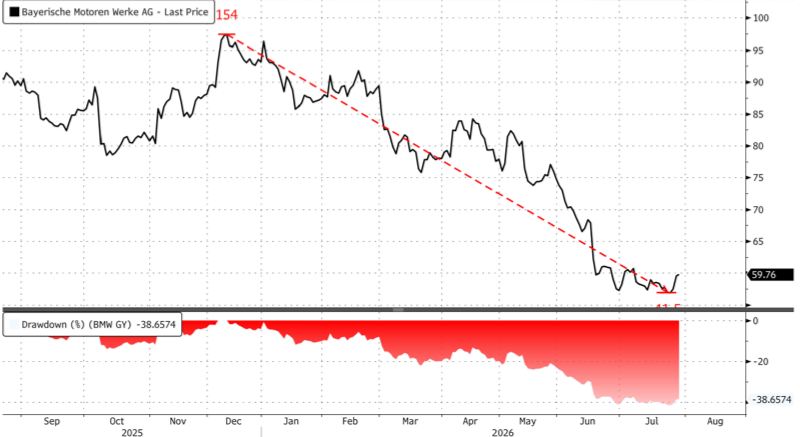
This comes after last month’s profit warning, in which a JPM analyst described the downgrade as a major “wake-up call for the auto industry” and warned that the German luxury automaker must address its compact-segment product strategy in China, where European premium automakers have been priced out of the market.
Asumendi called the downgrade a “radical earnings cut” but noted that BMW is generally executing well. He believes the automaker will likely take one-time charges to downsize its global production footprint, with a particular focus on Europe.
The restructuring comes as BMW contends with sliding sales in China and intensifying competition from EV manufacturers led by BYD, both in Europe and abroad. These pressures reflect a broader deterioration across Europe’s auto industry, where soft demand, elevated production costs, and mounting Chinese competition continue to squeeze profitability.
Tyler Durden
Wed, 07/29/2026 – 10:15
ZeroHedge News
[crypto-donation-box type=”tabular” show-coin=”all”]