The U.S. is reducing the number of forces it is prepared to commit to NATO in a crisis, U.S. European Command said in a June 3 announcement that has stirred debate at home and abroad.
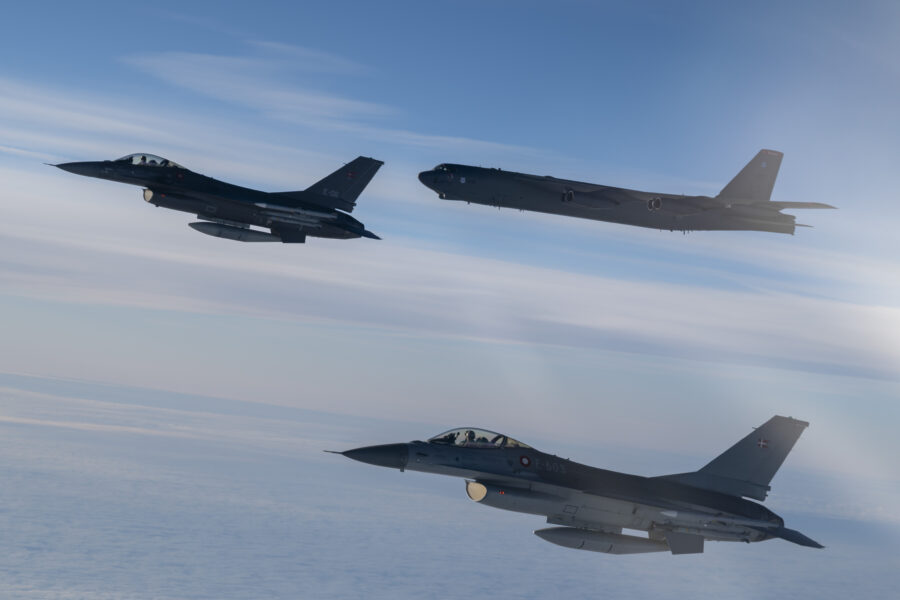
The changes, which were previewed to alliance members last month by a senior Pentagon official, appear to include a decrease in the number of combat aircraft, air-to-air refueling, and Navy vessels that would be sent to defend the alliance during a crisis or conflict under the so-called NATO Force Model.
“There has been an unhealthy co-dependence in the NATO Force Model on U.S. forces,” EUCOM commander Air Force Gen. Alexus G. Grynkewich said in a statement.
“President Trump, Secretary Hegseth, and others have been clear that this needs to change, and it will change,” Grynkewich added. “The potential reality of simultaneous conflict in multiple theaters demands it.”
The move comes on the heels of a Pentagon decision last month to cancel the deployment of an Army armored combat brigade to Poland and a decision last year to remove a brigade from Romania. Collectively, the steps have spurred unease among U.S. lawmakers and European nations that are struggling to fill the gap.
Grynkewich also serves as NATO’s top military officer as Supreme Allied Commander Europe, a role that will enable him to craft the alliance’s plans given the reduction of U.S. forces committed in Europe.
According to a news release issued by EUCOM, the changes to the U.S. force model will make NATO’s plans more realistic and prevent NATO from “over-relying” on U.S. forces, which the Defense Department says are required to “sustain deterrence in other regions and respond in the event of other global contingencies.”
But the reductions come as Russia has stepped up its missile and drone attacks on Ukraine and upped its threats on NATO states, while arms control is in abeyance.
After the U.S. announced it was cutting a brigade last month, the Republican heads of the Senate and House Armed Services Committees issued a joint statement expressing concern about how the reduction would affect the U.S. force posture in Europe.
“Prematurely reducing America’s forward presence in Europe before those capabilities are fully realized risks undermining deterrence and sending the wrong signal to Vladimir Putin,” Sen. Roger Wicker (R-Miss.) and Rep. Mike Rogers (R-Ala.) said in a May 2 statement.
A provision in the 2026 National Defense Authorization Act stipulates that the Pentagon may not reduce its posture in Europe below 76,000 troops. The U.S. is not expected to go below that floor this year, though American officials have signaled that further cuts should be expected. The draft House version of the 2027 NDAA also includes a provision requiring a report from Undersecretary of Defense for Policy and the Chairman of the Joint Chiefs of Staff that provides the analytical basis for force posture changes directed in Europe.
The Force Model reductions announced by EUCOM and previous brigade cuts in Europe are part of a broader shift by the Pentagon to reallocate more resources to the Pacific to deter China and to the Western hemisphere.
The adjustments have long been championed by Pentagon policy chief Elbridge Colby as part of the Trump administration’s vision for what it calls “NATO 3.0.” Neither the Pentagon nor EUCOM has explained what American cuts are being made and how fast it will take European nations, which have begun to boost their defense budgets, to fill the gap.
“Two areas where Canada and European Allies can step up now and in the near term—as the United States reduces forces sourced to the NATO Force Model in Europe and refocuses them elsewhere—are with manned and unmanned aircraft, and with naval vessels,” Grynkewich said.
Allies were informed of the Force Model changes in late May at NATO’s headquarters in Brussels by Alexander Velez-Green, a senior Pentagon policy official. Allied officials again discussed the matter during a meeting at the Mons, Belgium headquarters of Supreme Headquarters Allied Powers Europe, or SHAPE, which was chaired by Grynkewich’s NATO deputy RAF Air Chief Marshal Johnny Stringer, on June 2-3.
The alliance’s defense ministers are set to meet in Brussels later this month, before the yearly NATO summit of the alliance’s political leaders in Ankara in July, which President Donald Trump plans to attend.
“SHAPE continues to work with allies to offset the reduced American capabilities,” Grynkewich said.
The post US Reduces Forces Committed to NATO, Tells Allies to Step Up Air and Naval Power appeared first on Air & Space Forces Magazine.
National Security, Air Chief Marshal Johnny Stringer, Alexander Velez-Green, Donald Trump, Elbridge Colby, Gen. Alexus G. Grynkewich, NATO, North Atlantic Treaty Organization, Pete Hegseth, SHAPE, Supreme Allied Commander Europe, Surpreme Headquarters Allied Powers Europe
Air & Space Forces Magazine
[crypto-donation-box type=”tabular” show-coin=”all”]