The U.S. military struck Iran for the second time this week, carrying out attacks on an Iranian military facility on May 27, U.S. officials said. The skirmish occurred even as America and Iran continue to say they are seeking a negotiated deal to end the conflict.
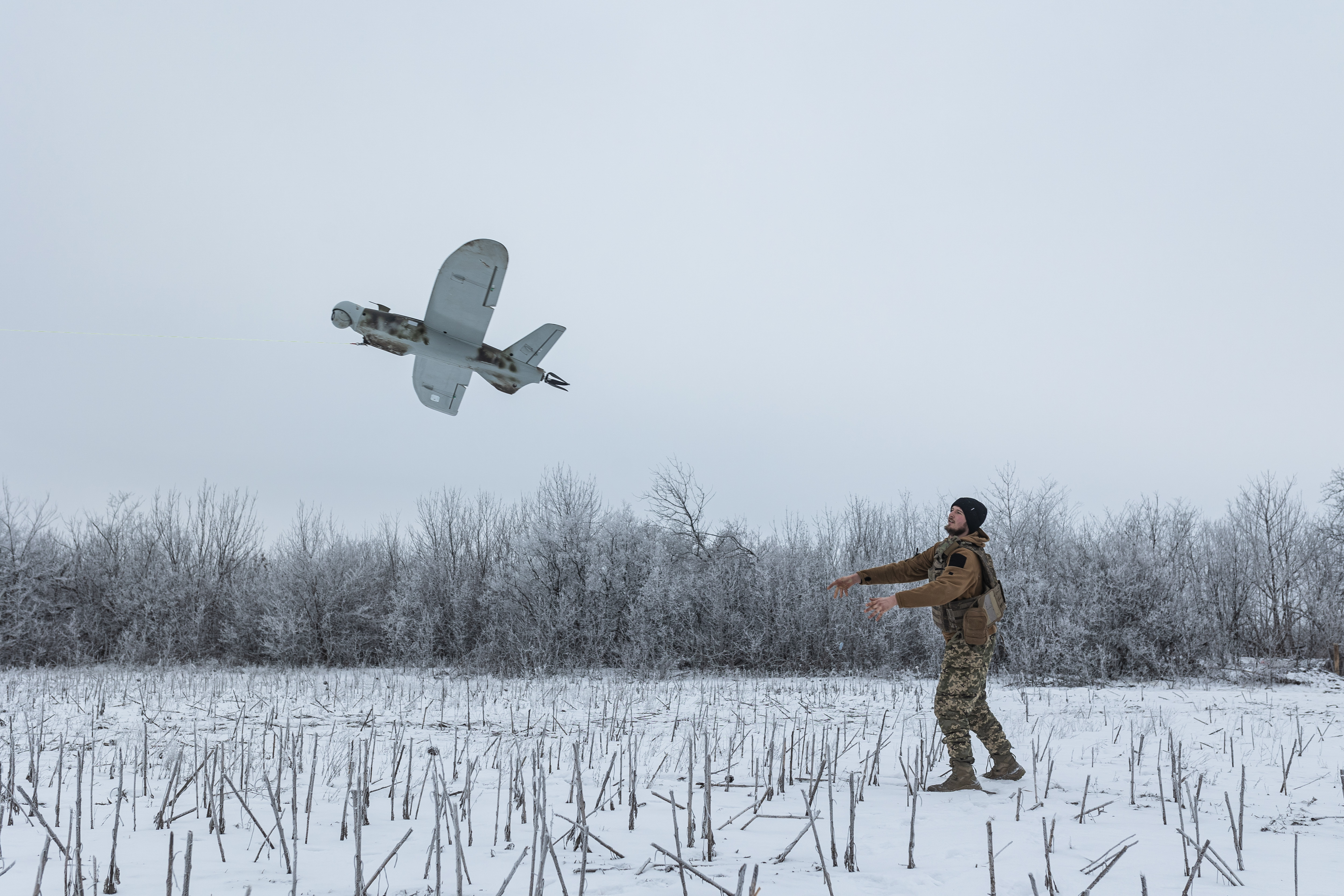
The U.S. struck an Iranian drone station near Bandar Abbas in southern Iran, near the Strait of Hormuz, a U.S. official told Air & Space Forces Magazine. Earlier in the day, Iran fired four one-way attack drones, which the U.S. believed posed a threat around the Strait of Hormuz. They were shot down by American forces, and the U.S. airstrikes prevented the launch of a fifth drone.
“These actions were measured, purely defensive, and intended to maintain the ceasefire,” the U.S. official said.
This marks the second flare-up involving the Strait of Hormuz and targets near Bandar Abbas in three days. On May 25, the U.S. struck two Iranian Islamic Revolutionary Guard Corps vessels laying mines, sinking the ships. The Iranians shot at U.S. aircraft with surface-to-air missiles. The U.S. responded by attacking Iranian missile launchers. On May 26, Iran claimed it had downed a U.S. MQ-9 Reaper drone. American officials have not substantiated that account.
In both instances, U.S. officials have cast their actions as defensive in nature and not a major escalation in the three-month-old war.
The U.S. and Iran both insist they are adhering to the ceasefire, which was announced in early April, though they have sporadically exchanged fire. On May 7, the U.S. struck drone launchers, radars, and missile facilities in Iran after the U.S. military said three U.S. Navy destroyers were targeted by Iranian drones and missiles.
To enforce an ongoing blockade of Iranian ports, U.S. fighter planes have resorted to striking Iranian ships with gunfire and munitions. A U.S. Navy destroyer also disabled an Iranian ship with fire from its main gun during the blockade. The U.S. has turned around more than 100 ships since the blockade came into force on April 13.
The U.S. insists it is still pursuing a diplomatic path. “Diplomacy is always the first option,” Secretary of State Marco Rubio said during a Cabinet meeting on May 27 at the White House.
But President Donald Trump has threatened to renew military action should those talks fail.
During the meeting, Trump said Secretary of Defense Pete Hegseth and the U.S. military would “finish them off” if the U.S. could not agree to a deal with Iran.
The post US Strikes Drone Site in Iran, Says Ceasefire Still in Place appeared first on Air & Space Forces Magazine.
Air, CENTCOM, Defense Secretary Pete Hegseth, Epic Fury, Iran, Marco Rubio, Operation Epic Fury, President Donald J. Trump, Strait of Hormuz, U.S. Central Command
Air & Space Forces Magazine
[crypto-donation-box type=”tabular” show-coin=”all”]