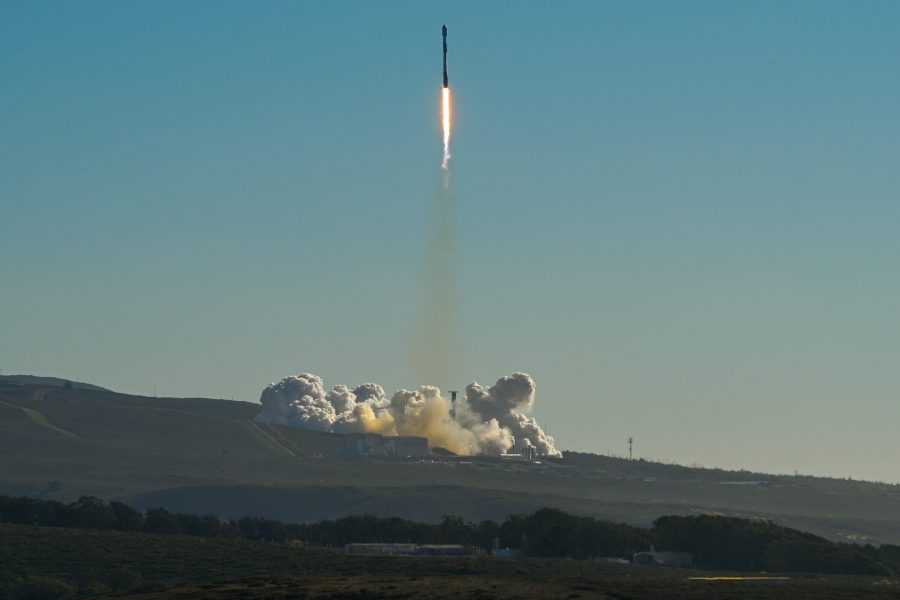
The Space Force this month established a squadron dedicated to defending against cyber intrusions at Vandenberg Space Force Base, Calif., as concerns about threats to the service’s physical and digital launch infrastructure are on the rise.
The 630th Cyberspace Squadron’s activation, which occurred March 10, follows the Space Force’s decision last September to reassign the 645th Cyberspace Squadron to Space Launch Delta 45 at Patrick Space Force Base, Fla. The mission of both squadrons is to “defend the ranges in real time” from adversary cyberattacks against launch capabilities, the service said in a March 23 statement.
“Access to space is critical for our nation’s national security, national defense, and our economy,” Maj. Torius Davis, commander of the new unit at Vandenberg, said. “Our adversaries know this, and are constantly looking for ways to deny, disrupt or destroy our ability to launch. Our new Defensive Cyber Operations Squadrons are just one of the ways the U.S. Space Force is staying ahead of the threat.”
The Space Force’s East and West Coast ranges are among the busiest in the world and provide a vital service for both government and commercial customers. The Eastern Range at Cape Canaveral Space Force Station in Fla., supported a record 109 missions last year. Vandenberg supported 66, up from 51 in 2024.
The establishment of these new cyber squadrons reflects an evolution in the types of threats levied against launch ranges. In the past, the primary security concerns at ranges and other installations were things like preventing espionage or restricting access to secure areas. Now, as more operations rely on digital infrastructure, cybersecurity presents a greater threat.
Lt. Col. John Quinn, commander of the East Coast-focused squadron, compared the cyber threat at Space Force ranges to enemy attempts to jam U.S. satellites.
“We’ve had to increase our security protection against a host of potential cyber attacks,” Quinn said. “Much like the anti-jamming capabilities we build into our modern satellites, our new Cyberspace Squadrons will work to secure our launch systems from a myriad of potential threats, from hijacking satellites or ground systems to using malware to gain unauthorized access to our systems.”
Along with establishing operational units to protect against cyber threats, the Space Force is exploring new capabilities to ensure its spaceports can withstand a range of threats—from hacking to drone incursions. SLD 45 announced last fall it is investing in several counter UAS systems, and leadership at Vandenberg and the Cape are working closely with the Pentagon’s counter-drone unit, Joint Interagency Task Force 401, to improve counter-drone defense at both ranges.
Col. James Horne, commander of SLD 30 at Vandenberg, told reporters in December that both ranges are actively looking for new technology to protect against these and other emerging threats.
“We need to continue to harden, and we’re doing that across the board,” he said. “We’re standing up cyber squadrons to actively defend our mission networks. We’re looking at more innovative ways to protect our perimeter and ensure that we have adequate resource protection.”
The post More Launches, More Cyber Threats: Space Force Stands Up Units to Defend Ranges appeared first on Air & Space Forces Magazine.
Cyber, Space, 630th Cyberspace Squadron, 645th Cyberspace Squadron, assured access to space, Cape Canaveral Space Force Station, cyber, SLD 30, SLD 45, space launch, Space Launch Delta 30, Space Launch Delta 45, Vandenberg Space Force Base
Air & Space Forces Magazine
[crypto-donation-box type=”tabular” show-coin=”all”]