The U.S. military struck over 1,000 targets on the first day of its air campaign against Iran, unleashing enormous firepower in the opening 24 hours of Operation Epic Fury, U.S. Central Command said March 1.
Having built up the largest concentration of airpower in the region since 2003’s invasion of Iraq, the U.S. launched the operation in broad daylight, at 9:45 a.m. in Tehran on Feb. 28, or 1:15 a.m. Eastern Time. Epic Fury unfurled in tight coordination with a parallel Israeli offensive, dubbed Operation Roaring Lion.
Israel and the U.S. acted based on intelligence identifying the precise location of Iran’s Supreme Leader, Ayatollah Ali Khamenei, according to media reports, after talks on Iran’s nuclear arms and ballistic missile programs failed to progress toward a settlement.
A senior administration official said the U.S. decided the parallel American and Israeli attacks were necessary to blunt Iran’s ability to retaliate.
President Donald Trump announced the start of the air campaign in a predawn social media post, promising a “massive” attack, and urging the Iranian people to rise up against their government. U.S. officials said the operation would last multiple days and attacks by the U.S., Israel, and counterattacks by Iran continued on Day Two, March 1.
U.S. and Israeli forces delivered a crushing blow to Iran’s military, but Iranian forces did manage to retaliate with missiles and drones aimed at U.S. military bases across the region as well as against civilian targets in host countries. Three American service members were killed in those attacks, and five have been seriously injured, U.S. officials said. In addition, at least a dozen civilians were killed by Iranian strikes.
Pulling a page from Operation Desert Storm, CENTCOM focused its attacks on key power centers in Iran: the ayatollah, command and control centers, the elite Islamic Revolutionary Guard Corps and its joint headquarters, the IRGC Aerospace Forces headquarters, integrated air defense systems, ballistic missile sites, navy ships and submarines, anti-ship missile sites, and military communications centers.
“CENTCOM forces are striking targets to dismantle the Iranian regime’s security apparatus, prioritizing locations that pose an imminent threat,” the command said in a statement.
CENTCOM provided a detailed account March 1 of the weapons used in Operation Epic Fury. It did not, however, say how many of each system were employed and noted that the U.S. military also used “special capabilities we can’t list here!”
Aircraft
B-2 Sprit
B-2s flew a round-trip mission from the United States to strike hardened ballistic missile sites with 2,000-pound guided bombs, U.S. officials said. Four B-2s appear to have taken part in the opening mission, according to Air Traffic Control communications and other open source data.
F-35 Lightning II
The U.S. amassed about 30 Air Force F-35 Lightning II stealthy multirole fighters in the Middle East, drawing them from the 48th Fighter Wing at RAF Lakenheath and the 158th Fighter Wing of the Vermont Air National Guard. A squadron of Marine Corps F-35Cs deployed with the aircraft carrier USS Arabram Lincoln, operating in waters south of Iran, also took part. CENTCOM released photos of the jets Feb. 28.
F-22 Raptor
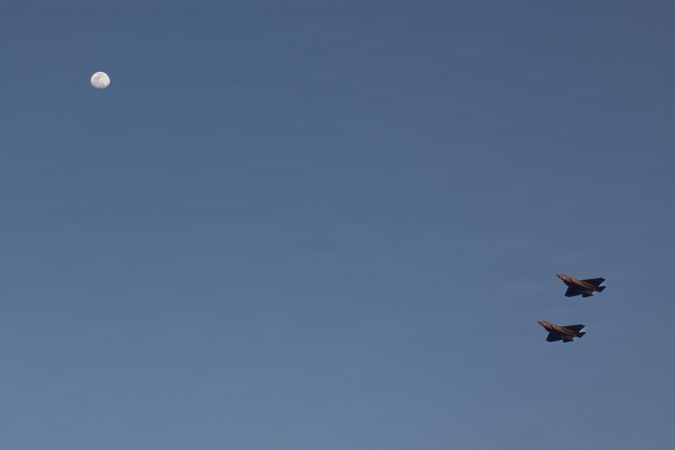
About a dozen F-22s from Joint Base Langley-Eustis, Va., deployed to Israel just ahead of the operation’s start, the first time the air superiority fighters had gone there for combat operations. More F-22s from Langley deployed to RAF Lakenheath in the lead-up to the operation. F-22s took part in last June’s Operation Midnight Hammer against Iran, and also in January’s Operation Absolute Resolve against Venezuela. While details were not released, it is likely F-22s escorted strike aircraft to engage air-to-air threats, among other actions during the operation.
F-16 Fighting Falcon
Dozens of multirole F-16s, including “Wild Weasels” equipped for SEAD—suppression of enemy air defenses—along with other F-16s are in the region. U.S. military officials did not specify their missions in operations against Iran.
A-10 Thunderbolt II
At least one squadron of A-10 ground-attack aircraft is in the Middle East, having flown a training mission over the Persian Gulf with the Navy last month. They have participated in strikes against the Islamic State group in Syria in recent months. Like the F-22s and F-16s, U.S. officials have yet to say what type of missions the A-10s conducted.
F-15E Strike Eagle
Multiple squadrons of F-15E Strike Eagles are currently in the Middle East. CENTCOM did not list them as participating in operations against Iran in its March 1 account, but a picture of an F-15E was included in a video released earlier that day, showing the opening 24 hours of Operation Epic Fury. F-15Es have been effective operating in a defensive role, shooting down Iranian drone and missiles launched against Israel during the past two years.
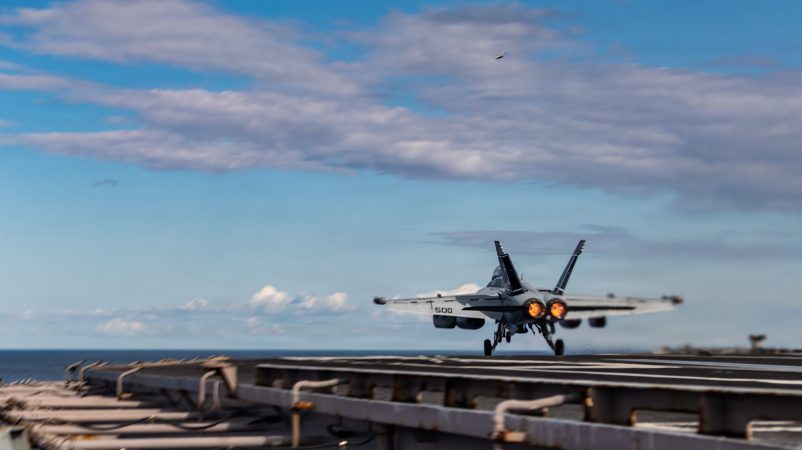
EA-18 Growler
The Navy’s EA-18 Growler electronic attack aircraft is designed to jam and attack enemy air defenses. Both aircraft carriers in the region, the USS Gerald R. Ford and the USS Arabram Lincoln, carry EA-18s. Open-source information indicates that about half a dozen EA-18s have been operating from a base in the region. The Ford’s EA-18s took part in Operation Absolute Resolve in January, and photos released by CENTCOM showed EA-18s operating during Operation Epic Fury.
Airborne Early Warning & Control Aircraft
Six Air Force E-3 Sentry AWACS command and control and battle management aircraft, equipped with the signature rotating radar above the fuselage, were in the Middle East, according to recent satellite images and flight tracking data. Navy carriers operate with E-2D Hawkeyes, which sport a smaller airborne radar, took part in Operation Epic Fury, CENTCOM photos show. The command did not specifically reference the E-3 or E-2 in its statement.
Airborne Communication Relay Aircraft
Five Air Force E-11 BACN airborne communications relay aircraft have been based in the Middle East, according to flight-tracking data and satellite imagery. The type has seen action before in the U.S. military operations in the region. CENTCOM did not specify the type of communications relay aircraft used in Operation Epic Fury, though the E-11 BACN is designed for that role.
P-8 Posedion
P-8s are Navy land-based maritime patrol aircraft, developed to surveil the seas and land and have been operating in the Middle East, particularly near the strategic chokepoint of the Strait of Hormuz. Multiple P-8s have recently been operating in the Middle East and Mediterranean, according to flight-tracking data.
RC-135 Rivet Joint
Air Force RC-135s, among the U.S. military’s most valuable spy planes, gather signals intelligence. Multiple RC-135s have been operating from the Greek island of Crete, according to flight-tracking data.
MQ-9 Reaper
The U.S. military’s stalwart remotely piloted aircraft gather intelligence, capture battle damage with cameras, and fire missiles when needed. Numerous MQ-9s are known to operate in the Middle East.
KC-46 Pegasus
Dozens of KC-46 Pegasus refueling aircraft were stationed in Europe and the Middle East, and numerous KC-46s operated out of Israel. KC-46s supported Operation Epic Fury, flight tracking data shows.
KC-135 Stratotanker
The Air Force also deployed numerous KC-135 refueling aircraft leading up to the launch of Epic Fury. KC-135s were flying in the Middle East during Operation Epic Fury, according to flight tracking data.
Airlift
Dozens of C-17 Globemaster III flights hauled weapons, people, and other cargo to the Middle East in recent weeks, and C-130 variants also appear to have been extremely active in the Middle East leading up to the attacks, according to photos and flight-tracking data.
Other Platforms
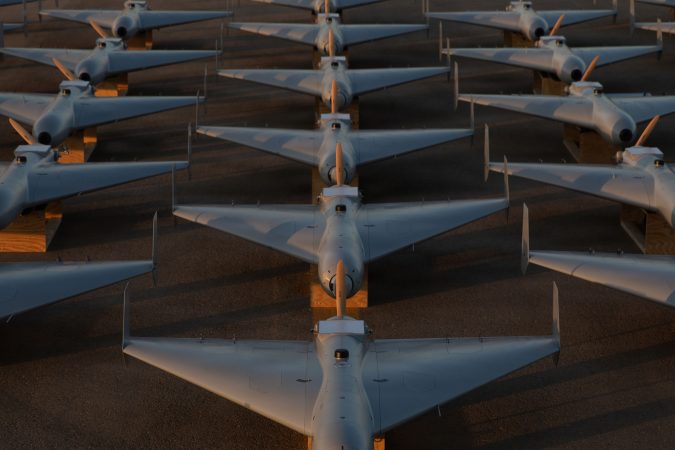
LUCAS drones
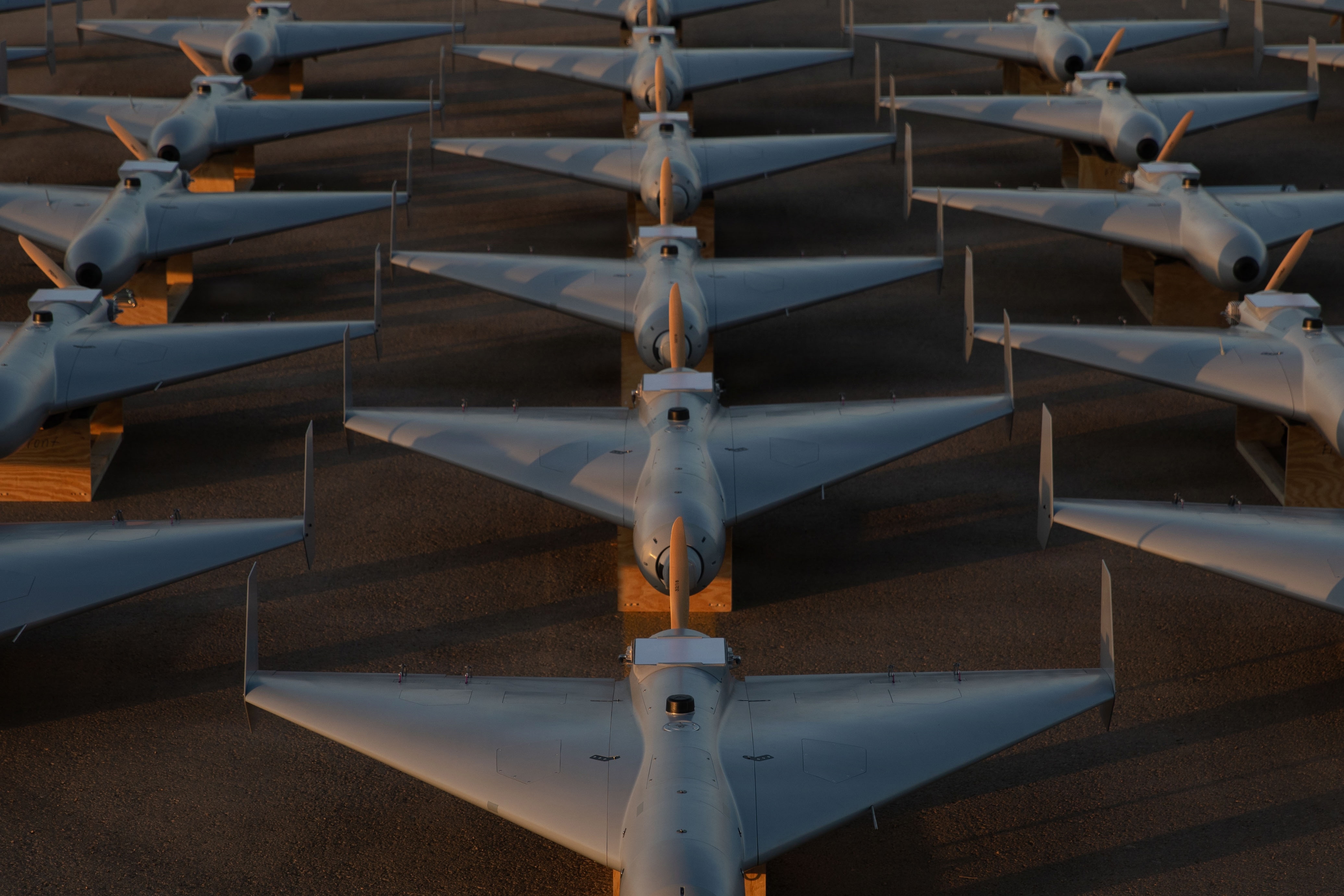
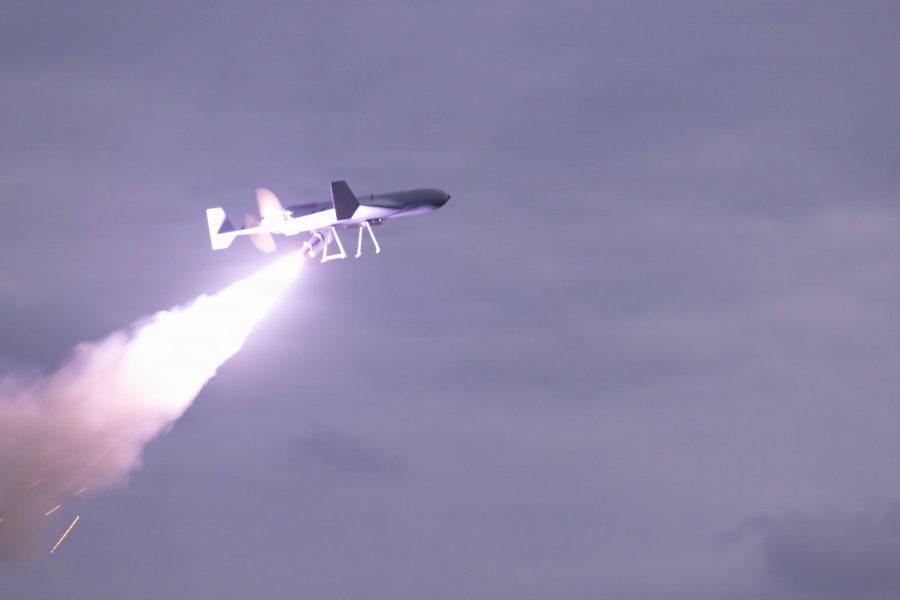
The U.S. employed these aircraft, modeled after the Iranian drones launched at U.S. troops in the Middle East and by Russia against Ukraine. LUCAS—for Low-Cost Uncrewed Combat Attack System—are one-way attack aircraft and are operated by a unit that only stood up in December, the U.S. military said.
“CENTCOM’s Task Force Scorpion Strike—for the first time in history—is using one-way attack drones in combat during Operation Epic Fury,” CENTCOM said in a release. “These low-cost drones, modeled after Iran’s Shahed drones, are now delivering American-made retribution.”
M-142 High Mobility Artillery Rocket Systems (HIMARS)
HIMARS rocket launchers fired what appeared to be the Army’s new Precision Strike Missile (PrSM) short-range ballistic missiles, analysts noted. The system was visible in a video released by CENTCOM, and HIMARS launchers have long been used in the Middle East.
Guided-Missile Destroyers
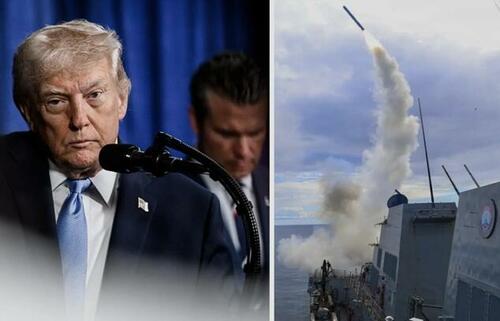
Numerous Navy destroyers accompanied both the Ford and Lincoln. Multiple destroyers fired Tomahawk land attack cruise missiles at Iran.
The post Weapons of ‘Epic Fury’: Fighters, Missiles, and ‘Special Capabilities’ appeared first on Air & Space Forces Magazine.
Air, National Security, CENTCOM, Iran, Israel, Operation Epic Fury, U.S. Central Command
Air & Space Forces Magazine
[crypto-donation-box type=”tabular” show-coin=”all”]