Tyler Durden
An “Existential Crisis” To Close 2025
By Michael Every of Rabobank
The Fed delivered what was expected – a 25bps rate cut to 3.75% and a deep public split over whether it should cut further because the labor market is weakening or keep policy tight because inflation is too high. The Fed will also buy $40bn of T-Bills just after stopping QT, but this is not to be seen as QE, nor as having any impact on monetary policy – and QE was a neutral “asset swap”, not a balance sheet expansion that juiced asset prices. See here for the take of our US Strategist Philip Marey, who concludes that as Trump takes a firmer grip of the Fed ahead, rates are likely to fall more than some expect.
The ECB’s Lagarde spoke of “Europe’s existential crisis” and didn’t think the level of ECB rates could do anything about it. She underlined estimates that internal trade barriers due to national regulations on top of the EU’s own amount to an effective tariff of 110% on services and 60% on goods traded between member states. “Everybody wants to sugarcoat, gold-plate and do just a bit more,” yet on reforms, “There will be pushback from multiple corners… from people who say: ‘We’re very happy in our corner of Europe, leave us alone.’” (As ‘Teresa Ribera is ‘not interested in competition,’ complains jilted Brussels bubble’ – but that didn’t stop the EU from just raiding China’s Temu over a foreign subsidy allegation.) Lagarde underlined the need for a transformative capital markets union and joint Eurobonds for defence funding, seeing this as opportunity.
The BoC left rates on hold at 2.25% and seems to think it’s done, yet admitted it‘s difficult to “assess the underlying momentum of the economy,” given US tariffs’ impact over time. See here for more from Molly Schwartz.
The RBA, hawkish on Tuesday, prompting market chatter of rate hikes in 2026, will look at the jobs numbers today (-21.3K vs +20K expected) and perhaps rethink. But what of asset prices as the AFR notes, ‘Why this mum bought her 11-year-old son a townhouse.’ Only one? Tsk!
Today, BoE Governor Bailey will testify to Parliament’s Covid Inquiry. Will we see questions about the Bank’s response, e.g., why didn’t it use macroprudential measures on mortgage lending at the same time as deep rate cuts and massive QE? There are key lessons to be learned for when the next, inevitable ‘nobody saw it coming’ crisis hits – will central banks have a clearer idea of what they are *for* by then?
Meanwhile, as so often reiterated here, the backdrop against which all central banks pretend to know what they’re doing is getting increasingly unpredictable.
In geoeconomics, Mexico imposed 50% tariffs on China and other Asian economies –exactly the Trump Plan we predicted: next, Canada(?) Against that backdrop, the USTR said he seeks a “constructive” reset on trade with China, which launched a satellite super factory to rival Starlink and added domestic AI chips to its official procurement list for the first time. However, Ford suppliers received China’s new streamlined rare-earth licenses – but German automakers were notably excluded so far. Indonesia is resisting US trade demands on critical minerals and energy it sees risking its relations with China and Russia. On the other hand, India reportedly offered the US its ‘best-ever’ deal, as D.C. pushes farm access in trade negotiations, as the US Soybean association president meanwhile stated that Trump’s farm aid plan for them is “A band-aid on an open wound.” The UK’s PM also told Parliament that a return to the EU customs union would “unravel” new UK trade deals: yes, some things are zero sum. Trade can be one of them.
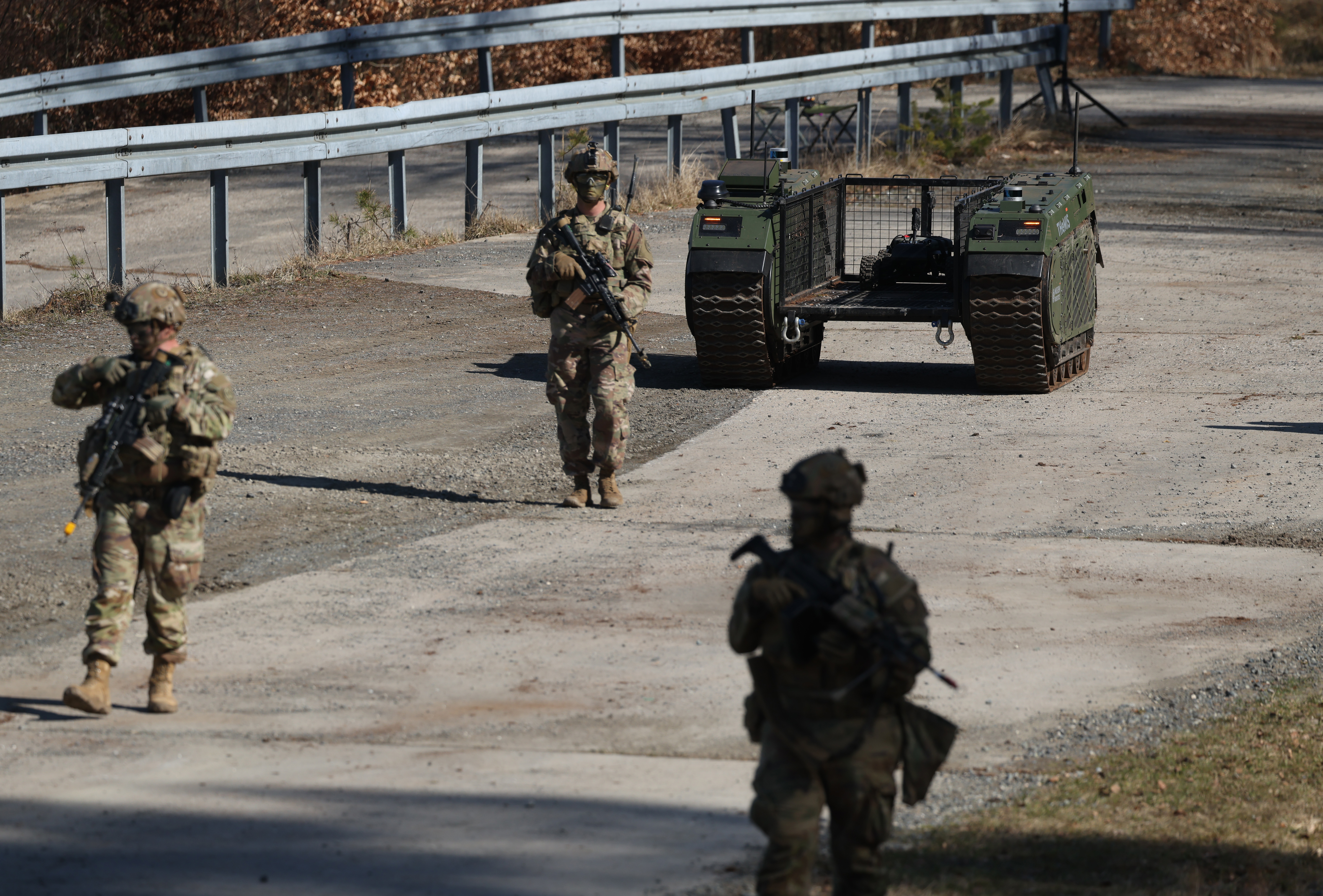
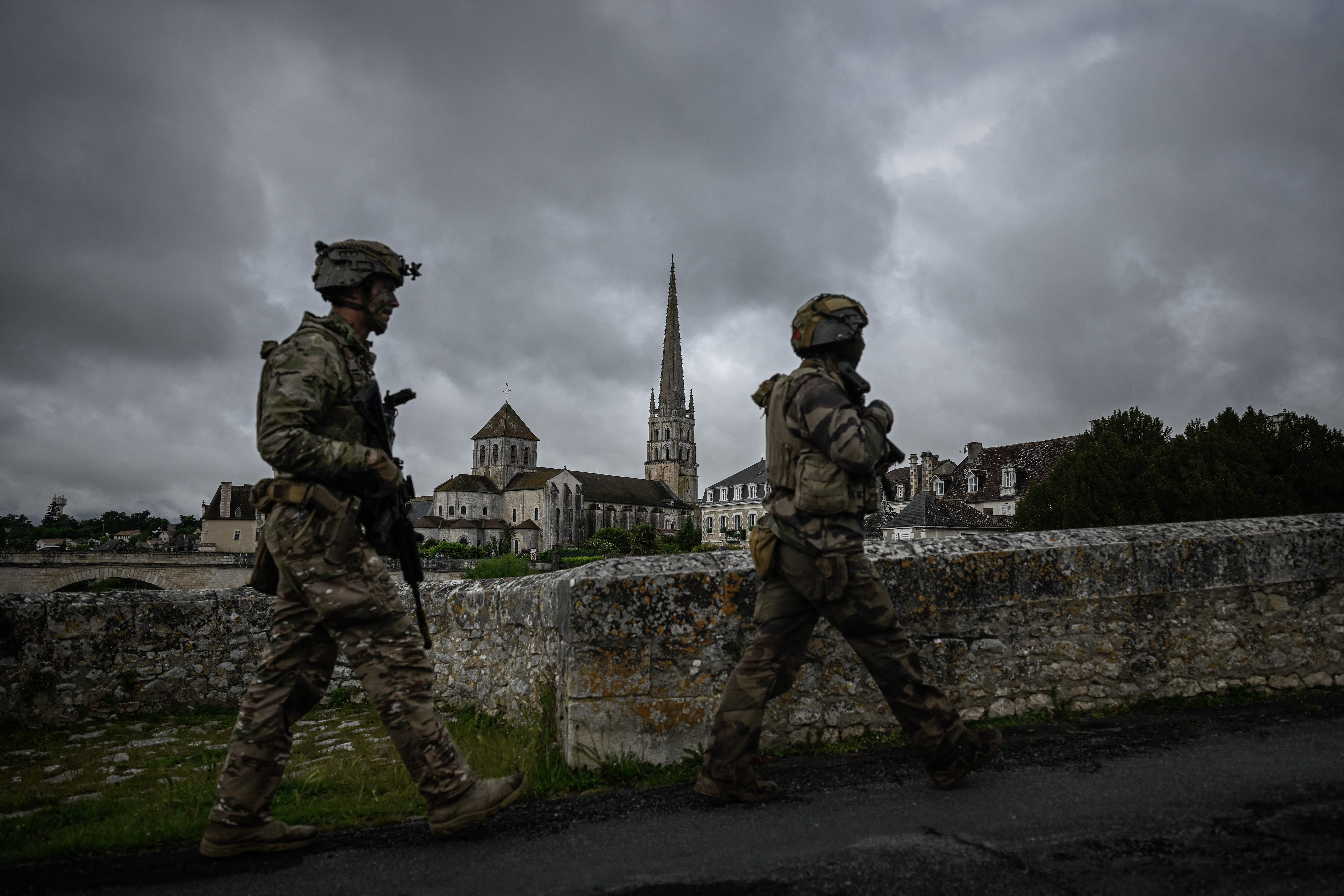
In geopolitics, US Representative Massie has introduced a bill to pull America out of NATO, which speaks to the times if not its likelihood of passage. It’s nonetheless noted that Trump’s recent verbal attacks on Europe will force it to speed up post-America defence plans, with belated recognition that the era of America’s “security guarantee” for Europe is over. It seems Europe will have to pay much more than it has budgeted for the military by 2035, and a lot sooner. That’s as a report suggested a parallel US National Security Strategy to split up the EU and establish a new global “C5” of the US, China, Russia, India, and Japan, leaving Europe out of the power loop.
Germany’s Chancellor Merz nonetheless underlined he still wants the US as partner, and if Trump “can’t make sense of this institution or the structure of the EU,” the US can still cooperate with member states, and “Germany is, of course, first and foremost one of them.” Divide et impera.
Regardless, the EU is pressing harder for the passage of its €210bn Ukraine loan scheme, which Lagarde says is now the “closest” to being legal so far – is that something compliance officers like hearing? She added the new version should reassure investors it “does not amount to confiscation” – but as this money is clearly not going to be given back to Russia, it’s unclear how. Indeed, Belgium is demanding an extra cash buffer as wergild against expected Russian retaliation against it and Euroclear. And that’s presuming retaliation stays in that dimension – the FT reports on fears of a wider Russian campaign of sabotage to infrastructure and businesses ahead, which potentially comes with its own cost in terms of lower growth and higher inflation.
Muddying the waters for the EU in terms of its desire to adhere to global institutions, the International Court of Justice granted Russia’s counterclaim in a genocide case vs Kyiv. The potential implication, according to some, is that any warfare can be genocide if civilians are involved. Elsewhere, the US threatened to sanction the International Criminal Court unless it promises not to prosecute President Trump.
In Latin America, the US seized an Iranian oil tanker off the coast of Venezuela after smuggling Nobel peace prize laureate Machado out of the country: she called for democracies to “fight for freedom,” which may not be metaphorical. In Brazil, a bill that could reduce ex-President Bolsonaro’s prison time has advanced in Congress. In Bolivia, leftist ex-president Arce was just arrested for corruption a month after leaving office. And China pledged foreign aid to the region with no “political conditions” – it seems the Western Hemisphere may be ideologically, if not physically, contested.
In the Indo-Pacific, China says it seeks a “fair and just maritime order” in the South China Sea, which it claims; the ongoing Japan-China spat is seen as having no off-ramp; a Telegraph report claims China’s hypersonic missiles would destroy the US Navy in a fight over Taiwan – as the US Navy Secretary called for a “wartime footing” in US weapons production; and Thailand-Cambodia border fighting rages on as Trump signals he might try to intervene.
In the Middle East, there are reports of a build-up of US military jets heading towards the Middle East, as others say Iran has started mass production of ballistic missiles again. Trump will also delay unveiling his Gaza Board of Peace members until 2026, and it’s reported that the US is weighing hitting the UN Palestinian refugee agency UNWRA with terrorism-related sanctions.
If you think that’s too much information to fit into a Global Daily, try writing it(!) Moreover, consider this is just one day, in one week, in one month, in what has been a non-stop year for wild news headlines. 2026 doesn’t look like it’s going to get any easier. Quite the opposite, in fact.
You might not see it all as an existential crisis, just a ‘volatile trading backdrop’, but trying to keep up with just that part for readers can certainly prompt one for those who try!
Tyler Durden
Thu, 12/11/2025 – 10:25
ZeroHedge News
[crypto-donation-box type=”tabular” show-coin=”all”]