Tyler Durden
Europe’s Online Censorship Laws Could Restrict Americans Too, Analysts Say
Authored by Kevin Stocklin via The Epoch Times (emphasis ours),
For many Americans, talk of a crackdown in Europe on “hate speech” and “misinformation” may seem a faraway issue, but legal experts say that Europe’s online censorship laws could affect Americans, too.
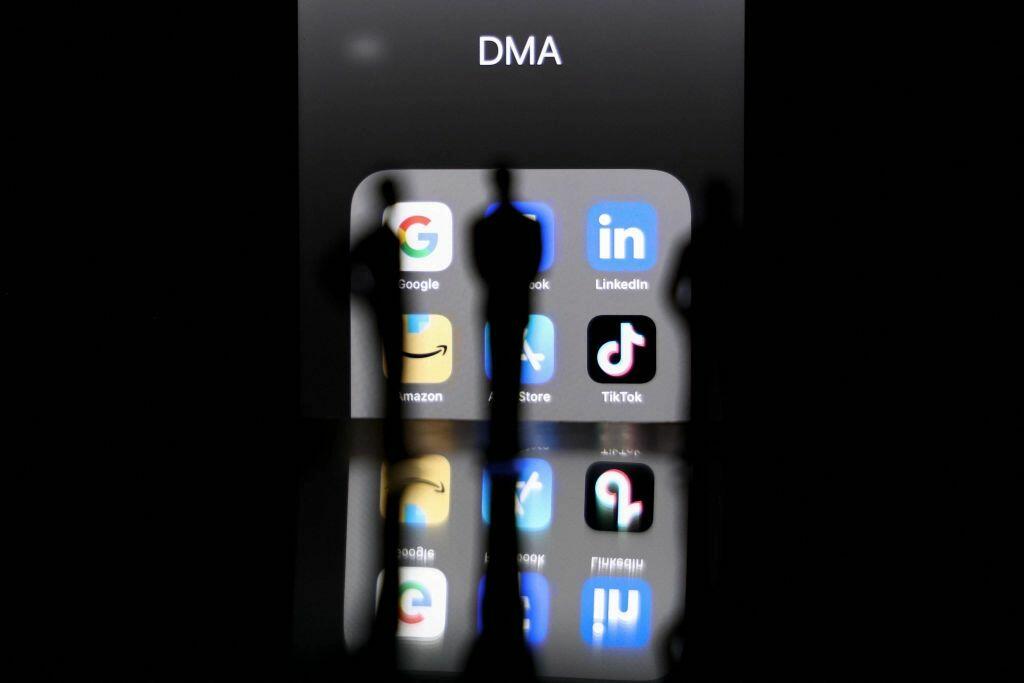
Starting July 1, social media companies and internet service providers operating within the EU that do not comply with laws that ban content deemed illegal there could be fined up to 6 percent of their global revenue, according to the EU’s Digital Services Act (DSA).
The European Commission states that the DSA, originally passed in 2022, “protects consumers and their fundamental rights online by setting clear and proportionate rules.” On July 1, the DSA integrated its Code of Conduct into the act, requiring online platforms and search engines to comply with the censorship laws of all member states or face punitive fines.
Proponents of the DSA state that the law was passed in response to escalating cases of anti-Semitism and anti-Muslim statements in Europe.
Meanwhile, critics, like Virginie Joron, a French member of the European Parliament, have called it a “Trojan horse for surveillance and control.”
“What was sold as the Digital Services Act is increasingly functioning as a Digital Surveillance Act,” Joron told attendees at a May conference hosted by the Alliance Defending Freedom.
Joron accused the European Commission and some parliamentarians of having “seized upon the DSA as a political tool to control speech, particularly targeting platforms like X, Facebook, and Telegram.”
The concern among policy experts is that Europe’s speech laws could compel online platforms to institute restrictive policies worldwide, in order to comply.
“The DSA generally cannot directly compel technology companies to censor American speech, but it creates an incentive to do so,” David Inserra, a fellow for free expression and technology at the Cato Institute, told The Epoch Times.
“At some point, companies may find it easier just to change their policies to align with more restrictive laws, thus having American speech effectively regulated by Brussels—thus the name the ‘Brussels effect.’”
Vague Laws Give Regulators Broad Discretion
Legal analysts say that the Digital Services Act is open to political manipulation because of its imprecise language regarding what is illegal for people to say, as well as a complex and ever-changing array of online speech prohibitions.
“Through very vague and loose definitions of illegal content and ‘hate speech’ and ‘misinformation,’ this becomes a blueprint for restricting speech online,” Adina Portaru, senior counsel for ADF International, told The Epoch Times.
“If you take the narrow definition of ‘hate speech—incitement to hatred—then you realize that, once again, whoever has the power to define ‘hatred’ is the one who defines if you are breaching the law or not.”
According to a September 2024 analysis by Therese Enarsson, a European attorney, “the DSA provides a very broad legal definition for illegal content,” which it defines as speech that does not comply with the laws of the EU or any member state.
“Similarly to illegal content, the DSA does not attempt to define what constitutes hate speech,” Enarsson states. “This is unfortunate, seeing that platforms must adapt their systems to combat such speech.”
This means that content posted by someone in Romania would have to be taken down if it conflicts with speech laws in France, creating a lowest-common-denominator threshold for suppressing content.
The DSA also states that it “specifically recognises the role of trusted flaggers to identify and flag hate speech online and to allow action against it”—a role that’s analogous to the collaboration between “fact-checkers” and social media companies in the United States to police online speech.
“We’re speaking about Europe, but of course we can also speak of situations whereby you have an American citizen posting something here in the U.S. and with the internet being an online environment globally, somebody can flag that in Europe, and according to the DSA, that speech will be removed from the entire platform,” Portaru said.
In addition, this process of flagging and fact-checking often includes a left-leaning bias, studies show. A 2023 survey of 150 “experts on misinformation” published in the Harvard Kennedy School Misinformation Review found that nearly 85 percent of the respondents were on the political left.
Germany Leads, Other EU Nations Follow
Within Europe, analysts say, Germany has led the charge against online “hate-speech” crimes.
In June, German police officers carried out early morning raids on 140 residents throughout the country who were investigated for such activities. The action was part of Germany’s 12th annual “day of action against hate-posts.”
The number of hate-speech prosecutions in Germany increased from 2,411 in 2021 to 10,732 in 2024, according to Germany’s Federal Criminal Police Office (BKA), which coordinated the “day of action.”
The Brownstone Institute, a conservative think-tank, reported in October 2024 that “Germany submitted by far the most reports on content entailing ‘negative effects on civic discourse or elections,’ yet another category of speech that is clearly not illegal per se but that is deemed ‘harmful’ enough under the DSA regime to require suppression.” The assessment was based on an analysis of periodic content suppression reports that are required to be submitted under the law.
Inserra stated in a July 3 Cato report that such an environment has resulted in Germans feeling increasingly “unable to express their opinions, with multiple polls finding around 44 percent of Germans expressing such concerns, up from 16 percent in 1990.”
Other countries in Europe have followed Germany’s lead. Periodic police sweeps similar to Germany’s “day of action” have taken place in at least a dozen other European countries, according to Europol, the EU’s law enforcement agency.
And in a high-profile case in Finland, Päivi Räsänen, a member of parliament, was charged with hate crimes for posting Bible verses online regarding human sexuality. Räsänen was first charged in 2021; the case is now before Finland’s Supreme Court.
Speaking to European leaders in February, Vice President JD Vance stated: “The threat I worry the most about vis-à-vis Europe is not Russia, it’s not China, it’s not any other external actor. What I worry about is the threat from within, the retreat of Europe from some its most fundamental values, values shared with the United States of America.”
Censoring Americans
Some experts say Europe’s speech laws could end up regulating Americans and beyond.
“The European Union has wielded its Digital Services Act (DSA) to restrict the speech not just of Europeans but especially of Americans and other English-speakers,” John Rosenthal, an analyst of European politics, wrote in an op-ed earlier this year.
In August 2024, European Commissioner Thierry Breton threatened Elon Musk, owner of X, with reprisal over Musk’s intention to broadcast an interview with then-presidential candidate Donald Trump, which Breton stated posed “a risk of amplification of potentially harmful content,” in violation of the Digital Services Act.
This followed the initiation of “formal proceedings” by the EU against X in December 2023, in which European officials charged that the American company had failed to sufficiently combat “illegal content” and “information manipulation.”
In January, Belgium’s French-speaking broadcaster RTBF chose to delay the live airing of President Trump’s inaugural speech by several minutes to give reviewers time to block any statements that they deemed “racist, xenophobic, or hateful.”
“Online speech is global, and if online platforms are restricting Americans’ speech to satisfy the demands of a foreign government, which is precisely what is happening under the DSA, then the First Amendment is a dead letter,” Rosenthal told The Epoch Times. “The U.S. government needs to take specific action against the DSA—to get it repealed or to ensure that U.S. companies do not comply with it; otherwise, free speech is dead.”
Inserra concurs.
“At the very least, American policymakers should condemn such censorship for what it is,” he said. “They should support American companies who find themselves facing increasing regulatory and censorial pressures.”
Rosenthal argues that controlling political speech was among the core motivations for passing the Digital Services Act.
“The initial impulse came from two shocks in 2016: first, the Brexit vote in the UK and then, four months later, the election of Donald Trump in the USA,” Rosenthal said. “The EU elites could not accept that either result was the product of rational choices on the part of voters; rather, in their view, they had to be the product of voters being ‘misinformed.’”
“It was at this point that they began to frame online ‘misinformation’ as a problem that online platforms would have to address,” he said.
Upon taking office in January, President Donald Trump issued an executive order prohibiting the U.S. government from restricting online speech, stating that the Biden administration had “trampled free speech rights” by pressuring tech companies to suppress online speech that the federal government did not approve.
“Under the guise of combatting ‘misinformation,’ ‘disinformation,’ and ‘malinformation,’ the Federal Government infringed on the constitutionally protected speech rights of American citizens across the United States in a manner that advanced the Government’s preferred narrative about significant matters of public debate,” Trump stated.
In May, Secretary of State Marco Rubio said the United States would impose visa bans on foreign nationals whom it deemed to be censoring Americans.
‘Hateful’ versus ‘Harmful’ Speech
The Code of Conduct in the Digital Services Act bans both “hateful” and “harmful” speech.
For the latter category, which includes speech that government officials deem to be “misinformation” or “disinformation,” the DSA allows online service providers to restrict the visibility of posts versus taking them down or suspending users.
“This is what Elon Musk is referring to when he says ‘freedom of speech is not freedom of reach’—i.e. you’re allowed to say it but the algorithm will prevent the broader public from hearing what you say,” Rosenthal said.
Musk posted in November 2022 on Twitter, which became X in 2023, that the “new Twitter policy is freedom of speech, but not freedom of reach.”
“Negative/hate tweets will be max deboosted & demonetized, so no ads or other revenue to Twitter.”
In most cases where EU authorities have flagged posts on X as objectionable, X has responded by restricting visibility, rather than taking the posts down, Rosenthal said, based on his analysis of the “transparency reports” that EU officials publish periodically.
The prohibition of “harmful” speech has curtailed the information the public could see online regarding issues like the COVID-19 pandemic. According to performance reports required to be provided to EU regulators, X suspended 11,230 accounts under the company’s COVID-19 Misleading Information Policy between 2020 and 2022, the Brownstone Institute reported. This policy was discontinued in November 2022, shortly after Musk purchased the company.
One issue with this approach is that whereas users are generally aware that their content has been removed, they may not necessarily be aware that tech companies’ algorithms are simply blocking others from seeing it.
In line with Europe, Canada, another close ally of the United States, has also recently taken steps to curtail perceived hate speech.
Tyler Durden
Sun, 07/20/2025 – 10:30
ZeroHedge News
[crypto-donation-box type=”tabular” show-coin=”all”]