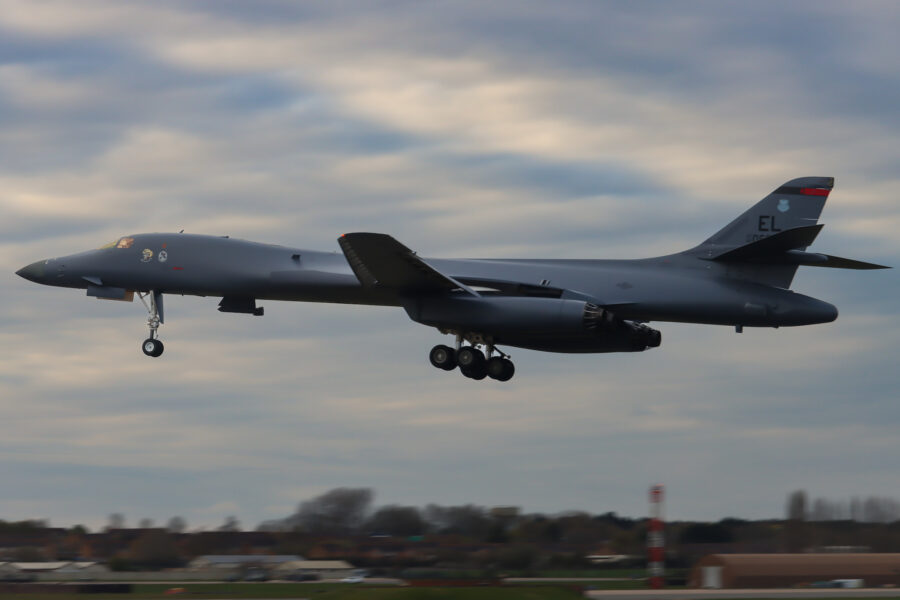
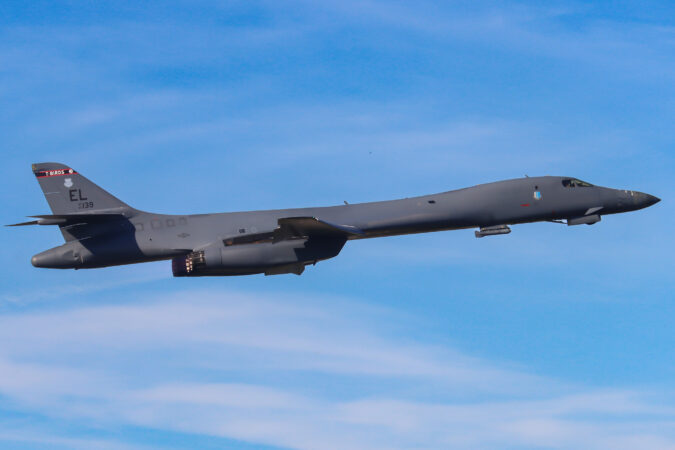
Three additional B-1B Lancers arrived at RAF Fairford on March 26, bringing the total number of bombers stationed at the U.K. base to 21—one of the largest bomber deployments in recent history.
There are now some 15 B-1B and six B-52H aircraft stationed at the base, located in southwest Britain, according to local spotters, air traffic control communications, and flight-tracking data. The 15 B-1s in particular represent a third of the entire Lancer fleet left in service.
The U.K. has said the U.S. is using Fairford to strike Iranian missile facilities, a key U.S. objective and one of the targets the Pentagon has highlighted in explaining Operation Epic Fury, which began Feb. 28.
The U.K. government’s decision to allow U.S. bombers to use RAF Fairford, with a long runway suitable for such aircraft, halves the distance the U.S. aircraft would need to travel compared to flights to and from the continental United States. U.S. bomber strikes have also included B-2 Spirit bombers, particularly early in the campaign.
Local spotter Lee Hathaway captured images of B-1B bombers arriving March 26 and shared them with Air & Space Forces Magazine, along with images of U.S. bombers operating from the base recently.
The arrival of the three B-1Bs, assigned to Ellsworth Air Force Base, N.D., was also captured by other spotters in the area and by open-source flight-tracking data collected by the Military Air Tracking Alliance.
The flight used “Purse” callsigns, and air traffic control communications confirmed that the three aircraft were headed from the U.S. to the U.K.
The U.S. military has declined to comment on its assets at RAF Fairford. But the bombers are easily visible to local enthusiasts and journalists, who document the arrival of more bombers and capture bombers taking off, sometimes with live munitions visible on the aircraft or during the loading process.
There are 44 B-1s in the Air Force inventory. Only a portion of them are available for operations at any given time, either for testing or for maintenance. As of late 2024, the service maintained a 47 percent mission-capable rate for the aircraft, so the 15 B-1s present at Fairford could represent a significant majority of the available fleet.
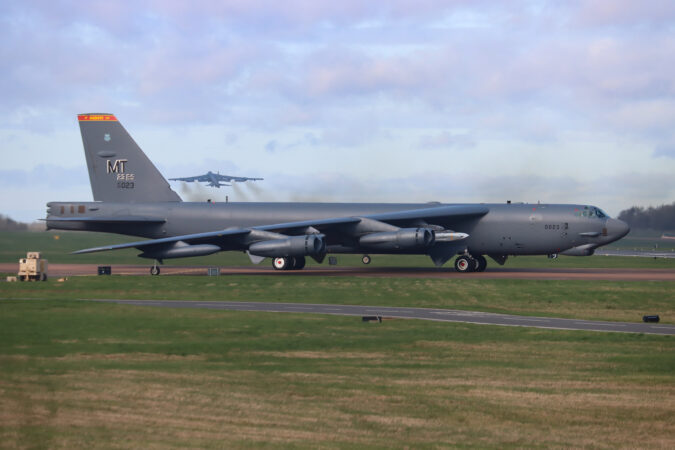
Six B-52s, which have also been used to strike Iran, are based at Fairford, but the B-1 is the most heavily deployed. It has the largest internal payload of any U.S. bomber, making it ideal to carry heavy loads of guided bombs. CENTCOM has said the vast majority of missions use “stand-in” munitions, and Airmen have been photographed loading B-1s with JDAM guided bombs.
B-52s have been photographed carrying JASSM-variant standoff missiles, which carry a smaller warhead than the traditional 2,000-pound JDAMs that have long been a munition of choice for U.S. bombers in combat in the relatively permissive skies of Iraq, Afghanistan, and Syria. U.S. warplanes have dropped 2,000-pound GBU-31 JDAMs in the conflict with Iran, as well as GBU-72 Advanced 5K 5,000-pound guided bombs, people familiar with the matter told Air & Space Forces Magazine, though they did not specify the platform that dropped the munitions.
The post More B-1s Arrive in UK, as Bomber Force for Iran Ops Nears Two Dozen appeared first on Air & Space Forces Magazine.
Air, B-1, Iran, Operation Epic Fury, RAF Fairford
Air & Space Forces Magazine
[crypto-donation-box type=”tabular” show-coin=”all”]