The Pentagon has increased the cost estimate for its Golden Dome advanced missile defense shield by $10 billion in recent months due to demand for more space sensing, tracking, and data transport capabilities, the general in charge of the effort said March 17.
Golden Dome Director Gen. Michael Guetlein said his team was directed to speed up delivery of some key space technology that will be part of the program’s architecture—namely the Hypersonic and Ballistic Tracking Space Sensor, the Space Force’s data transport layer, and space-based air moving target indicator capabilities.
“We were asked to accelerate some space capabilities to move the current program schedules from the right to the left,” he said at McAleese & Associates’ Defense Programs Conference. “They gave us $10 billion extra to accelerate those capabilities with the United States Space Force.”
The Pentagon envisions Golden Dome as a vast network of sensors, satellites, and interceptors designed to protect the United States from missile threats. During a White House briefing last May, President Donald Trump—who has championed Golden Dome as a signature defense project since the start of his second term—said the program would cost $175 billion and would field an initial capability by 2028.
Since then, some analysts have released estimates that are much higher. Todd Harrison from the American Enterprise Institute has projected costs ranging anywhere from $250 billion to $2.4 trillion. The Congressional Budget Office has estimated the cost at $542 billion. The cost of widespread space-based interceptors in particular is seen as likely to be high.
Guetlein argued that those outside projections are based on inaccurate assumptions about the program’s architecture, which is largely classified.
“I would say the biggest difference between what they are estimating and what we are building is they’re not estimating what I’m building,” he said. “They’re estimating a very large, complex capability, fully integrated, using technologies that we currently use to fight the away game.”
Guetlein didn’t describe the details of Golden Dome’s architecture and declined to offer more insight into cost projections for specific elements like space-based interceptors or command and control. But he said keeping the program’s cost within its baseline estimate—which it has already exceeded—is a major focus for him.
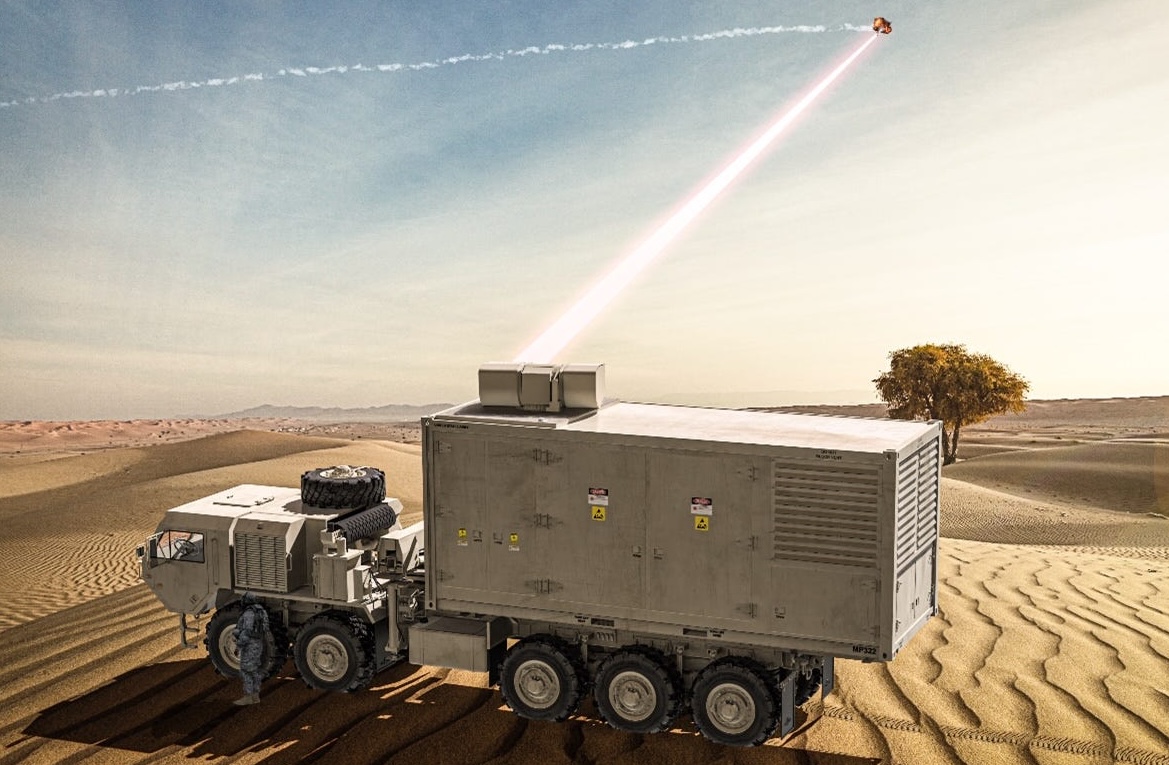
Some elements of homeland missile defense are inherently more affordable, he argued, because the Pentagon can leverage and repurpose existing communications nodes and infrastructure and doesn’t have to “ruggedize” equipment as it would for an overseas conflict. But to really drive down costs, he said, the Defense Department will need to rely on “next-generation technology” like directed energy, artificial intelligence, and advanced data processing.
“We’re working really closely with the national labs and with the Director of Research and Engineering to bring to bear some of that next-generation tech to drive down that cost per kill and drive up the magazine,” he said.
The Pentagon has about $23 billion on hand for initial Golden Dome work, which Congress provided through last year’s One Big Beautiful Bill Act. In a report accompanying the fiscal 2026 appropriations act, lawmakers criticized a perceived lack of transparency on the program, saying they hadn’t received insight into its projected cost, schedule, and performance metrics.
Responding to those criticisms, Guetlein said he has been busy briefing members of Congress on the intricacies of the program.
“I have personally briefed all six committees numerous times on everything that we’re doing on Golden Dome, to include the detailed costs of what Golden Dome is going to cost,” he said. “All of the funding for Golden Dome under reconciliation has flowed, and we’ve got a very close partnership with OMB and NSC on execution of those funds.”
The post Pentagon’s Golden Dome Cost Estimate Grows to $185 Billion appeared first on Air & Space Forces Magazine.
Space, Gen. Michael A. Guetlein, golden dome, McAleese conference, missile defense, missile warning and tracking
Air & Space Forces Magazine
[crypto-donation-box type=”tabular” show-coin=”all”]