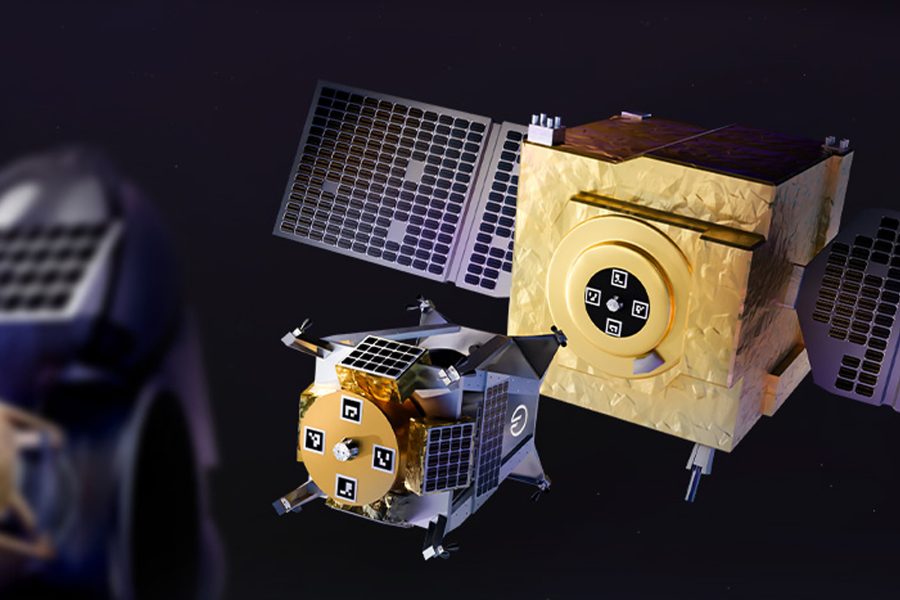
As the Space Force continues to weigh the military utility and economic viability of refueling satellites in orbit, it’s asking industry for systems that could start doing so by 2030.
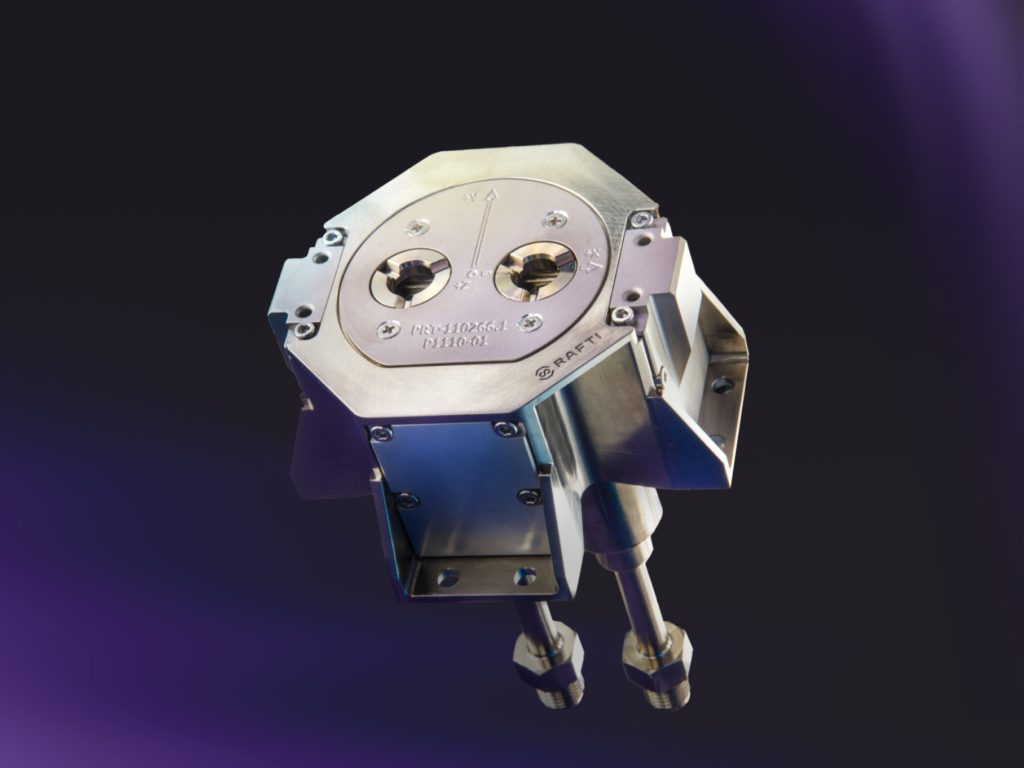
The Feb. 13 request for information, which will help inform Space Force decisions on how and if to take advantage of commercial refueling capabilities, is geared toward companies with satellite servicing vehicles already equipped with one of the two standard interfaces Space Systems Command’s System Engineering Review Board has approved in recent years—Orbit Fab’s Rapidly Attachable Fluid Transfer Interface and Northrop Grumman’s Passive Refueling Module.
“Industry solutions for refueling of national security space assets equipped with these SERB-approved interfaces are sought to meet sustained space maneuver needs by 2030,” the notice states.
The service is particularly interested in vehicles that have achieved the equivalent of a preliminary design review, which means it’s ready to be demonstrated in a representative environment. The notice also requests information about the system’s supporting ground architecture and any demonstrations planned over the next three years.
The 2030 timeline matches the service’s schedule for delivering its first fleet of satellites that could potentially be designed with the option to be refueled in orbit—a space domain awareness program called RG-XX. The service is weighing whether to make refuelability a requirement for those spacecraft, which will augment capabilities provided by Geosynchronous Space Situational Awareness Program. GSSAP satellites provide a neighborhood watch capability but have limited ability to maneuver or change orbits due to thrust and fuel constraints.
The program will likely be the Space Force’s first operational application of on-orbit refueling, but the Space Force’s long-term vision for the capability is unclear. U.S. Space Command has argued that future spacecraft, particularly those performing the space domain awareness mission, need to be able to perform “dynamic space operations,” meaning they can more freely move to observe or avoid potential threats. A report last year from AFA’s Mitchell Institute argued that the Space Force should take more decisive steps to cultivate the technology needed to enable DSO, which could include refueling as well as other logistics capabilities.
“The potential inclusion of in-space logistics, like refueling, is not only about increasing the lifespan of a GSSAP vehicle, but also its ability to conduct more operations to significantly increase mission utility,” the report argued. “But without a steady and reliable growth in resources to support DSO, systems like GSSAP will continue to operate more like blimps than F-35s.”
For now, the Space Force is still wrestling with questions about whether refueling is the answer to Space Command’s need for more maneuverable satellites. Vice Chief of Space Operations Gen. Shawn Bratton said last month the debate over refueling is still an active one. On one hand, topping off a space domain awareness satellite at the start of a conflict could ensure that spacecraft will be available longer and for more dynamic operations. However, he said, it’s not clear yet whether that added service life is worth the investment.
“We have a really good handle on the cost curve of when it becomes economically beneficial to start refueling a constellation,” Bratton said during a Jan. 21 event at Johns Hopkins University’s Bloomberg Center in Washington, D.C. “It has to do with the size of the constellation and the cost of each spacecraft. And so we’re getting really good information on sort of when it makes sense for economic reasons. I don’t know that that’s the exact same thing as military advantage.”
As the service moves forward with RG-XX, it also has several demonstrations planned for the next few years, which it says will help inform the way ahead for refueling and in-space servicing writ large. Some of those will involve refueling satellites, like the Tetra-5 mission slated to launch later this year. During this demonstration—sponsored by the Space Force and Air Force Research Laboratory—a satellite fitted with Orbit Fab’s interface will dock with an on-orbit fuel depot.
The Space Force has also contracted with Northrop Grumman to develop a satellite “tanker” called GAS-T. The company announced the award last year, but hasn’t shared details about the timing of the mission.
Other missions will showcase solutions to augment the propulsion systems of satellites that don’t have a refueling port. Under a DARPA-funded mission slated for later this year, Northrop’s Mission Extension Vehicle will use a robotic arm to move a satellite and install an external pod to serve as a “jetpack” meant to provide the satellite with additional thrust.
Earlier this month, the Space Force awarded Starfish Space a $54 million contract to deliver one of the company’s Otter servicing spacecraft by 2028. Otter is designed to attach to a satellite that’s not equipped with a servicing interface and provide maneuver capabilities. The company in January won a separate contract from the Space Development Agency to use Otter spacecraft to dispose of defunct satellites in low Earth orbit.
“Otter addresses a critical need for sustained space operations and maximizes the capabilities national security assets can deliver to the Warfighter,” the company said in a Feb. 7 statement. “The award underscores a broader shift toward on-orbit servicing as a core element of national space architecture and represents Otter’s transition into a sustained, operational capability.”
The post Space Force Surveys Industry For Refueling Tech appeared first on Air & Space Forces Magazine.
Space, dynamic space operations, GSSAP, RG-XX, satellite refueling
Air & Space Forces Magazine
[crypto-donation-box type=”tabular” show-coin=”all”]