 Tyler Durden
Intel Slides After Nvidia Halts Tests Of 18A Tech, White House Signals Chip Giant Not “Too Strategic To Fail”
After President Donald Trump publicly attacked Intel CEO Lip-Bu Tan in August, writing, “The CEO of INTEL is highly CONFLICTED and must resign, immediately,” Intel rushed to arrange a White House meeting that became a turning point for the struggling chipmaker which was on the verge of failure, Reuters wrote in a new report.
Tan, a veteran venture capitalist with a long history of investments in China, prepared for the meeting, seeking support from influential allies including Nvidia CEO Jensen Huang and Microsoft CEO Satya Nadella.
The roughly 40-minute Oval Office meeting included Commerce Secretary Howard Lutnick and Treasury Secretary Scott Bessent, and focused on how Tan would stabilize and rebuild Intel at a moment when US semiconductor policy had become a central national priority.
During that meeting, Tan agreed to the proposal which was already reported and which saw the US government receive equity in Intel in exchange for additional CHIPS Act funding. The agreement delivered $5.7 billion in cash, made the U.S. government Intel’s largest shareholder, and conferred on the company what many investors now describe as a “too-strategic-to-fail” status…. although maybe not.
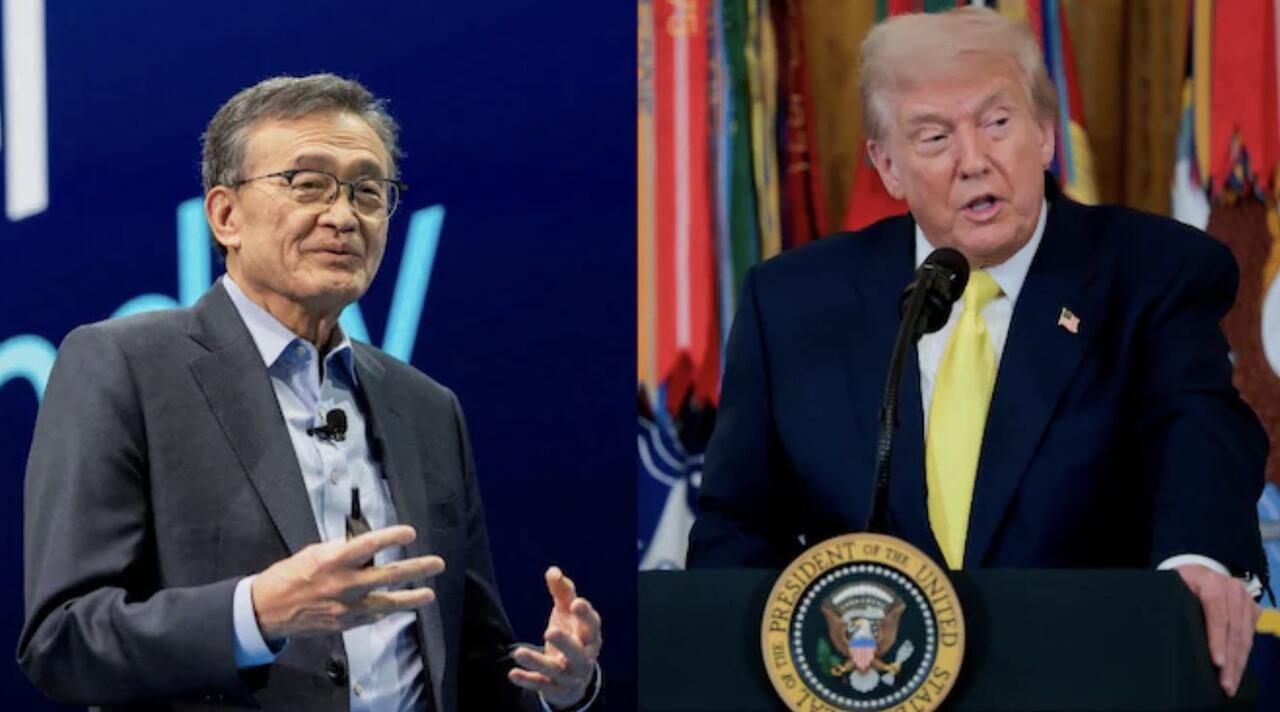
After the deal, Tan pledged to “make Intel great again,” which Lutnick posted under the caption, “The Art of the Deal: Intel.” The government’s involvement quickly helped “improve” Intel’s standing with potential partners and customers eager to align with the administration’s industrial strategy.
Sure enough, since Tan became CEO in March, but really since the deal with the Trump admin, Intel’s stock has climbed about 80%, far outpacing much of the broader market. The new momentum helped secure major investments, including $5 billion from Nvidia and $2 billion from SoftBank.
Technology lobbyist Adam Kovacevich called the government deal a “lifeline” for Intel, suggesting the company’s leadership and strategic direction might have been in jeopardy without it. At the same time, Tan began a sweeping internal restructuring, cutting roughly 15% of Intel’s workforce, flattening management layers, and pushing for faster, more engineering-driven decision-making across the organization.
That’s the good news. The bad news is that, well, despite the optics little has changed.
As Reuters notes, despite the improved deal flow (or at least perception thereof) and the political backing (in exchange for a pound of flesh equity), Intel’s core manufacturing challenges remain and the Commerce Department appeared to make it clear that they are not a guaranteed priority, and in fact more dilutions for the benefit of taxpayers may be on deck.
Intel is not “too strategic to fail” one official told Reuters refuting the prevailing market mantra which assumes the opposite, adding that “Secretary Lutnick talks to all parties rather than prioritizing calls for Intel’s sake.”
And while the company claims that its advanced chip process is “progressing well,” there was more bad news – which apparently never rose to the level of 8K importance – after Nvidia recently tested Intel’s 18A manufacturing technology and chose not to proceed. Even after investing billions, Nvidia made no commitment to manufacture its chips at Intel, and Tan acknowledged the limited scope of the partnership, saying, “Right now we are focused on collaborations.”
But now that the forced deal “honeymoon” period is over and the stock is once again drifting lower, Tan may want to consider focusing on delivering results because the goodwill that the CEO bought by going in bed with Trump is almost over.
In response to the Reuters report, INTC stock dropped as much as 4%, and down almost 20% from its recent high at the start of the month. It still has a long way to fall to the low $20 where it traded before the company announced its “tactical alignment” with the US government.

Tyler Durden
Wed, 12/24/2025 – 12:25
ZeroHedge News
[crypto-donation-box type=”tabular” show-coin=”all”]