Tyler Durden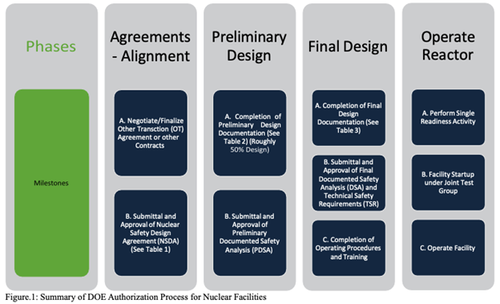
Oklo Fuel Facility Hits Next Milestone
Oklo achieved their next milestone with the Department of Energy, with the approval of the Preliminary Documented Safety Analysis (PDSA) for the Aurora Fuel Fabrication Facility at Idaho National Laboratory.
We previously discussed the break-neck speed at which the DoE is reviewing and approving reactor plant and fuel facility designs under the department’s Reactor Pilot Program (RPP) and Fuel Line Pilot Program (FLPP), and now the regulatory are pouring in:
- Radiant submitted their DARK, satisfying the intent of a PDSA, for the Kaleidos reactor
- Oklo received approval for their Nuclear Safety Design Agreement (NSDA) for the A3F
- Valar Atomics went critical on a pilot reactor core with DoE coordination
- Antares’s NSDA for their Mark-0 reactor was highlighted during their $96 million Series B
This latest achievement from Oklo represents the roughly 50% completion mark of the A3F design, and is first of its kind under the FLPP. The DoE is coordinating with Oklo to use existing facilities at INL to construct the fabrication plant for producing the unique metallic fuel that will be used in the first Aurora reactor.
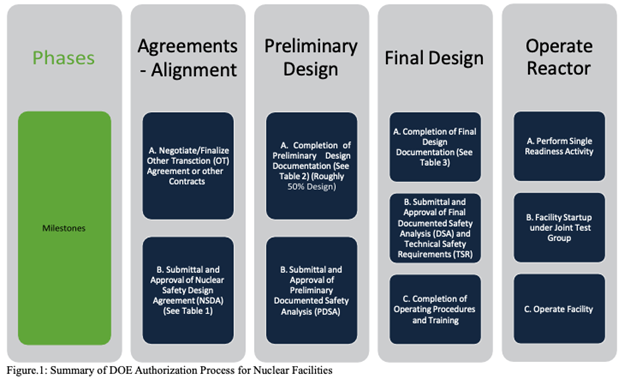
Oklo has been working with the DoE and INL since 2019 and has leveraged the coordination over the past six years to progress as rapidly as possible through the novel DoE licensing path. The sodium-cooled reactor development company will now be focused on the physical construction of the A3F while they prepare their Documented Safety Analysis, which will be submitted near the end of the construction process.
The assertions are still popping up everywhere that the DoE is simply rubber stamping everything that comes across their desk, in contrast to what would be a thorough and detailed review of the safety aspects of reactor plant and fuel facility designs by the NRC. However, this train of thought fails to hold for two major reasons.
- The endless headaches that come with NRC regulation are not present under the DoE, such as town hall meetings, lawfare from environmental activists, and political-ideology-based state laws and regulations. The lack of these problems alone reduces the timeline for regulatory review by years.
- Neither the DoE nor the reactor developer has any incentive to develop and progress a product that would not eventually meet the requirements of the NRC. As we thoroughly detailed in our coverage of the new addendum between the DoE and the NRC, there is no path to the commercialization of a reactor or fuel fabrication facility that does not travel through the NRC review process. The NRC is intimately involved with the DoE’s reviews conducted under the RPP and FLPP so concerns can be addressed early and commercialization can happen as rapidly as possible when that stage is reached.
Tyler Durden
Tue, 12/16/2025 – 10:45
ZeroHedge News
[crypto-donation-box type=”tabular” show-coin=”all”]