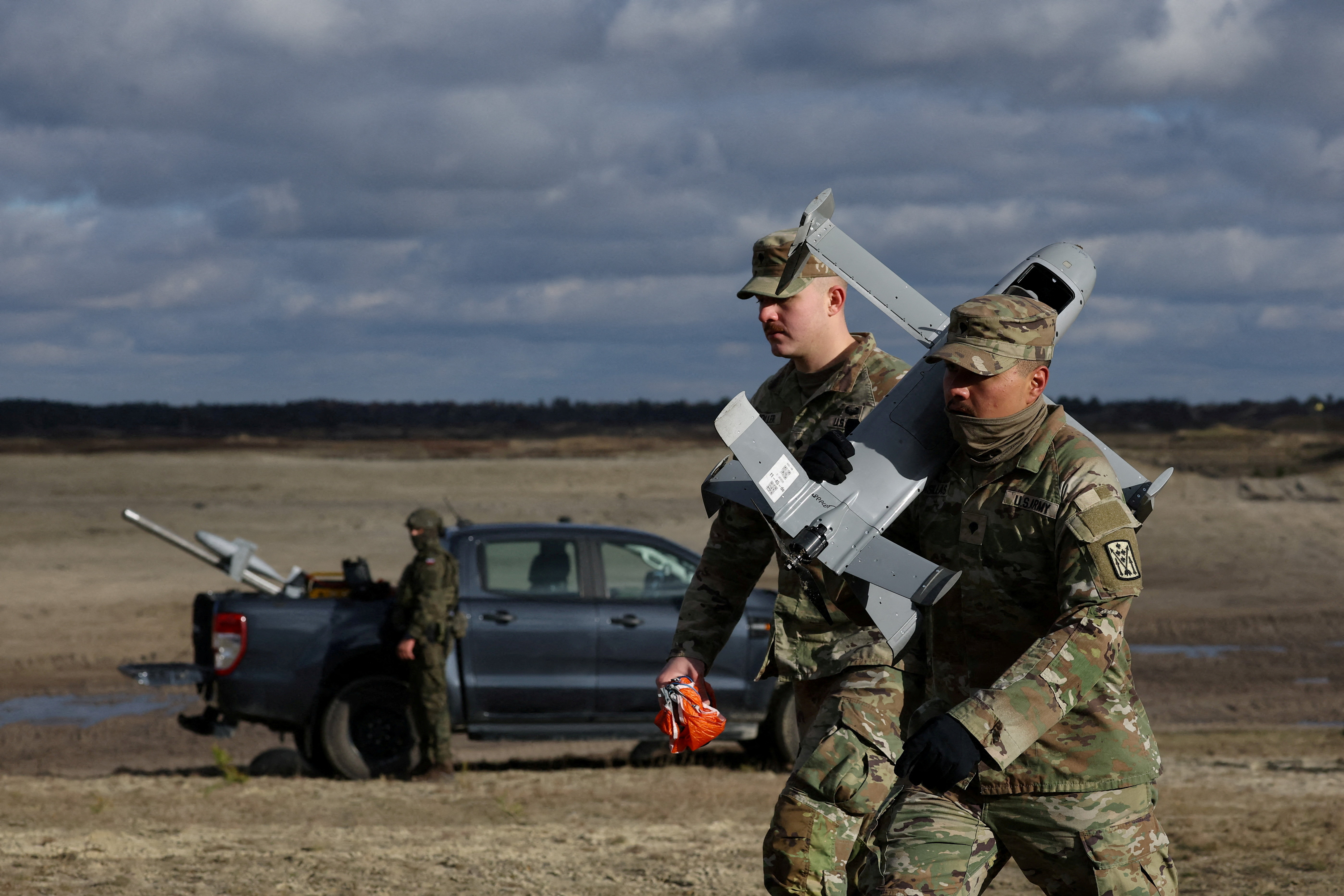

U.S. Northern Command and multiple research organizations just wrapped up a joint, three-year experiment to test new radar technology that could enable the Northern Warning System to detect incoming threats at longer ranges across Alaska and northern Canada.
The Sept. 7-14 test event marked the conclusion of live-fly testing in the experiment series, which explored how existing radar infrastructure and emerging technology could complement current surveillance capabilities, according to an Oct. 19 release from Alaskan Command, a subordinate command under NORTHCOM. The Arctic air domain awareness experiment series focused on closing surveillance gaps across a region where vast distances, harsh weather and limited infrastructure present challenges for air surveillance.
The Air Force Research Laboratory and Defense Research and Development Canada also participated in the exercise alongside scientific organizations in the region. The Air Force and NORAD have relied on the AN/FPS-117 and AN/Transportable Phased Array System-77 radar systems to detect and track incoming threats out to 250 miles throughout the region.
The experiment paired an existing high-frequency transmitter, paired with a newly developed, low-cost receiver array, according to the release.
Initial results show the system was “successfully able to achieve full skywave (beyond line of sight) detections” of an E-3 Sentry from the 962nd Airborne Air Control Squadron, HC-130J Combat King IIs from the 211th Rescue Squadron, and KC-135 Stratotankers from the 168th Air Refueling Wing—aircraft that served as cooperative targets, providing known positions against which researchers could compare the experimental data, the release states.
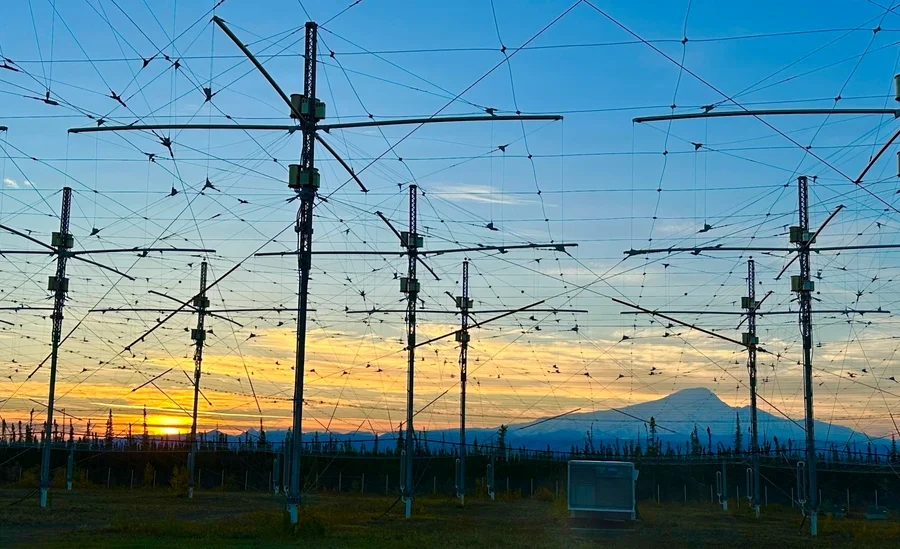
Researchers used the University of Alaska Fairbanks’ High Frequency Active Auroral Research Program, or HAARP, facility and a receiver array in Cold Bay developed by MITRE to collect data on participating aircraft over the Gulf of Alaska and Bering Sea.
The effort supported a broader focus of Alaskan Command to improve how units detect and track aircraft across Alaska and its approaches and help commanders assess potential threats for homeland defense, the release states.
“Understanding what this technology can do in the Arctic starts with collecting data under real operating conditions,” Dr. Carolyn Stwertka, chief scientist for Alaskan Command, said in the release. “Working with operational units allows us to compare the experimental observations with known aircraft positions and assess where this approach could help address gaps in air surveillance.”
The experiment occurred as NORAD is building and deploying high-frequency systems to detect hypersonic missiles with over-the-horizon radar, modernizing the Northern Warning System and building a polar over-the-horizon radar network.
The Homeland Defense OTHR, which kicked off in 2022, is being funded by both the United States and Canada at an estimated $6-7 billion and $3.1 billion, respectively. Initial Operating Capability is slated for 2028-29, with Full Operational Capability targeted for 2031.
Meanwhile, the Air Force is looking to replace its Air Route Surveillance Radar-4, a three-decade-old radar warning system that protects the coastlines and borders of the United States and a few remote locations.
The ARSR-4 system, which was built in the 1990s, was designed to help operators distinguish aircraft or potential missile threats from other radar “clutter,” which is more prevalent at lower altitudes. The system has been very effective, but Air Force officials maintain that newer additions to the cluttered landscape, namely wind farms, can distort the radar’s ability to “see” clearly, according to a recent Air Force Life Cycle Management Center sources sought notice.
The post NORTHCOM Wraps Radar Test to Boost Arctic Early Warning appeared first on Air & Space Forces Magazine.
Emerging Technology, Missile Warning & Defense, Alaskan Command, Arctic, NORAD, NORTHCOM, Northern Warning System, OTHR, over the horizon radar, U.S. Northern Command
Air & Space Forces Magazine
[crypto-donation-box type=”tabular” show-coin=”all”]