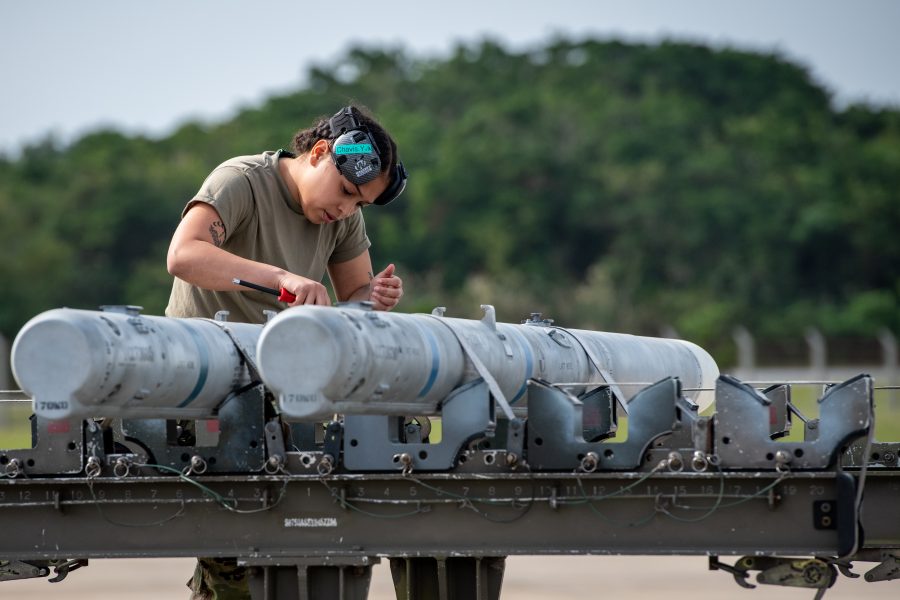

All 12 American bombers deployed in Britain rapidly returned to the U.S. on Oct. 4 following security concerns about a potential Iranian threat to their base in the U.K.
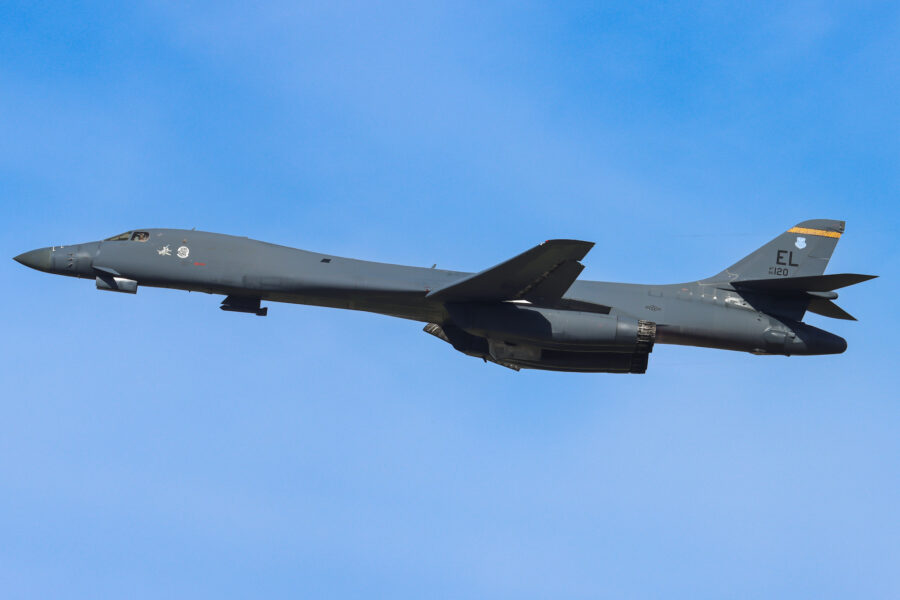
The dozen B-1B Lancer bombers, which were stationed at RAF Fairford amid ongoing hostilities with Iran, departed over the course of a day, local aircraft spotters said. The U.S. military later confirmed the unexpected departure of the aircraft.
“All U.S. bombers that were deployed to RAF Fairford have redeployed to their home stations in the United States,” the Pentagon and U.S. European Command said in statements to Air & Space Forces Magazine.
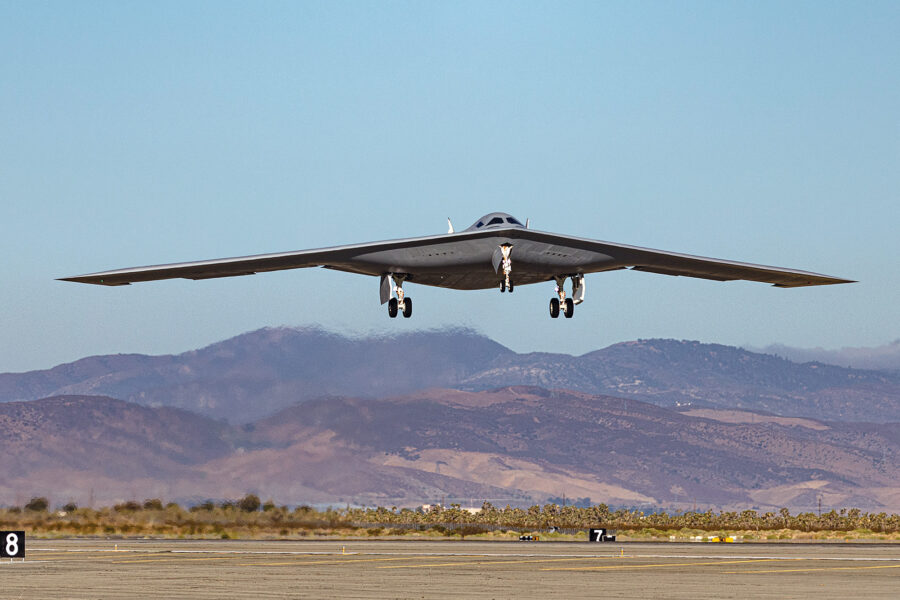
The U.S. military emphasized that bombers could still strike targets across the globe from the continental United States—something B-1B, B-2 Spirit, and B-52 Stratofortress bombers all did during the height of operations against Iran this spring.
“The Airmen that operate America’s bomber force, including B-1s, B-2s, and B-52s, remain ready to deliver precision global strike capabilities—including through operations that launch and recover from the continental United States—anywhere, anytime,” the statement read.
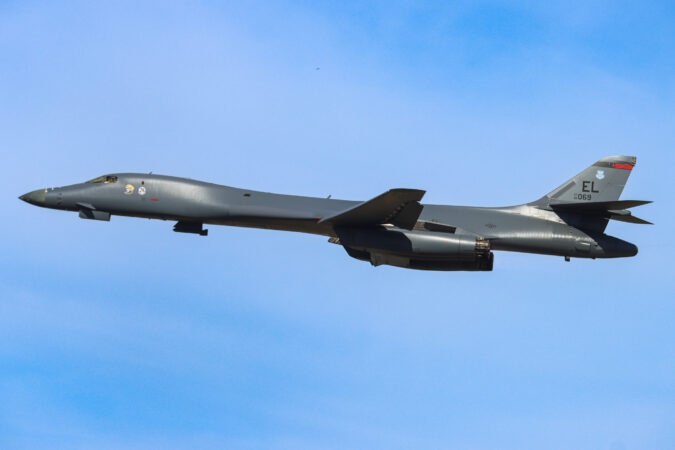
Still, stationing bombers at RAF Fairford sharply reduced the flight time U.S. bombers needed to strike targets in Iran. The open-source group Military Air Tracking Alliance recorded 29 separate bombers that deployed to RAF Fairford, located in southwest England, at different points during the conflict.
The departure of the last 12 bombers comes a week after arrests were made following a suspected plot against the base. Six people have been arrested in connection with the episode. U.K. Prime Minister Andy Burnham said there were “strong indications” that Iran was behind the threat.
Burnham and his predecessor Keir Starmer allowed the U.S. to use the base to attack Iran for what the U.K. government called self-defense strikes. Iran’s Islamic Revolutionary Guard Corps said in July it considered RAF Fairford a legitimate target because of the U.S. bombers deployed there.
At the height of the deployment during Operation Epic Fury, the U.S. had around two dozen bombers deployed to RAF Fairford at a single time—some 18 B-1B and half a dozen B-52H bombers. Since the U.S. reached a shaky ceasefire with Iran in April, the bombers have mostly conducted training missions, and the B-52s left months ago. One B-1B that arrived just last week to replace another bomber was part of the exodus on Oct. 4.
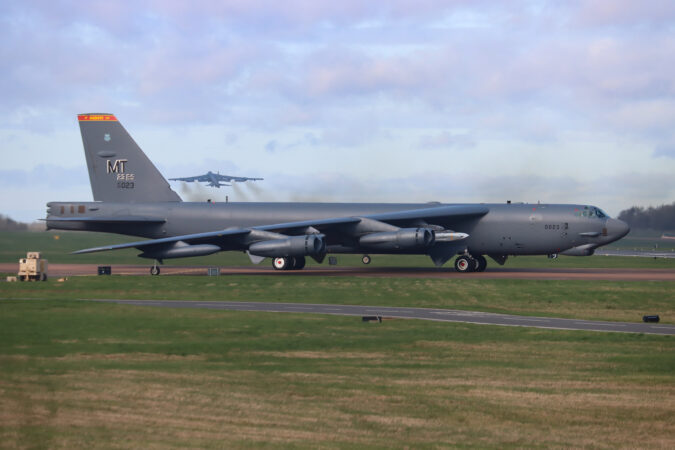
RAF Fairford does not have permanent assigned U.S. Air Force aircraft, but the base has a wing dedicated to supporting U.S. operations and is considered the main U.S. bomber site in Europe, having regularly hosted U.S. aircraft for years.
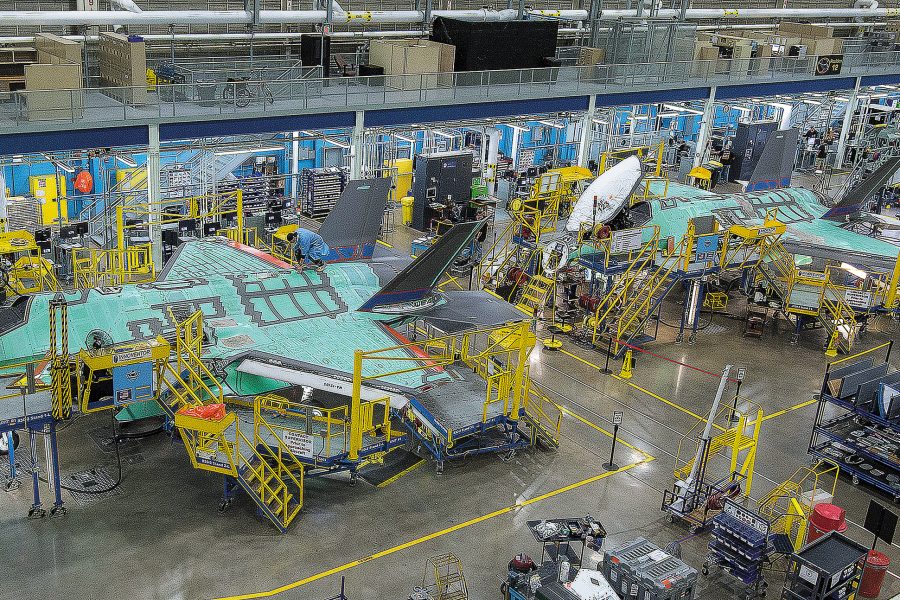
The Air Force permanently stations aircraft in the U.K. at RAF Lakenheath, which hosts F-35A Lightning II and F-15E Strike Eagle fighters that have deployed to the Middle East to operate against Iran. Lakenheath also serves as a stopover for fighters heading to and from the Middle East from the U.S. Nearby, RAF Mildenhall hosts KC-135 tankers that belong to the 100th Air Refueling Wing stationed at the base.
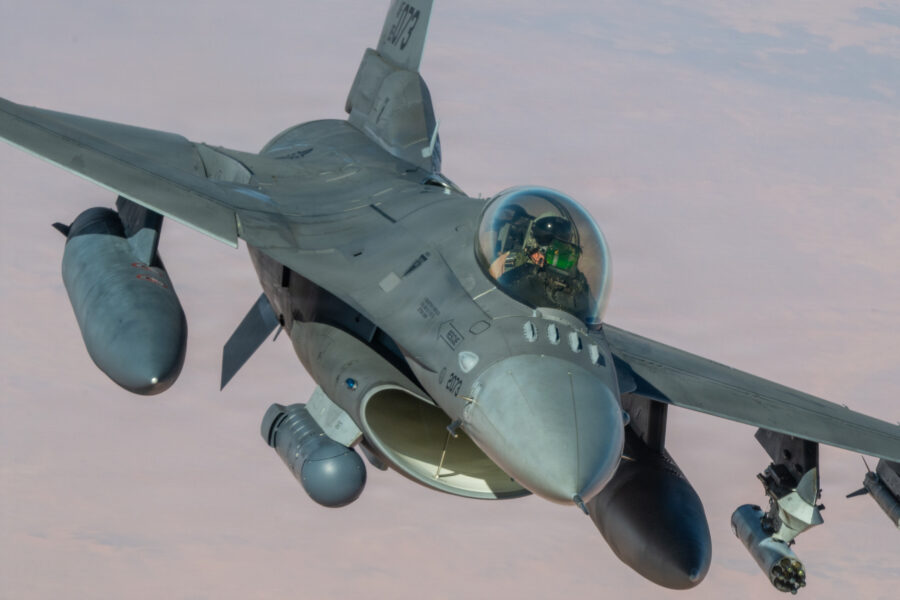
The U.S. has also been rotating its fighters based in the Middle East, sending fresh F-16 Fighting Falcon and F-35s units to the region, primarily from the Air National Guard.
The post All B-1 Bombers Leave RAF Fairford in Hasty Departure from UK Base appeared first on Air & Space Forces Magazine.
Air, National Security, Operations, Andy Burnham, B-1, B-2, B-52, Epic Fury, Iran, Operation Epic Fury, RAF Fairford, RAF Lakenheath
Air & Space Forces Magazine
[crypto-donation-box type=”tabular” show-coin=”all”]