
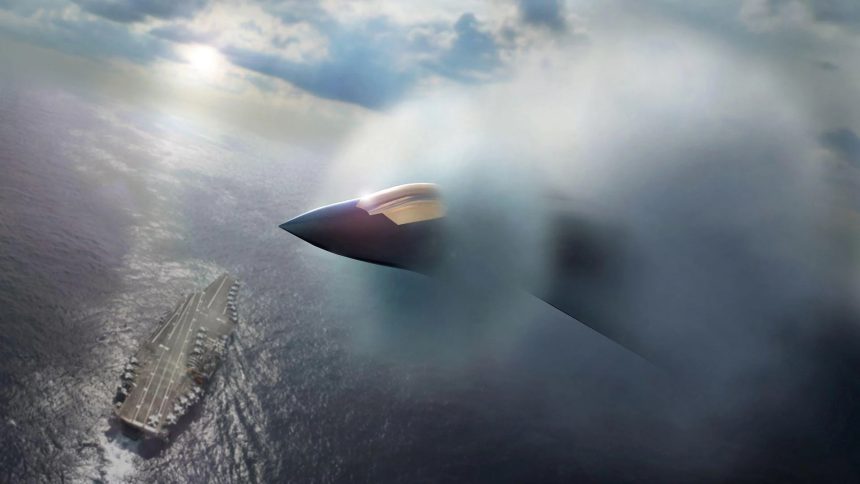
The Navy has awarded Boeing a contract worth more than $20 billion to build its new carrier-based sixth-generation fighter, the F/A-XX. Boeing is also building the Air Force’s sixth-gen F-47.
“The F/A-XX is a critical pillar in our commitment to maintaining peace through strength,” Michael P. Duffey, the undersecretary of defense for acquisition and sustainment, said in a Sept. 29 release from the Pentagon “F/A-XX will dominate contested airspace, extend operational reach, and deliver a decisive combat advantage for the warfighter. The F/A-XX platform represents a crucial, non-negotiable investment in America’s national security and long-term air combat capabilities.”
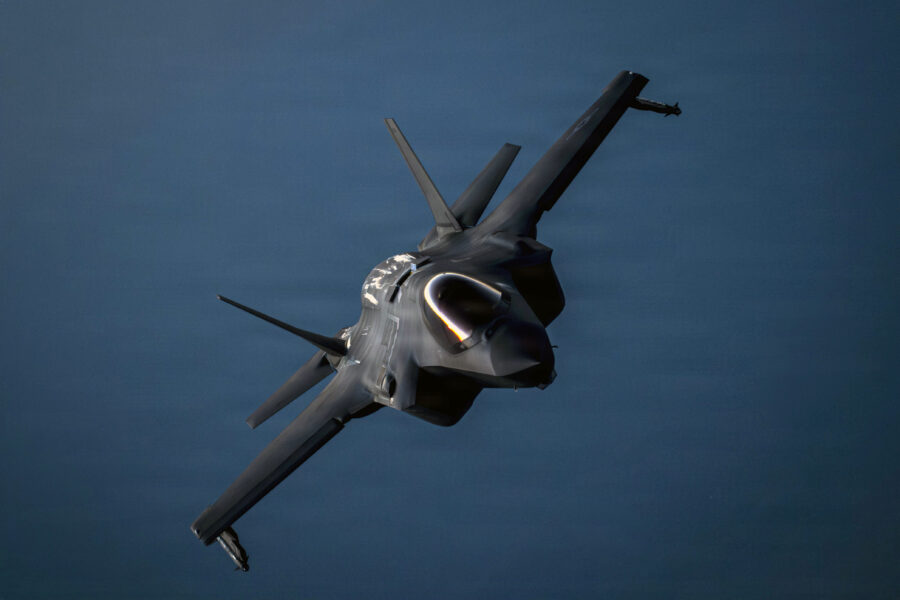
The Pentagon release states that the F/A-XX will first augment, and eventually replace, older F/A-18E/F Super Hornets and EA-18G Growlers beginning in the 2030s. It will operate alongside the carrier-based F-35C Joint Strike Fighters, which the Navy and Marine Corps both fly.
The selection ensures Boeing will make two of the three sixth-generation aircraft in development for the U.S. military—the firm won the contract for the Air Force’s sixth-gen fighter program in March 2025 with the F-47. It also represents a loss for Northrop Grumman, the only other company that remained in the running for the Navy’s Next-Generation Air Dominance fighter, and the maker of the Air Force’s B-21 Raider.
“We are joining forces with Boeing to field these capabilities rapidly, ensuring our warfighters possess the lethal and highly networked systems required to deter aggression, project undisputed power, and secure absolute air superiority,” Duffey said.
The Pentagon release said F/A-XX will be able to fly alongside and control semi-autonomous Navy drones known as Collaborative Combat Aircraft.
“This achievement marks a new era for the U.S. Navy,” acting Navy Secretary Hung Cao said. “The sixth-generation fighter is a generational leap in air superiority and will provide the world’s best aviators with unparalleled capabilities to fight, win, and come home safe. We are excited to partner with Boeing, and for our warfighters to continue to dominate the skies and defeat our nation’s enemies.”
Advanced stealth is also considered to be a key attribute of sixth-generation aircraft.
Now-retired Rear Adm. Michael Donnelly, the former director of the Navy’s air warfare division, said at an April 2025 conference that F/A-XX could be the Navy’s last manned fighter.
“It could be our last tactical manned fighter that we operate out of the Navy,” Donnelly said at the Navy League’s Sea Air Space conference in National Harbor, Md. “It will actually be at a point where we are more man-on-the-loop than man-in-the-loop, and be the bridge to fully integrating towards the hybrid air wing [combining piloted aircraft and unmanned platforms] in the future, in the 2040s.”
Donnelly told reporters at that conference that F/A-XX would likely be able to fly more than 25 percent farther than current Navy fighters before needing refueling. The F/A-18 Super Hornet has a roughly 1,275-nautical mile combat range, which is slightly more than the F-35C Joint Strike Fighter’s combat range of more than 1,200 nautical miles.
“That’s a core attribute of the F/A-XX,” Donnelly said in 2025. “It will definitely have longer inherent range, and then with refueling, you could say that’s indefinite, as long as refueling is available.”

Boeing said in a statement that F/A-XX “will revolutionize advancements in open mission systems architecture, advanced mission systems, and operational reach and capacity.”
“It’s an honor to be selected to produce the Navy’s first sixth-generation platform,” Steve Parker, president and chief executive officer of Boeing Defense, Space and Security, said in the company’s own statement. “Backed by decades of work, bolstered by game-changing innovations and solidified by the investments we’ve made in new facilities uniquely suited to build multiple products with next-generation capabilities, our dedicated and talented team is ready to execute this critical program.”
Boeing said technical and program details on the F/A-XX are classified and could not be released.
Longtime defense analyst J.J. Gertler said the Navy’s choice of Boeing could leverage work Boeing is now doing with its F-47 sixth-generation fighter for the Air Force. That connection could accelerate the F/A-XX process and get it into production faster.
“If it’s based on the F-47 or was codeveloped with the F-47, they might be able to put an aircraft in the air very quickly,” Gertler told Air & Space Forces Magazine.
Boeing has invested heavily in building more facilities for advanced aircraft production in St. Louis, Mo., where the F-47 is now in the works, Gertler said.
Boeing is also building F-15EX Eagle II fighters and T-7 Red Hawk trainer jets for the Air Force in St. Louis. Indeed, also on Sept. 29, the Pentagon awarded Boeing a $2.38 billion contract for 22 more F-15EX fighters.
Boeing said construction is still ongoing for its secure manufacturing facility in St. Louis, which will “be part of the world’s most advanced, all-digital aerospace design and manufacturing system.”
“Delivering two advanced fighters in parallel was always our plan, and we invested accordingly,” Parker said. “We are ready and able to build multiple concurrent future combat aircraft franchise programs.”
Gertler said it remains to be seen whether Boeing will be able to follow through on commitments for many critical military aircraft.
“We don’t know how much of [Boeing’s new advanced aircraft facility] is taken up by F-47,” Gertler said. “They’ve got F-15EX numbers expanding. They’ve got T-7 there. Do they have the people to be able to produce this [F/A-XX] aircraft quickly?”
The post F-47 Maker Boeing Tapped for Navy’s F/A-XX Sixth-Gen Fighter appeared first on Air & Space Forces Magazine.
Air, Boeing, F-47, F/A-XX, Navy, NGAD, Northrop Grumman
Air & Space Forces Magazine
[crypto-donation-box type=”tabular” show-coin=”all”]