 Max Headroom
UNCLASSIFIED
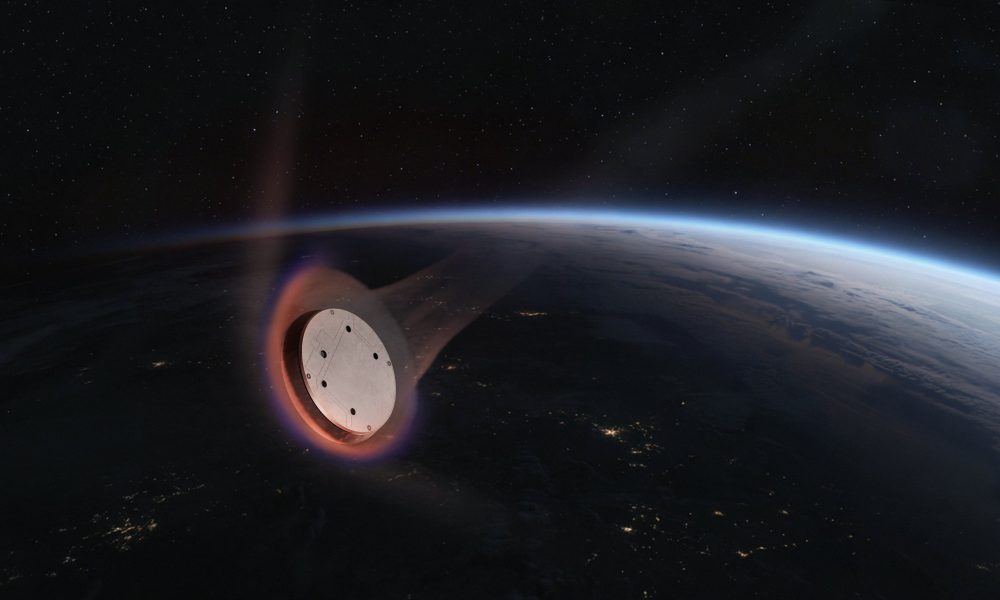
SpaceX has put up a dedicated commercial page for Starfall, its disk shaped reentry capsule, laying out for the first time what customers actually get when they book a flight. The page, live at spacex.com/starfall, pitches “affordable, routine access to microgravity” and invites companies to get in touch about flying manufacturing, research or testing payloads.
The specs are short and specific. Each Starfall mission carries up to 1,000 kg of payload, supplies 1 kW of power and connects through an Ethernet interface. Mission length is tailored to the customer, and the payload stays online the entire time through Starlink, which means researchers can pull data from an experiment while it is still in orbit instead of waiting for splashdown.
SpaceX is launching a secret spacecraft that could change how things are made in space
SpaceX is aiming the service at three markets. Biomedical customers are told they can grow stem cell organoids, replacement tissue and layered biomaterials. Pharmaceutical companies are pitched on protein and small molecule drug crystals, which form smaller and more uniform shapes without gravity driven convection. Materials science rounds out the list, with semiconductors and other next generation materials grown in vacuum and microgravity.
The page also makes clear which rocket SpaceX is counting on. “By launching on Starship, Starfall brings a reliable and scalable cadence previously unavailable to the market,” the company wrote, contrasting weeks of continuous microgravity with the seconds offered by drop towers and parabolic flights. No price or first operational flight date is listed.
The commercial push is a sharp turn from how Starfall started. SpaceX said almost nothing about the capsule ahead of its first flight in June, and nearly everything known came from FAA and FCC filings describing a disk about 10.2 feet wide and 2.5 feet tall that can return 2,200 pounds of cargo. By its second flight on the Bandwagon-5 rideshare in October, Starfall was listed by name on the mission page, though SpaceX still did not say what it carried.
Customers appear to be lining up. SpaceX said in its third quarter results that it signed three commercial Starfall missions during the quarter. On the earnings call, President Gwynne Shotwell described the capsule as providing “routine relatively low cost access to microgravity environments for scientific research, including improving our understanding of diseases like cancer and diabetes,” and said the three new missions would fly on Starship.
The branding effort extends past the website. SpaceX added a Starfall T-shirt to its online store on Monday as part of a batch of new merchandise, giving the program a place next to Starship, Starlink and Starshield in the company’s lineup.
The move also puts SpaceX in more direct competition with companies it launches. Varda Space Industries, which has built much of the in-space manufacturing market so far, flew its W-Series 7 capsule on the same Bandwagon-5 mission as Starfall in October. Varda’s capsules are roughly three times smaller than Starfall, and SpaceX controls the ride to orbit for both.
Starfall’s near term cadence depends on Starship. SpaceX is preparing for Flight 15 after completing static fires of Ship 42 and its Super Heavy booster in late October, and is aiming to catch both stages with the launch tower on that flight.
The post SpaceX’s Starfall just went from secret to storefront appeared first on TESLARATI.
Read MoreNews, SpaceX, Featured, starfallTESLARATI