 Don Draper
UNCLASSIFIED
The Department of War is making its acquisition leaders accountable for mission outcomes. Secretary of War Pete Hegseth set the tone in November 2025, when he announced an overhaul of defense acquisition at the National War College. He said contracting officers would be judged on mission outcomes rather than regulatory compliance, and that evaluation criteria would center on mission effectiveness over meeting specifications.
His overhaul also directed the reorganization of program executive offices into portfolio acquisition executives (PAEs), each the single accountable official for the outcomes of an entire portfolio. The strategy released with the overhaul calls for accountability measures that “prioritize outcomes rather than activity.” The Air Force completed its transition in July 2026, designating PAEs for all 17 of its acquisition portfolios.
In September 2026, the DoW CIO brought the same focus to software policy. DoW Instruction 8430.01, Accelerated Mission Software, directs enterprise reporting to focus on value stream and mission outcomes, and treats delivery metrics, like deployment frequency, as diagnostics for individual teams.
Outputs are what a team produces: features, releases, story points, reports. Outcomes are changes in user or system behavior that directly and positively impact the mission value stream. For example, an analyst now completes their task 50% faster, or a pilot now gets the data they need in seconds instead of minutes. Impact is the mission result those changes produce: the mission succeeding, lives saved, critical services reaching the people who need them.
You’ve probably sat through some version of a program review where the team has been at it for months, if not years. They’ve closed hundreds of story points and checked off every milestone, the demos look great, and leadership hears “on track” at every checkpoint. The software makes it to production, but few operators use it, because nobody designed it around how they work. And for all of that effort, the program has made no measurable impact on the mission since the day the government signed the contract.
Unfortunately, this happens to the majority of large government software initiatives. According to the Standish Group data that GSA’s 18F cites, 87% of large government software projects fail. The Standish bar is generous: it counts a project as success when it lands on time, on budget, and with a satisfied customer, even if the mission never changed.
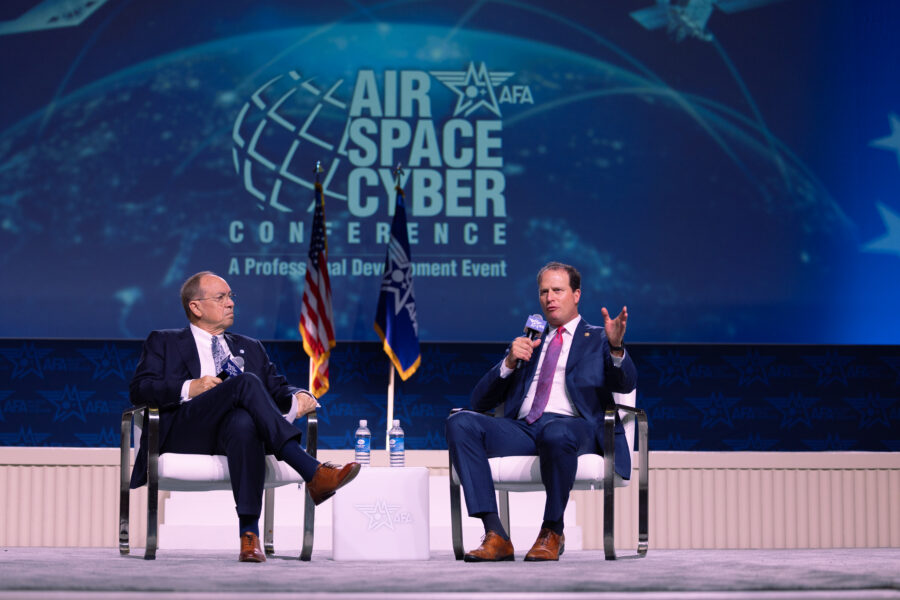
Bryon Kroger, a former Air Force intelligence officer who co-founded Kessel Run (the DoW’s first software factory) and now leads Rise8 as founder and CEO, described programs like these at Prodacity, Rise8’s annual training event for GovTech leaders. He was clear that the people on those programs work hard, contractors and government alike. The problem, he said, is that “the entire system is oriented around the activities and the outputs instead of the outcomes.”
Stop paying for hope
For as much as the community talks about outcomes and new directives call for them, contracts still pay for hours and features. Even firm-fixed-price contracts often pay for level of effort. The government pays the contractor for time spent and people assigned whether or not the mission improves. After delivery, programs often hand adoption to another contractor or a government team, so if the software ships and the mission doesn’t move, the government owns that problem. In general, Kroger said, “we’re buying hope.” Programs pay vendors and hope for an outcome in production that turns into mission value, and that’s a risky bet.
How to buy outcomes
In a world where outcomes are the end goal, outputs should stay off the contract. Teams rarely know exactly what to build up front, so a contract that lists outputs almost always gets them wrong. How do you buy outcomes, then?
Buying outcomes works backward from understanding the desired mission impact. Program leadership names that impact, and the government and contractor team work out which change in user or system behavior would produce it and measure where that behavior stands today. That change and its baseline go on contract, and success means that change, measured in production.
Deliver outcomes, guaranteed
An outcome on contract still needs a team built to deliver it. Kroger saw the limits of the software factory model firsthand at Kessel Run. Software factories brought agile delivery into government, but over time, bureaucracy pulled many of them back to contracts that paid for effort and metrics that counted outputs. What was missing was a model for outcomes from start to finish.
Rise8 built the Outcome Factory to keep what worked and hold every stage accountable to validated mission outcomes. For programs where the government and Rise8 each meet a set of shared commitments, Rise8 guarantees the first validated mission outcome in production within 180 days, or keeps working for free until it is.
The Rise8 Outcome Factory starts with the long-range impact a program needs, maps the current state, and finds the single bottleneck limiting that impact. Together, the Rise8 and government teams set a measurable target aimed at that constraint and continuously deliver software every week until they can validate each outcome against its baseline. When they hit the target, they find the next constraint and start again.
Ask what changed
The Department of War is working to close the gap between outputs and outcomes, from how it judges contracting officers to how it measures software. Every contract can help close this gap too, by naming the change it’s paying for.
The next time a program review says “on track,” ask: what changed for the people using the software, and by how much? If nobody can answer that, the program is still buying outputs and it may be time to start buying outcomes with the Rise8 Outcome Factory. Are you ready to scope your first mission outcome and get it to your operators within 180 days, reach out to us to scope your first mission outcome in a free working session and see if your program qualifies for the guarantee.
The post Your Program Needs Outcomes, Not Outputs appeared first on Air & Space Forces Magazine.
Acquisition, C4ISR & Networks, Bryon Kroger, defense acquisition, Kessel Run, Outcome Factory, Pete Hegseth, Rise8
Air & Space Forces Magazine