 Tyler Durden
Iran Attacks At Least Two More Tankers In Gulf Waters In Past 24 Hours
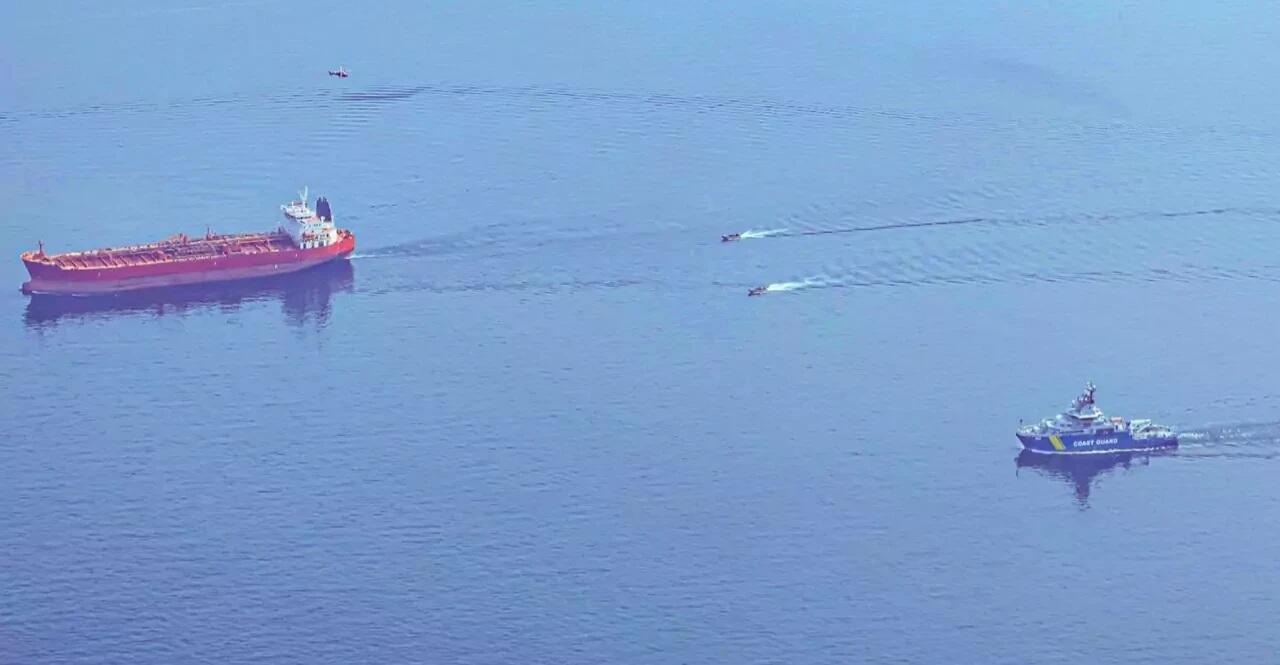
There have been at least two more tanker attack incidents in Gulf waters and the Strait of Hormuz area over the last 24 hours.
First, the United Kingdom Maritime Trade Operations (UKMTO) says it received a delayed report of a projectile hitting a tanker off Iraq’s coast, which occurred Tuesday. The tanker was struck reportedly thirty nautical miles off the coast of Al Faw, but the information has only emerged Wednesday. All crew members are said to be safe after the attack.
And on Wednesday another ship was hit “by an unknown projectile” off the coast of Oman, close to the Strait of Hormuz, resulting in a fire.
A fresh UKMTO report indicated the tanker is 11 nautical miles off the town of Bukha. The vessel is deemed “now at anchor” and all crew are safe and account for, with no reports of environmental impact.
Iranian state media is also reporting the latest attack. Tehran seeks for these assaults, which have been coming at record pace for the month of October, to be made as public as possible. It hopes to squeeze the Trump administration politically, imposing an economic cost on Americans, headed into the November midterm elections.
In the midst of all of this The Wall Street Journal, citing Kpler, has issued some surprising conclusions on Wednesday:
Persian Gulf oil exports have surpassed prewar levels, as an improvised shipping system under U.S. protection is helping tankers move oil through one of Iran’s fiercest waves of attacks in the Strait of Hormuz.
Middle East oil flows, including shipments through Hormuz and alternative routes across the region, averaged more than 24 million barrels a day in the week through Oct. 18, surpassing prewar levels of 23.3 million, according to ship tracker Kpler.
Preliminary figures show Hormuz oil flows, including offshore transfers in the Gulf of Oman, came to around 14 million barrels a day on average for the same period, or 82% of prewar levels.
Still, the same report also emphasizes that “Thinning global inventories leave little margin for error. The operation is also expensive, costs that ultimately flow through to consumers at the pump.
As for stalled negotiation efforts, Iranian media reports that Tehran informed Pakistan’s Army Chief Asim Munir on Tuesday that Tehran’s conditions stand firm, and that talks won’t materialize until these demands are met.
There are fears all-out war could resume after the November midterm elections in the US:
The current situation reminds me immensely of the days before February 28. Intense talks were underway, mediated by Oman. Today, Qatar is playing that role. But just like in February, it seems to me that Trump has already made up his mind and that the ongoing diplomacy is just for show. Trump has, together with Netanyahu, already decided to restart the war. In February, Tehran agreed to major concessions, but it was all for naught because Trump thought he could get a better deal by simply removing the regime through war. Today, due to the misinformation space Trump lives in, he once again appears to have already opted for war because he believes it will give him better results than a diplomatic deal. Just like in February, it is a devastating miscalculation.
— Trita Parsi (@tparsi) October 21, 2026
Washington wants a focus of these talks to be the nuclear file, while Iran has not budged in its insistence that this is not on the table. Iran’s leaders have consistently said that the nuclear issue can only be dealt with after there is a permanent peace deal.
Tyler Durden
Wed, 10/21/2026 – 12:30
ZeroHedge News
[crypto-donation-box type=”tabular” show-coin=”all”]