 Tyler Durden

Mutatis Mutandis Not Ceteris Paribus
By Michael Every of Rabobank
2026 has seen economists and strategists forced to accept that geopolitics, rather than being the odd ‘exogenous shock’, is a structural backdrop disrupting models and markets. If an economic or market call depends on a geopolitical one, it logically requires an entirely different skillset. Of course, people adapt. Six years ago, economists and strategists busily tracked Covid infections while knowing nothing about virology or epidemiology until, fortunately(!), the virus naturally mutated into something less, not more, dangerous. Today, they Hormuz track tanker passages and/or Ukrainian strikes on Russian oil refineries. However, neither says what the geopolitical backdrop will mutate into.
The Financial Times notes, ‘Iranian hardliners say the time for nuclear weapons has come’, and the US and Israel are reportedly weighing “inevitable” strikes. Secretary of War Hegseth just made an impromptu visit to Israel as PM Netanyahu, a week before elections, reiterated he’s “ready to strike,” and Syria fears an imminent Israeli-backed Druze offensive. As China’s premier slammed “blatant” US aggression against Iran and Russia again offered to process Iranian uranium, Foreign Minister Lavrov backed Iran, and Tehran said “friendly” nations might be allowed safe passage through Hormuz while adding 122 vessels to its ‘non-conformity’ list. Pakistan’s army chief visits Tehran today, Egypt’s parliament delayed a vote on military support for the Saudis by a week, Qatar announced an unspecified new defence partnership, and Macron is on a 3-day visit to the Gulf, starting in Kuwait (rumoured to face a possible Iranian ground incursion) before heading to the UAE, Bahrain, and Qatar: as a French diplomat says France “has to assist Gulf states”, is it Qatar’s new defence partner? Elsewhere, Turkey-Azerbaijan tensions are rising, Ethiopia threatened Eritrea, Trump says he recognises the breakaway republic of Somaliland as “a totally different country”, and 160 people are reported dead in escalating drone attacks across Sudan. So, what’s the output from modelling that all – war or peace?
Trump has partially reinstated Starlink access for Ukraine yet slammed Zelenskyy, saying “somebody else” should negotiate – and he’s ready to meet Xi and Putin next month to thrash out a deal without Kyiv or Brussels. Rumors are this could involve Europe buying Russian gas again, with the US holding shares in a new NordStream pipeline. That isn’t “strategic autonomy.” Neither is the US warning Europe if it tries to set up a rival to Starlink by freezing the US out there will be “devastating” retaliation. NATO is meanwhile making new plans for how to fight Russia, Finland ordered 1 million landmines – but the UK cut £2bn from army front line spending. So, what’s the output from modelling that all – war or peace?
Trump signaled uncertainty about meeting North. Korea’s Kim next month – perhaps because of the internet rumour that he’s dead, which would open tail risks of civil war in a hermit kingdom with nuclear weapons, if so. As Taiwan and the Philippines now build maritime cooperation in the face of Chinese pressure, the Chinese press talks about a new fleet of PLA-N drone carrier ships.
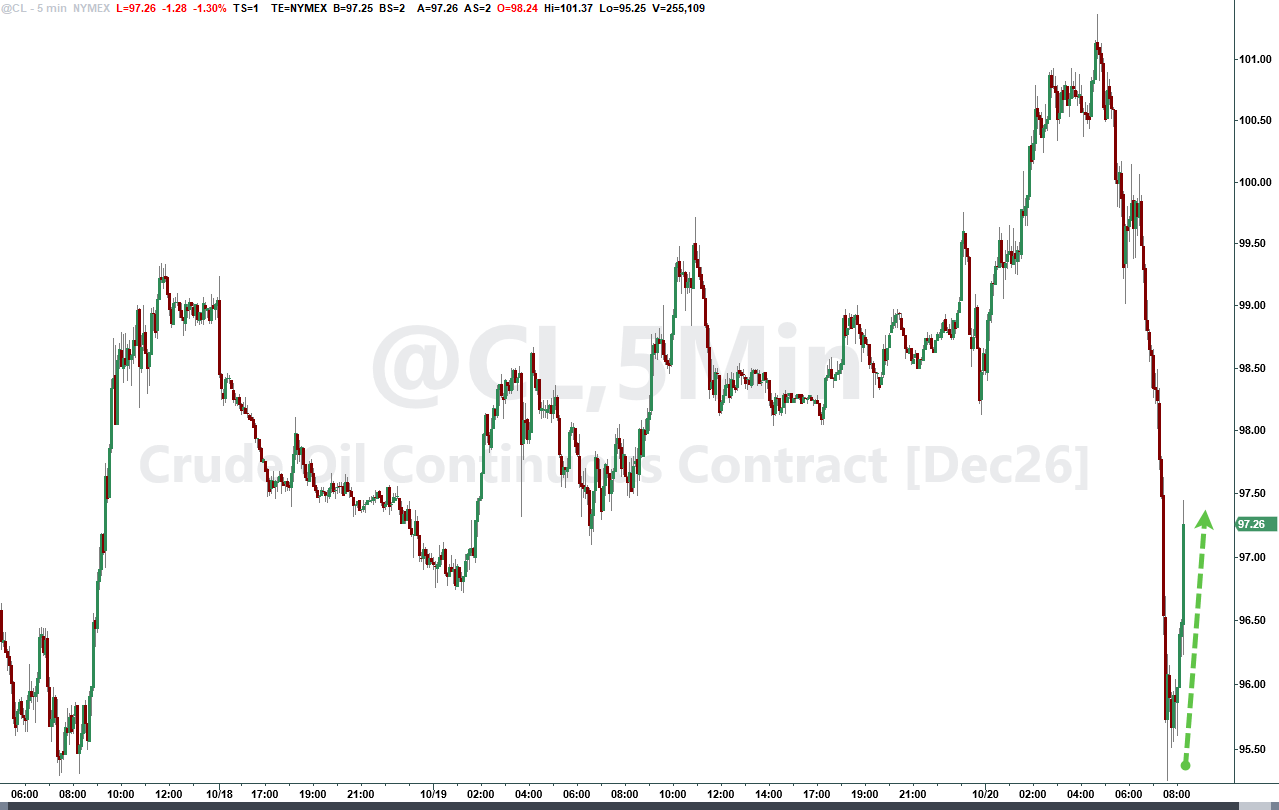
The geoeconomic knock-on effects of this backdrop are clear: Saudi Arabia has postponed its ‘Davos in the desert’: what other spending, and dollar recycling will it and other GCC countries have to postpone if this chaos continues? Energy prices remain high, if volatile on ‘peace’ hopes, as oil tanker rates push Asian and European refiners into the red. By contrast, Venezuela is seeing oilfield hiring pick up as US FDI into it builds.
In trade, the US sanctioned five Chinese entities over AI trade secret theft and ordered DeepSeek removed from federal systems as a national security risk. China has banned the export of some drones (used by rivals’ militaries, some note) on top of other recent tech export bans, which now includes tunnel-boring machines used in mining, e.g., for rare earths, and construction, targeting India in particular, who is using them in metros and national-security tunnels in the Himalayas next to China. Elsewhere, the US pitched itself as a trade partner to Central Asia to woo them from China and Russia, and New Zealand is talking to Brazil and Canada as its FTA with India begins. The market implications in these shifting trade flows can be significant: expect prices to soar for tunnel-boring projects, for example – and note the CME plans tungsten futures as the global demand for weapons rises.
Meanwhile, changing politics can also change markets. Yesterday saw an ugly bond reaction to the ugly protests and looting in France (and Belgium and Italy, following earlier peaceful protests in Spain and Portugal) with 10-year French yields +13bps, Italian +8bps, and German +3bps. If this is an ‘exogenous shock’ then economists’ and strategists’ structural metrics still apply, but other skillsets are again needed to make that call – and some political scientists suggest French politics has mutated into something more dangerous.
While France will see localized curfews, more protests are planned: and organised groups domestic and foreign, and a major French political party, are fanning the flames. Were the RN’s Le Pen to win the presidency in six months, which was the original market concern, there is now fear that the far left may aim for insurrectionary politics; and the whispered risk is Macronistes in key institutions may even see such chaos as a route back to power.
Even if we only focus on fiscal metrics, French 10-year borrowing costs are now half a rate hike higher than Friday. It’s also clear there’s no public appetite for austerity but a demand for more public spending on education and public housing, or the police and justice system, or both, when France might be about to get involved in a Middle East war and have to prop up a Ukraine whom the US has walked away from.
Of course, France can’t be allowed to fail given its importance within the EU. Then again, can the RN be allowed to succeed? The hypothetical whispered realpolitik binary is between the ECB bailing France out if needed, at a cost to the Euro and the fury of Germany, and not doing so at a cost to EU economic, political, and market stability. But could the ECB bail everybody else out from French contagion and leave Paris to sort out its mess? Maybe… except France has the aircraft carrier and nuclear weapons the EU will rely on even more if the US is doing even less: so, even here, a geopolitical call likely needs to be made first. Whatever happens now, more volatility seems far more likely than a ‘reversion to mean’.
Meanwhile, this isn’t just about France: Albania is seeing violent street protests; India has extended the detention of its angry youthful anti-government ‘Cockroach’ party leaders; the Wall Street Journal says the US ‘Congress Is Broken’ and early voting data show 19-29 voting has collapsed so far; UK politics is fragmenting and has seen one political murder this year; an Australian politician was just struck by a left-wing activist’s car, losing a leg. That, plus votes are being counted in Alberta’s referendum on a referendum on independence, which while unlikely to succeed will very likely keep the issue alive just as it is in Quebec. Again, whatever happens now, more volatility seems far more likely than a ‘reversion to mean’.
So, mutatis mutandis –a rule can be applied to a new situation provided the necessary adjustments are made while keeping the fundamental point the same– arguably applies over the more common “because markets” ceteris paribus, or all things remain equal.
After all, one thing the looters in France were saying loudly was that all things are not equal in their eyes – and global power isn’t distributed that way either.
Tyler Durden
Tue, 10/20/2026 – 11:45
ZeroHedge News
[crypto-donation-box type=”tabular” show-coin=”all”]